MercoPress. South Atlantic News Agency


De la Espriella sets ten armed group leaders as his target for his first 90 days
 The first results came over the weekend
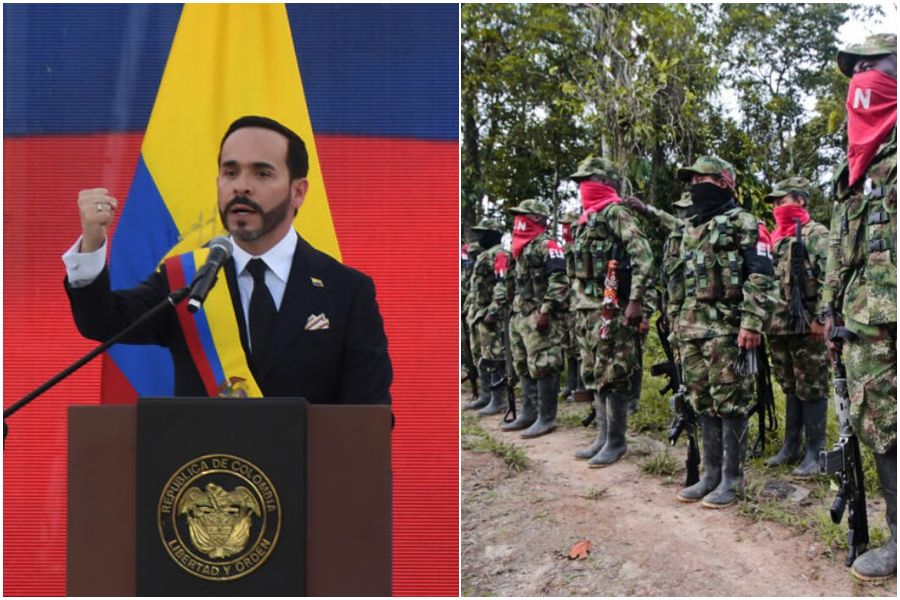
 Colombian President Abelardo de la Espriella has pledged to capture or kill ten leaders of illegal armed groups during the first 90 days of his term, which began on Friday in Cali. The commitment, made during his campaign, is the centerpiece of the “shock plan” with which the new president seeks to reverse the negotiation policy of his predecessor, Gustavo Petro.
De la Espriella inherits a country with nearly 29,000 members of organized armed groups and at least 14 zones of active dispute between illegal actors, according to security force estimates compiled by the Fundación Ideas para la Paz. The most critical areas are Catatumbo and Arauca, on the Venezuelan border; Cauca and Nariño, on the Pacific coast; Putumayo, bordering Ecuador; and the jungle department of Guaviare.
Those identified include Néstor Gregorio Vera Fernández, known as Iván Mordisco, head of the self-styled Estado Mayor Central, a federation of structures that split from the former FARC. Also Alexander Díaz Mendoza, alias Calarcá Córdoba, who leads the Estado Mayor de los Bloques y Frente, a breakaway from that group and now its rival; Jobanis de Jesús Ávila, alias Chiquito Malo, top leader of the Clan del Golfo, with more than 10,000 members; and the commanders of the 33rd Front and of the National Liberation Army's Northeastern War Front in Catatumbo, to whom the president gave a one-month ultimatum during a visit to Cúcuta. None has been convicted of the acts authorities attribute to them.
The first results came over the weekend. On Sunday, De la Espriella announced the killing of alias Ruso or Alemán, identified by the government as the man sent from Arauca to take command of the 28th Front, along with three other alleged members, in a joint military intelligence and air force operation in the area bordering Meta, Guaviare and Vichada. The same day, at least five alleged members of the Carlos Patiño structure died in an offensive in rural El Tambo, in Cauca, where several families were confined to their homes. On Saturday, a vehicle loaded with explosives had detonated beside a toll plaza under construction near Santander de Quilichao.
The International Crisis Group warned in a briefing published on inauguration day that the severity of the planned offensive carries risks. Decapitating these organizations tends to fragment them and to trigger internal disputes over territorial control, the document states, adding that Colombian forces are already operating at the limit of their capacity.
“The strategy of going after leaders tends to generate more violence, at least in the short and medium term,” said Elizabeth Dickinson, the organization's deputy director for Latin America. The most cited precedent is Dairo Antonio Úsuga, alias Otoniel, captured in 2021 and extradited to the United States: the Clan del Golfo grew stronger afterward.


Top Comments
Disclaimer & comment rulesCommenting for this story is now closed.
If you have a Facebook account, become a fan and comment on our Facebook Page!