MercoPress. South Atlantic News Agency

Colombia and Venezuela quakes are unconnected despite similar magnitude, experts say
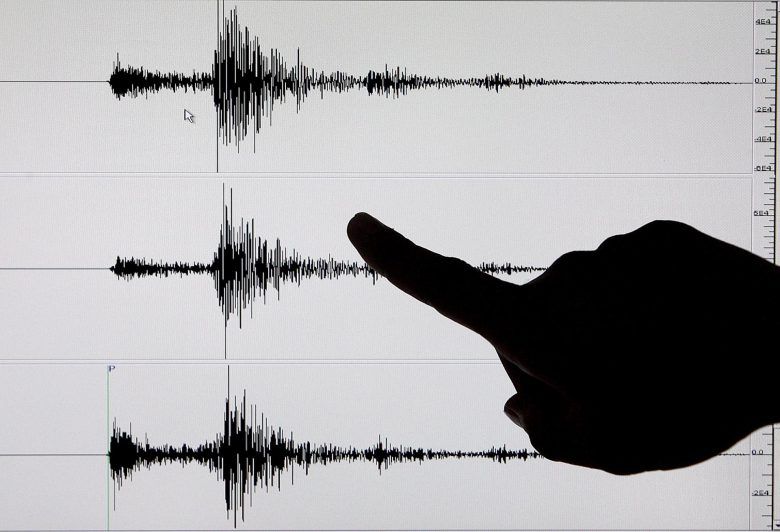 “The Venezuelan earthquakes are shallower and involve a different mechanism, a strike-slip mechanism. This one is deeper, a subduction earthquake,” a seismologist stressed
 The magnitude 7.4 earthquake that struck western and central Colombia on Monday has a different tectonic origin from the earthquakes recorded in Venezuela in June, despite comparable magnitudes, said Viviana Dionisio, a seismologist with Colombia's National Seismological Network.
“It was a tectonic earthquake associated mainly with a subduction mechanism,” the specialist said. That process occurs when the Nazca plate, beneath the Pacific Ocean, slides under the South American plate, on which Colombia's mainland territory sits. Energy accumulated at the contact between the two can be released in large earthquakes, of the kind historically recorded around the Pacific Ring of Fire.
The Venezuelan earthquakes of June 24, of magnitudes 7.2 and 7.4, responded to a different mechanism. According to Dionisio, they originated in the interaction between the Caribbean and South American plates through lateral displacement, known as strike-slip faulting. “The Venezuelan earthquakes are shallower and involve a different mechanism, a strike-slip mechanism. This one is deeper, a subduction earthquake,” she stressed.
Depth is the factor explaining why two earthquakes of similar magnitude can cause very different damage. The focus of the Colombian quake was located at around one hundred kilometers, according to revised data from the Colombian Geological Service, which in its first bulletin had placed it at 82. In shallow earthquakes, waves travel a shorter distance and reach areas near the epicenter with greater intensity; in deep ones they pass through more material and lose energy along the way. The seismologist warned, however, that depth alone does not determine the extent of damage, which also depends on the vulnerability of buildings and ground conditions.
The epicenter was located in San José del Palmar, in Chocó department, on the boundary with Risaralda and Valle del Cauca. Dionisio said it is not unusual for an earthquake of these characteristics to originate in that region, given the tectonic dynamics of western Colombia.
The Colombian Geological Service has recorded more than thirty aftershocks, the strongest of magnitude 4.8. “An earthquake of this magnitude generates a certain number of aftershocks that generally decrease in frequency and magnitude over the following days or weeks,” the seismologist said.
Rodrigo León, of the Geosciences Department at Universidad de los Andes, noted that earthquakes cannot be predicted, nor is it possible to anticipate when an aftershock will occur or to rule out larger movements. He also considered that, given the magnitude of the event, the damage could have been worse. The provisional toll exceeds 130 dead.


Top Comments
Disclaimer & comment rulesCommenting for this story is now closed.
If you have a Facebook account, become a fan and comment on our Facebook Page!