MercoPress. South Atlantic News Agency


Lacalle Pou's return reopens the debate over opposition leadership in Uruguay
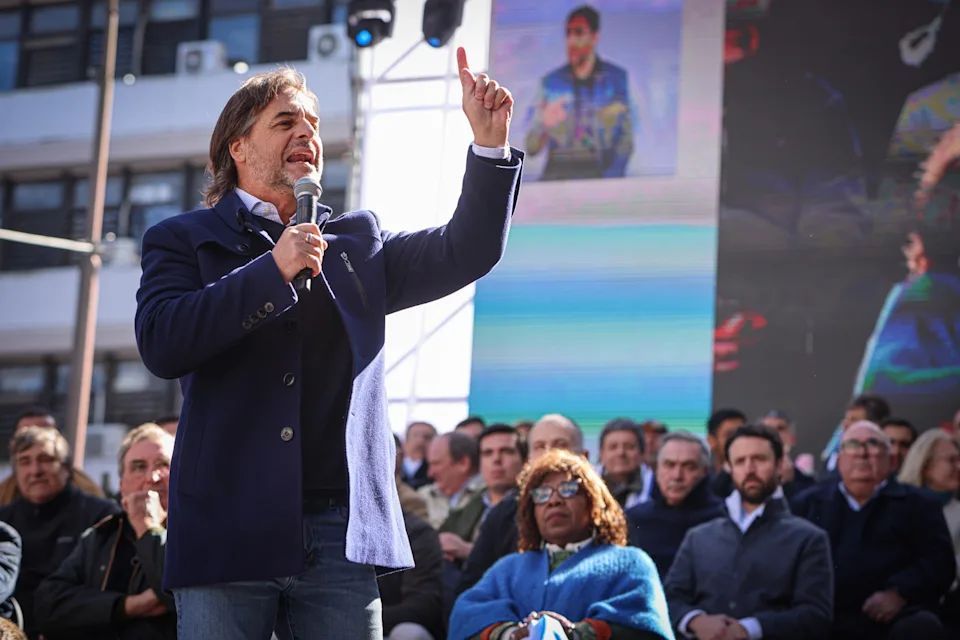 Lacalle Pou spoke for around half an hour before more than a thousand party members in Montevideo's Plaza Matriz, after several months of keeping a low profile
 The first public appearance by former Uruguayan president Luis Lacalle Pou since leaving office, at Sunday's ceremony marking the Partido Nacional's 190th anniversary, drew contrasting readings within the governing Frente Amplio and reopened discussion of his role in the opposition.
Lacalle Pou spoke for around half an hour before more than a thousand party members in Montevideo's Plaza Matriz, after several months of keeping a low profile. He described himself as an “old militant” and said that, after taking stock of his administration, he feels “at ease, satisfied, but not content.” He acknowledged “successes and mistakes” and called for unity: “It is not about healing wounds, it is about not inflicting them.” He made no electoral statements and did not announce a candidacy. Those present chanted “we are going to return” and cheered him with shouts of “President.”
The most discussed passage was a distinction between power and authority, which he attributed to a period of introspection begun months before his term ended. He defined power as something formal that originates in the vote, and authority as something built on intellectual, moral and emotional bonds. “You cannot exercise power well if you do not first have authority. You cannot govern a country well if you do not know it,” he said.
Party figures and some analysts read those words as aimed at President Yamandú Orsi. Political scientist Antonio Cardarello described them as a measured criticism of the government. Orsi dismissed the reading on Monday: “No, not at all, not at all. It is not for a president to comment on what other leaders say.” He noted that his government had granted the Partido Nacional national radio and television airtime to mark the anniversary.
Former vice president Lucía Topolansky, of the Movimiento de Participación Popular, praised the former president's composure and described his speech as that of a statesman. She read his call to avoid giving offense as a message directed at Parliament as a whole, in the midst of debate on the annual budget accounts, and not only at his own party's lawmakers. It was a rebuke delivered with dignity, she told El País.
Socialist senator Gustavo González offered a more critical assessment: he welcomed the fact that the former president did not attack the government, but called the speech very vague and said he had not spoken as a statesman, since he did not address the international situation. Senator Daniel Caggiani called the tone republican and sensible, though he saw a contradiction between it and the opposition's parliamentary strategy. Frente Amplio president Fernando Pereira said Orsi “probably does not look as good on the platform,” but “governs better on the pitch.”
Uruguay bars immediate re-election but allows non-consecutive terms, meaning Lacalle Pou could run in the 2029 elections.


Top Comments
Disclaimer & comment rulesCommenting for this story is now closed.
If you have a Facebook account, become a fan and comment on our Facebook Page!