MercoPress. South Atlantic News Agency



Argentina acknowledges the Magellan treaties and seeks to defuse friction with Chile
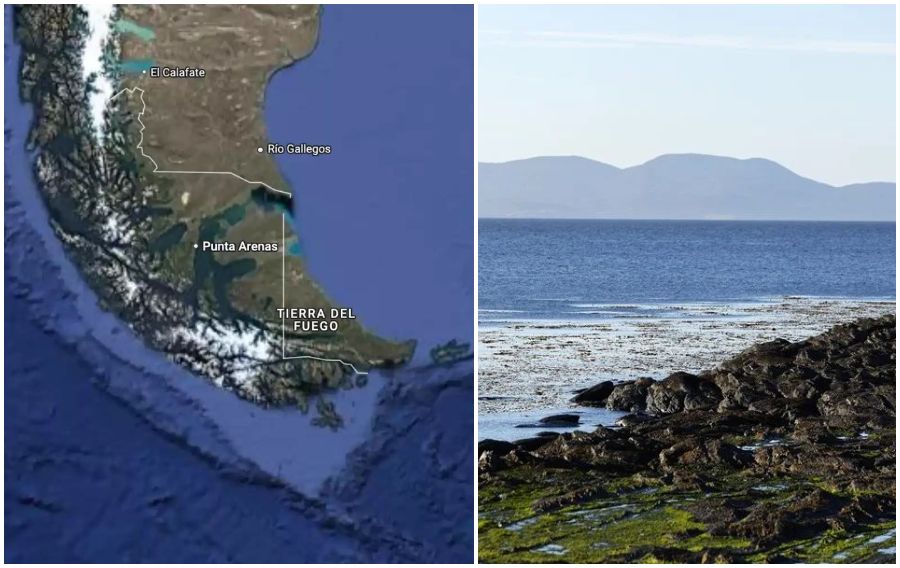 The 1881 treaty recognised Chilean sovereignty over the strait and established its perpetual neutralisation, with free navigation for vessels of all nations
 Argentina's foreign ministry issued a statement on Tuesday reaffirming that its position on the Strait of Magellan is the one established by the 1881 Boundary Treaty and the 1984 Treaty of Peace and Friendship, a day after Chile announced it would send a note of protest over remarks by the head of the Argentine Air Force General Staff.
“Both instruments are fully in force and are considered definitive by the Argentine Republic,” says the text, titled “Argentina's position on the Strait of Magellan and cooperation with Chile in the South Atlantic and Antarctica.” The document, issued by the ministry headed by Pablo Quirno, makes no mention of Brigadier General Gustavo Javier Valverde, whose words triggered the episode.
Valverde said on Sunday, in an interview with a YouTube channel, that “Magellan, the south, the Drake, all of that is sovereignty” and that it was necessary to “maintain a presence” in the area because it constituted “a bioceanic key.” Chilean authorities interpreted his words as a challenge to their country's sovereignty over the southern passage.
The Argentine statement places the continent's southern extreme within the defence of its rights “in relation to the Malvinas Question, the South Atlantic and Antarctica,” areas of “growing centrality for their strategic natural resources, for their role in maritime routes and global supply chains.” It then reaffirms “the strategic value of cooperation with Chile” and lists mutual recognition of Antarctic rights, joint administration of protected zones, the Combined Antarctic Naval Patrol the two countries have maintained for more than twenty-five years, and a joint proposal for a marine protected area in the western Antarctic Peninsula.
The 1881 treaty recognised Chilean sovereignty over the strait and established its perpetual neutralisation, with free navigation for vessels of all nations. The 1984 treaty, signed at the Vatican after the 1978 Beagle Channel crisis, ratified the southern boundaries and settled the divergences over the passage's eastern mouth.
There is a recent formal precedent. Decree 457 of 2021, issued under Alberto Fernández's government, proposed strengthening the “exploration, study and joint control” of the strait and the Drake Sea. In March 2025, Javier Milei's government acknowledged in writing to Chile that this interpretation was an error under the treaties and undertook to replace it.
It is the first diplomatic friction between the governments of José Antonio Kast, who took office in March, and Milei, who maintain a close political relationship. The two countries share more than 5,000 kilometres of land border.


Top Comments
Disclaimer & comment rules-

-

Read all commentsTrump will not be happy that his best friend has backed down.
Aug 26th, 2026 - 01:21 pm 0Much the same re Argentina's Beagle Channel case when it all went skew-whiff for them when one of their own maps showed that the area belonged to Chile - same Argentine map showed that the Falklands wasn't Argentinian.
Aug 26th, 2026 - 02:09 pm 0Latzina Map and the Falklands: https://www.academia.edu/108294347/The_Latzina_Map_and_the_Falklands
(Successfully used in the Beagle Islands dispute Arg/Chile 1977)
Commenting for this story is now closed.
If you have a Facebook account, become a fan and comment on our Facebook Page!