MercoPress. South Atlantic News Agency



Drums in his neighbourhood and a wake in parliament: Uruguay bids farewell to Ruben Rada
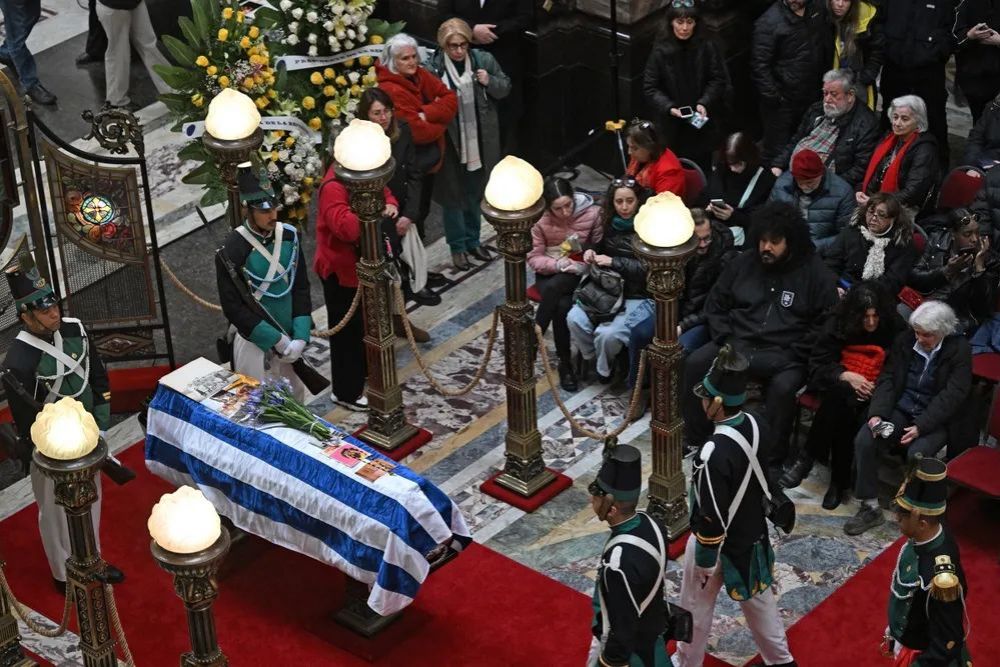 The wake drew political figures from across the spectrum
 Uruguay bade farewell on Thursday to musician Ruben Rada with a wake open to the public at the Legislative Palace, the seat of parliament, after hundreds of people had gathered the previous night with drums in the neighbourhood where he grew up, with no official summons involved.
The executive declared a day of official mourning. The decree signed by President Yamandú Orsi ordered the national flag flown at half mast at all public buildings, embassies abroad, barracks, fortresses, air bases and warships, and provided for funeral honours and for the costs of the burial to be met by the National Treasury. The resolution authorising the wake in the Salón de los Pasos Perdidos, between 2pm and 9pm, was signed by Vice-President Carolina Cosse in her capacity as president of the General Assembly.
The first farewell, however, was spontaneous. On Wednesday night, after news broke of the artist's death at 83 from bilateral pneumonia, hundreds of people gathered around Isla de Flores, between the Sur and Palermo districts, the historic heart of Montevideo's candombe and where Rada grew up among carnival drumming groups. The gathering was arranged through social media and word of mouth, in response to a wish the musician himself had set down in his song Muriendo de plena: he asked not to be mourned with weeping, but with singing.

Photo: Agencia Foco Uy
The same song was heard again in parliament. At around four in the afternoon, Rada's children and his wife, Patricia Jodara, gathered by the coffin with musicians León Gieco, Natalia Oreiro, Ricardo Mollo and Jorge Nasser to sing Blumana. That gave way to Muriendo de plena, and those present joined in, clapping out the candombe rhythm.
The wake drew political figures from across the spectrum. Alongside Orsi, those attending included former president Julio María Sanguinetti, the president of the National Party board, Álvaro Delgado, the Colorado Party's secretary general, Andrés Ojeda, Frente Amplio president Fernando Pereira and former vice-president Lucía Topolansky. Sanguinetti described Rada as “a giant of popular music” and compared him to José Gervasio Artigas, the founding figure of Uruguayan independence, and to Obdulio Varela, captain of the team that won the 1950 World Cup.
Topolansky recounted that some young people came to leave apples beside the coffin, in reference to Las manzanas, one of the musician's early hits. The PIT-CNT trade union confederation recalled his time with the band Tótem during the civic-military dictatorship, when, according to its statement, he circumvented censorship with songs that sustained a spirit of resistance.
The burial is scheduled for Friday. The cortege will leave at 11am from the corner of Isla de Flores and Santiago de Chile, in Barrio Sur, heading for the Cementerio del Norte.


Top Comments
Disclaimer & comment rulesCommenting for this story is now closed.
If you have a Facebook account, become a fan and comment on our Facebook Page!