MercoPress. South Atlantic News Agency

Next Wednesday, Chancellor Healey delivers the Budget statement, MP Burnham’ first
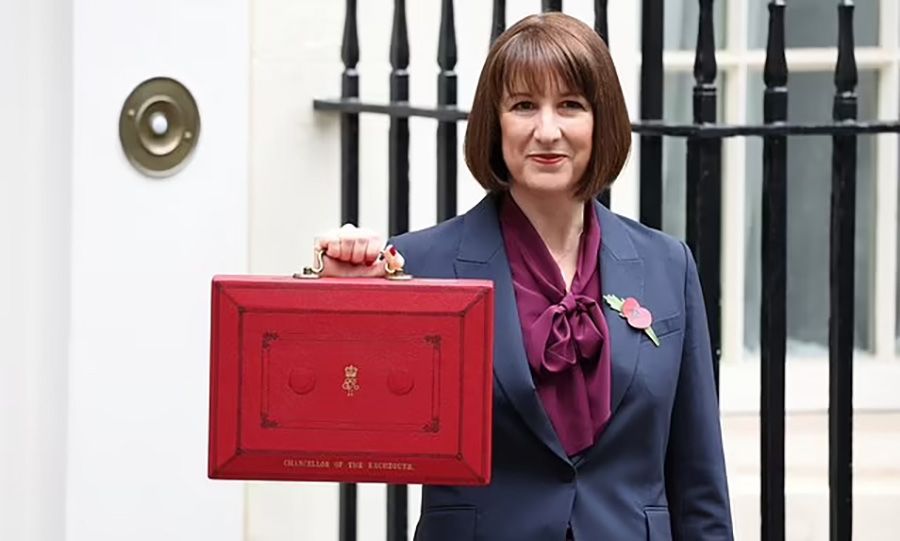 The previous Labor Chancellor, Rachel Reeves holding the famous red Budget box
Each year UK’s Chancellor of the Exchequer makes the Budget statement to the House of Commons outlining the state of the economy and the Government's proposals for changes to taxation. The government of PM Andy Burnham has announced that the Budget will take place this week on Wednesday 28 October 2026 and delivered by Chancellor MP John Healey. The last Budget was delivered Wednesday, 26 November 2025.
The Budget, or Financial Statement, outlines the nation’s finances and the Government’s proposals for changes to taxation. The Budget also includes forecasts for the economy by the Office for Budget Responsibility (OBR).
The Budget and the Finance Bill are usually annual events, in part because income tax and corporation tax are annual taxes which have to be renewed by legislation each year. By contrast, most UK taxes including all indirect taxes, petroleum revenue tax and taxes on capital are ‘permanent’.
In election years. After a change of Government, a Budget will also usually be introduced by the incoming Chancellor of the Exchequer, even if the outgoing Chancellor has already delivered one.
Some measures, such as any changes to the rates of duty on alcohol and tobacco, come into effect on Budget day or soon after.
The power to make these changes on an interim basis, before the Finance Bill is passed, comes from the House of Commons approving a motion for the provisional collection of these taxes. After the Chancellor finishes the speech, but before the Leader of the Opposition responds, the Chairman of Ways and Means puts a single motion to the Commons asking for agreement to these changes.
This is called the 'Provisional Collection of Taxes' and is by convention agreed to by the House, meaning that the changes can come into effect at 6pm on Budget day.
Traditionally the Leader of the Opposition, rather than the Shadow Chancellor, replies to the Budget Speech.
The Budget is usually followed by four days of debate on the Budget Resolutions, these are the tax measures announced in the Budget. Each day of debate is led by a different Cabinet minister and focuses on a particular theme of the Budget. The Shadow Chancellor makes their response on the day after the Budget statement during the Budget debates.
Budget Resolutions can come into effect immediately if the House of Commons agree to them at the end of the four days of debate but they require the Finance Bill to give them permanent legal effect.
A new Finance Bill is presented to Parliament each year; it enacts the proposals for taxation made by the Chancellor of the Exchequer in the Budget statement and brings them into law.
Once the House of Commons has agreed the Budget Resolutions, the Finance Bill starts its passage through Parliament in the same way as any other bill.
The House of Lords has a limited role in respect of Finance Bills. The House of Commons has the sole right to initiate and amend bills whose main purpose is to levy taxes or authorize expenditure.
The House of Lords will have a second reading debate on the Finance Bill but they will not consider the Bill clause by clause and will not amend the Bill.
The Commons Treasury Select Committee is a cross-party committee of MPs whose role is to scrutinize the work of the Treasury.
Following each Budget statement the Treasury Committee conducts an inquiry into the Government’s proposals, gathering evidence from expert witnesses and publishing a report with its conclusions and recommendations.
The Government then produces a report in response to the Committee’s findings, often with a contribution from the Office for Budget Responsibility (OBR).
Some history on the red Budget box The word Budget comes from an old French word ‘bougette’ meaning little bag. It was customary to bring the statement on financial policy to the House of Commons in a leather bag. The modern equivalent of the bag is the red despatch box or Budget box.
The distinctive red Budget Box which Chancellors used to carry their speech from 11 Downing Street to the House of Commons was in use for over one hundred consecutive years. The wooden box was hand-crafted for William Ewart Gladstone around 1860. It was lined with black satin and covered with scarlet leather.
Lord Callaghan was the first Chancellor to break with tradition in 1965 when he used a new box. In July 1997 Gordon Brown became the second Chancellor to use a new box for the Budget.
George Osborne used the Gladstone Box for his first Budget in 2010 but used a new box in 2011.
Traditionally the Chancellor is photographed on Budget day on the steps of 11 Downing Street, the official residence of the Chancellor of the Exchequer, holding up the Budget Box.
By tradition, the Chancellor, unlike Ministers at the despatch box at any other time of the year, may drink alcohol during the Budget Speech if they wish.


Top Comments
Disclaimer & comment rulesNo comments for this story
Please log in or register (it’s free!) to comment. Login with Facebook