MercoPress. South Atlantic News Agency


Falklands unveil 2026-2030 Islands Plan, with a sovereign wealth fund for energy revenues
 Under the first priority, the Plan aims to create the conditions for the economy to grow and diversify “while also ensuring effective regulation of industries”
The Falkland Islands Legislative Assembly on Thursday published the Islands Plan 2026-2030, the programme of government for the current Assembly, which provides for a sovereign wealth fund so that energy sector revenues benefit future generations and acknowledges that the government faces some of the largest projects in its history, with a capital programme of more than £300 million. Executive Council formally adopted the Plan on October 27.
The document, signed by the eight Members of the Legislative Assembly — Stacy Bragger, Lewis Clifton, Dean Dent, Jack Ford, Michael Goss, Dot Gould, Cheryl Roberts and Roger Spink — is built around a single vision: “a strong, secure and sustainable future for the Falkland Islands”. From it flow three priorities: providing strategic and proactive stewardship for the long-term prosperity of the Islands, building a sustainable and diversified economy for the future, and enabling a healthy, capable and prosperous community “with a strong sense of identity”.
An unprecedented capital programme
In the foreword, Members note that the Assembly has inherited “a substantial programme of work”: a capital programme of more than £300 million covering a new port, energy projects, improved waste management, housing and the development of land for release. These, together with the future of telecommunications and “the regulation of a developing hydrocarbons industry”, are “among the largest undertakings the Falkland Islands Government has ever embarked upon”.
The authors acknowledge the limits facing a small government. Each project “demands significant time, money, and expertise, and there is a limit to how much a government of our size can carry at once, and to what we can afford while living within our means”. Members have therefore chosen not to set a fixed four-year delivery plan: priorities will be set on a rolling 12-month basis “so that timeframes stay realistic and resources go where they are needed most”.
First-year priorities
For the first twelve months, the Assembly sets six priorities: progressing the Sovereign Wealth Fund for energy sector revenues; speeding up the release of housing plots and the building of government homes; delivering the next phase of the wind farm; introducing modernised anti-discrimination legislation; updating education law, including support for children with additional needs; and reviewing the Permanent Residence Permit system.
A tracking document setting out actions, owners and milestones will be brought to Executive Council, and a public version will be published “so the community can follow progress and hold the Assembly to account”.
Economy, energy and resilience
Under the first priority, the Plan aims to create the conditions for the economy to grow and diversify “while also ensuring effective regulation of industries”, review the National Infrastructure Plan and ensure delivery of the new port, energy projects, waste management and the healthcare and education estates. It also includes strengthening “national resilience” against evolving risks through intelligence-led risk management, modern technology, cross-government coordination and “international partnerships”, and a new framework for telecommunications.
On the economy, the government pledges to help local businesses meet the demands “of the new energy sector and other emerging sectors”, to work with partners on additional flight connectivity, and to review the Tourism Development Strategy, the tax system, aspects of the immigration system and health and social care provision. It also plans an inward investment strategy setting out “a clear framework for acceptable international investment” and national branding for the Islands’ economic, tourism and public diplomacy activities.
Identity and a voice in the world
The third priority covers housing, equalities, education and health, and mechanisms to monitor the social and economic effects of growth. It includes developing a set of “Falkland Islands Values” to communicate “our British values and our unique identity as Falkland Islanders, at home and abroad”, and a commitment to make “the voice of the Falkland Islands heard around the world” through public diplomacy and support for national sports teams, promoting “our right to self-determination”.
“By taking these bold steps, we are securing the right of Falkland Islanders to determine their own future,” the foreword concludes. The back cover reproduces a plaque bearing the words of then British Prime Minister Margaret Thatcher on April 3, 1982: “They are few in number but they have the right to live in peace, to choose their own way of life and to determine their own allegiance.”
The Plan is published as development of the Sea Lion oil field north of the archipelago advances, the revenues from which would feed the future sovereign wealth fund. Argentina, which claims sovereignty over the islands, has imposed sanctions on companies linked to the project and asked the International Tribunal for the Law of the Sea to halt it; the hearing will take place in Hamburg on November 10 and 11. The document does not mention Argentina.
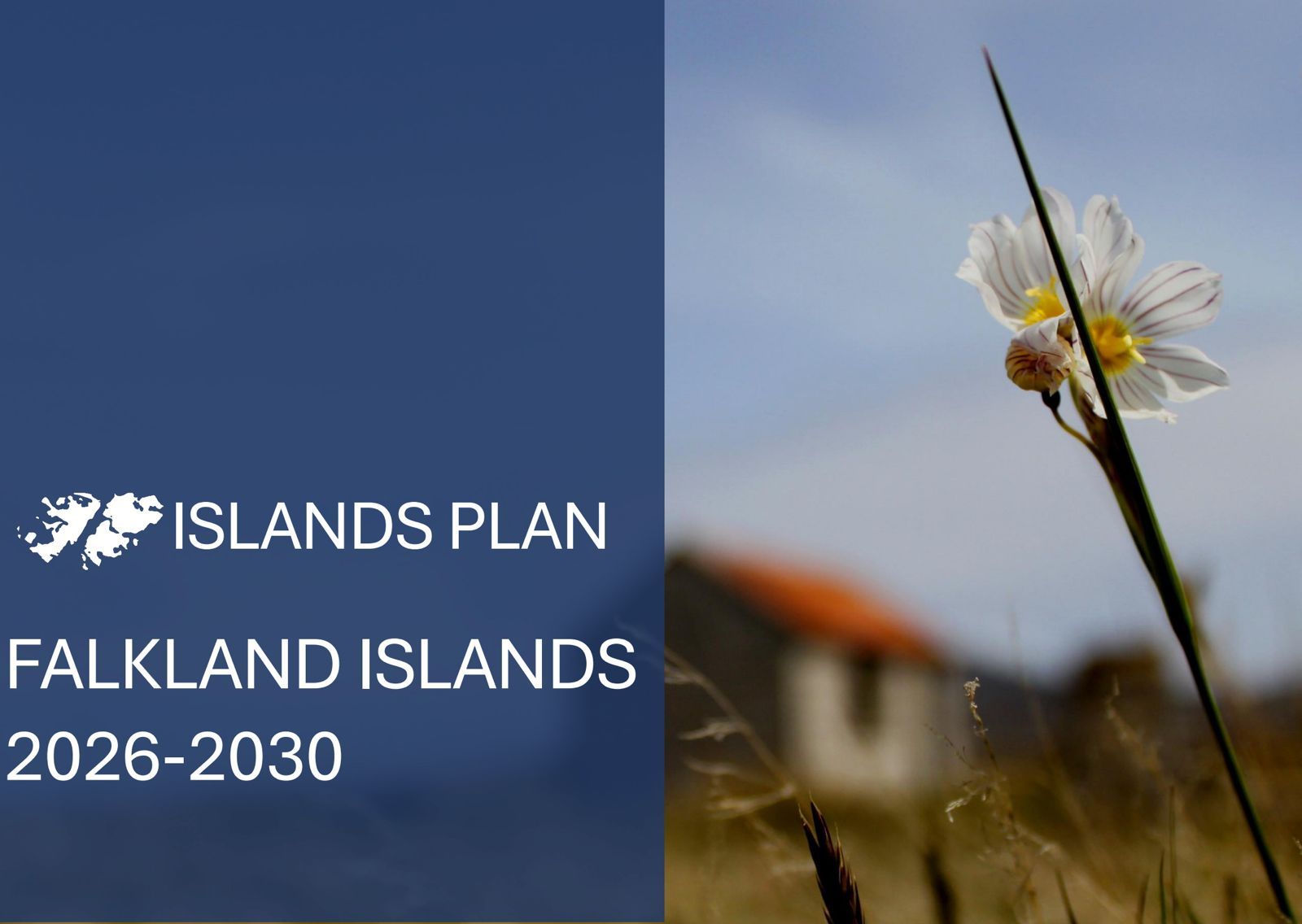
Islands Plan 2026-2030 by MercoPress

Top Comments
Disclaimer & comment rulesNo comments for this story
Please log in or register (it’s free!) to comment. Login with Facebook