MercoPress. South Atlantic News Agency



Paraguay’s Santiago Peña tenders his resignation, but Congress presses ahead with impeachment
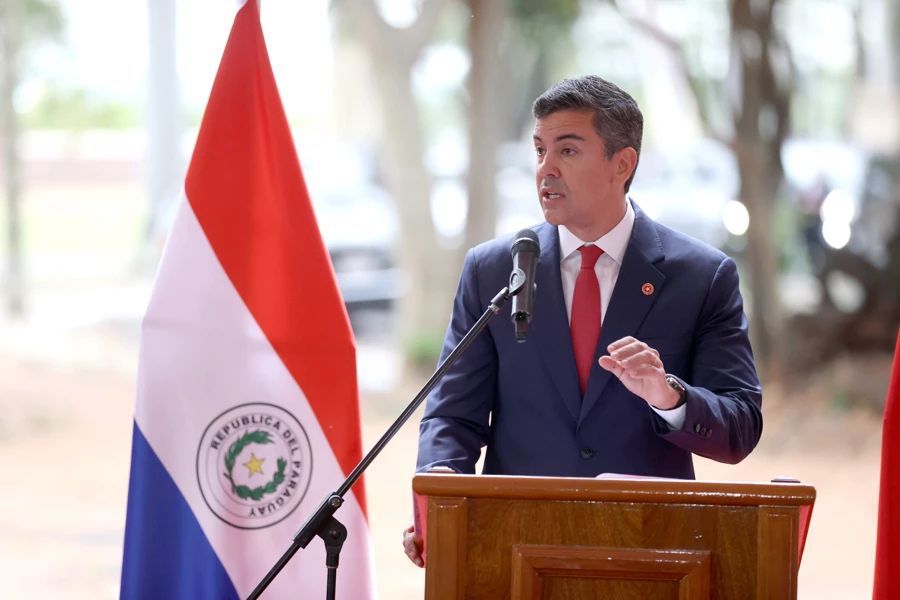 “I have decided to submit my resignation from the Presidency of the Republic. I do so with the stability of our country, social peace and the need to preserve our democratic institutions,” Peña said
Paraguayan President Santiago Peña tendered his resignation on Thursday, cornered by the collapse of Ueno Bank, but minutes later the Chamber of Deputies unanimously voted to impeach him, in an attempt to prevent him from taking up a lifetime Senate seat with immunity from prosecution once he leaves office. The final decision rests with the Senate.
“I have decided to submit my resignation from the Presidency of the Republic. I do so with the stability of our country, social peace and the need to preserve our democratic institutions in mind,” Peña said in a video posted on social media as deputies debated the charges. “My greatest wish is that the return of those funds is guaranteed,” he added, referring to the frozen savings of nearly three million of the bank’s customers. Interior Minister Enrique Riera formally submitted the resignation to Congress at around 1.30 p.m.
Less than an hour later, all 78 deputies present approved the impeachment charges, which now go to the Senate, where a two-thirds majority is needed to remove the president. The chamber rejected impeachment proceedings against Vice President Pedro Alliana, who would take over the presidency until the end of the term on August 15, 2028.
Mensaje del Presidente de la República, Santiago Peña, al pueblo paraguayo. https://t.co/RBz6IfFV9L
— Santiago Peña (@SantiPenap) November 5, 2026
The dispute is also constitutional. Under the Constitution, Congress must accept or reject a president’s resignation; if it accepts, Peña would become a senator for life, with parliamentary immunity. If the Senate removes him through impeachment, he would lose that protection. A session of Congress called to consider the resignation was suspended for lack of a quorum, so for now Peña formally remains president, according to Argentina’s La Nación.
Peña’s downfall accelerated when his own party withdrew its support. Former President Horacio Cartes, head of the ruling Colorado Party and for years his main political backer, endorsed the impeachment. “We will not side with the plundering of public and private funds and of pensioners,” he said. According to El País, prosecutors announced they were opening proceedings against Peña, and opposition lawmakers expanded a criminal complaint alleging illicit enrichment, money laundering and influence peddling, among other offences, which also targets Economy Minister Óscar Lovera, former Central Bank president Carlos Carvallo and other officials. No formal charges have yet been brought against the president.
The crisis erupted on Tuesday, when the Central Bank took over Ueno Bank, the country’s largest digital bank by customers, over insolvency and irregular loans to companies owned by its owners, the Vázquez Group, and froze its deposits, including hundreds of millions of dollars of public and pension funds. The bank’s president and other executives were detained. Thousands of savers took to the streets of Asunción demanding their savings and the president’s resignation. On Wednesday, Peña signed a law to speed up deposit guarantee payouts and proposed Raúl Vera Bogado to head the Central Bank, but failed to stem the crisis.
Carvallo, whom Peña appointed Central Bank president in 2023, had been chief executive of Ueno Bank, and Peña himself was a shareholder in Ueno Holding until April 2025. On the eve of the takeover, Alliana had publicly distanced himself from the president.
Peña, a 47-year-old economist who took office in August 2023, becomes the second Paraguayan president since the return to democracy in 1989 to face impeachment proceedings reaching the Senate; in 2012, the Senate removed Fernando Lugo in a fast-track process.


Top Comments
Disclaimer & comment rulesNo comments for this story
Please log in or register (it’s free!) to comment. Login with Facebook