MercoPress. South Atlantic News Agency



EU-Mercosur deal, six months on: winners, losers and the question mark over Europe’s top court
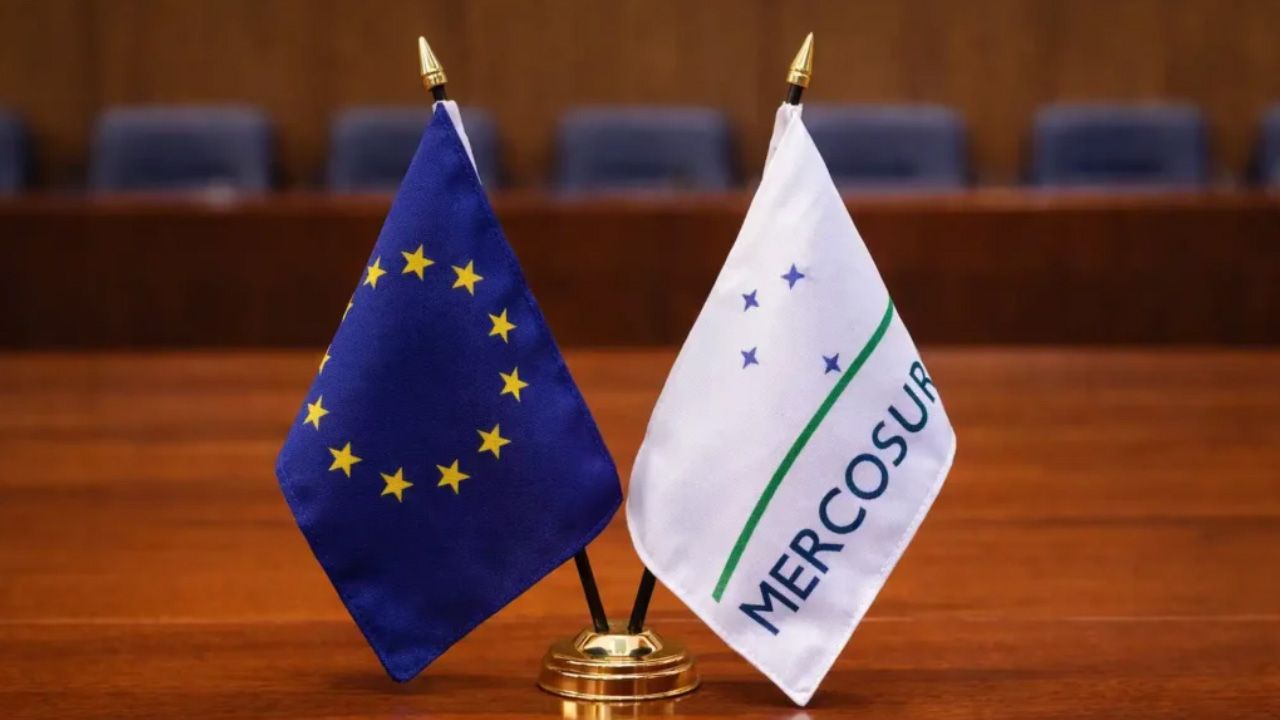 Supporters highlight tariff savings of about €4 billion and a market of more than 700 million consumers
Six months after it began to apply provisionally, the trade agreement between the European Union and Mercosur, made up of Argentina, Brazil, Paraguay and Uruguay, combines projected benefits for both blocs, opposition from part of Europe’s farming sector and a legal question mark: the opinion of the EU Court of Justice on its legality, which could take until early 2028.
The interim trade agreement, signed in January, has applied since May 1 and covers trade and investment liberalisation. Mercosur will gradually eliminate tariffs on 91% of imports from the EU and the EU on 92% of those from Mercosur. The European Commission specified that it applies to those South American countries that completed their ratification. The broader, political Association Agreement must be ratified by all 27 member states. On January 21, the European Parliament voted 334 to 324 to ask the court to review the deal. The Commission then said those doubts were unjustified, and provisional application continues in the meantime.
Supporters highlight tariff savings of about €4 billion and a market of more than 700 million consumers. BBVA Research estimates that bilateral trade will grow by 40% by the end of the 16-year implementation period. For Mercosur, the estimates cited by the newspaper point to a boost of up to half a percentage point of GDP in Argentina and one and a half in Brazil.
There are also sectors set to lose. According to BBVA Research economist Juan Ruiz, in Europe these will be extensive beef farming, sugar and bioethanol, and in Mercosur, industry and manufacturing. The agreement provides for closed quotas for beef and poultry, safeguards if prices fall by more than 5% and a €45 billion reserve to compensate European farmers. Ruiz acknowledges that these protections “distort the market”, but give time to adapt. Spanish farming organisation ASAJA argues that one cannot speak of “fair competition” while agreements are signed with countries that do not fully guarantee compliance with EU standards.
That debate was revived on September 3, when the Commission suspended imports of meat, eggs and honey from Brazil over antibiotic use incompatible with EU rules, pending an audit. For the specialists consulted, the measure shows that protection works. “There has been a lot of misinformation in the farming sector, which is the most protected in the world and has nothing to fear,” said Juan Moscoso del Prado of EsadeGeo.
Legal uncertainty worries businesses. “The uncertainty arising from the agreement’s legal status remains, which for now prevents companies from planning,” said Mar Guardiola, head of tax at Andersen. Her colleague Rafael Ripoll recalled that annulment has not been sought, only an opinion on three aspects, and that the formula of splitting the treaty in two was already used with the agreement with Canada.
On the geopolitical front, Moscoso del Prado considers it a deal “clearly alternative to the model imposed by both the US and China”. Experts concede that it arrives late, as China leads in goods trade, but argue it is not obsolete.


Top Comments
Disclaimer & comment rulesNo comments for this story
Please log in or register (it’s free!) to comment. Login with Facebook