MercoPress. South Atlantic News Agency
Tag: China
-
Friday, September 25th 2026 - 09:37 UTC
Trump and Xi end the state visit with the trade truce extended and no substantive deals
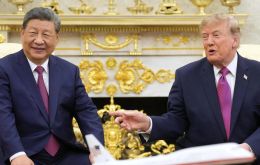
Chinese President Xi Jinping's state visit to Washington ended on Thursday with a two-month extension of the bilateral trade truce, agreed before the meeting itself, and no progress on the central issues dividing the two powers: tariffs, rare earths, agricultural purchases, Taiwan and export restrictions on advanced chips.
-
Tuesday, September 15th 2026 - 07:39 UTC
Trump rejects calls to regulate AI and targets Anthropic's CEO
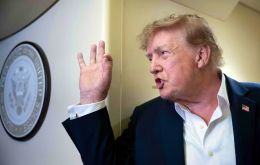
U.S. President Donald Trump on Monday rejected calls from the technology industry to slow the development of artificial intelligence, asserting that his administration holds broad criminal and regulatory powers over those companies.
-
Wednesday, September 2nd 2026 - 21:22 UTC
China's embassy accuses a senior Argentine official of spreading “rumours” about the Nepal flood

China's embassy in Buenos Aires has accused an official in Javier Milei's government of spreading “malicious rumours” and seeking to “stain the international image” of the Asian country, after he attributed to a Chinese state company responsibility for the flood that devastated the border corridor between Nepal and Tibet on August 26.
-
Thursday, August 27th 2026 - 21:00 UTC
More than 390 bodies recovered and nearly 1,500 unaccounted for after the Nepal Himalaya flood
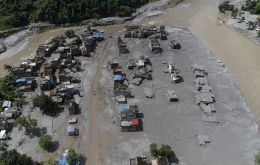
Rescue teams have recovered at least 389 bodies in Nepali territory and three more in China's Tibet region, while close to 1,500 people remain unaccounted for after the flood that swept down Himalayan valleys on Wednesday along the border between the two countries. A Nepali police spokesman told the Reuters news agency the death toll would continue to rise as relief work advances.
-
Wednesday, August 26th 2026 - 16:46 UTC
Twelve Britons are among travellers unaccounted for after the flood on Nepal's border
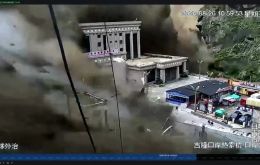
Twelve British citizens appear on a provisional list of travellers Nepali authorities have been unable to contact following the flash flood and landslides that struck the border corridor between Nepal and Tibet on Wednesday. The country's tourism board included hundreds of people on that register, among them 105 Indian nationals, three Americans, one Australian and one Dutch citizen, as well as Nepalis.
-
Saturday, August 8th 2026 - 07:00 UTC
China will have the largest embassy in London, the former Royal Mint

The UK High Court on Friday threw out a challenge against UK authorities' decision to permit a new Chinese super embassy in central London. The challenge was brought by a neighborhood group called the Royal Mint Court Residents' Association (RMCRA), which represents families and businesses in roughly 100 properties around the planned embassy site.
-
Friday, July 17th 2026 - 10:00 UTC
Trump accuses China of meddling in 2020 election, though intelligence findings say otherwise
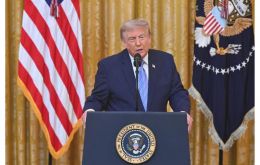
US President Donald Trump accused China of interfering in the 2020 presidential election and of having the complicity of officials who, he said, concealed that information. He did so on Thursday night in a primetime address to the nation from the White House, announcing the declassification of documents that he claimed reveal vulnerabilities in the US electoral system.
-
Thursday, July 2nd 2026 - 09:55 UTC
A Spanish investigation tracks how Asia's squid fleet is upending the South Atlantic market

An international investigation published by the Spanish newspaper El Confidencial, with an extensive interactive report, describes how the expansion of Asian fishing fleets in international waters —mainly Chinese— has transformed the global market for frozen squid, with a direct impact on the European fleet and consequences for fishing in the South Atlantic, one of the main sources of income for the Falklands.
-
Sunday, June 21st 2026 - 21:25 UTC
Report says Chinese firms control nearly two-thirds of the squid fleet in Argentina's waters
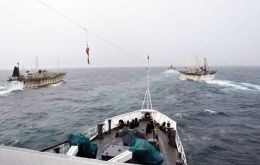
Companies of Chinese origin own 63.1% of the jigger fleet that, under the Argentine flag, fishes squid inside Argentina's Exclusive Economic Zone, according to a report by illegal-fishing and marine-conservation researcher Milko Schvartzman, published by the outlet Infobae. The study states that 53 of the 84 jigger vessels that catch the species under the national flag have Chinese companies as owners or “beneficial owners,” based on satellite observations from Global Fishing Watch and the translation of official Chinese documents.
-
Thursday, June 4th 2026 - 10:40 UTC
US proposes forced-labor tariffs on 60 economies, with Brazil and China facing 12.5%
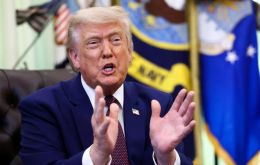
The US government proposed tariffs of up to 12.5% on 60 economies —59 countries and the 27-nation European Union— for failing to ban or effectively enforce the prohibition on imports of goods made with forced labor. The measure, announced Tuesday night by Trade Representative Jamieson Greer, relies on Section 301 of the 1974 Trade Act and is the White House's most ambitious step yet to rebuild its tariff policy.

