MercoPress. South Atlantic News Agency
Tag: First Capital Command (PCC)
-
Tuesday, May 12th 2026 - 23:32 UTC
Lula seeks his own security recipe to counter Brazilian right wing's tough-on-crime narrative
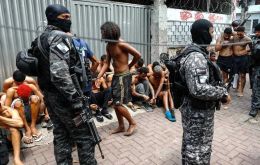
Brazilian President Luiz Inácio Lula da Silva on Tuesday unveiled in Brasília a public security plan worth around USD 2.25 billion aimed at weakening the finances of organized crime, regaining control of prisons, curbing arms trafficking, and improving homicide investigations, five months ahead of October's presidential election. The package is designed to give the government a distinct identity on one of the issues where public opinion sees the ruling party at its weakest against the right wing's punitive narrative.
-
Friday, February 6th 2026 - 17:37 UTC
Tunnel under Montevideo’s historic district foils bank raid plot, raises regional crime links
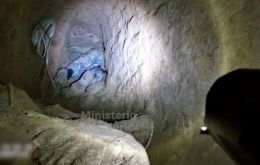
According to the Interior Ministry, the plot relied on a commercial premises leased in mid-2025, from which an access point was allegedly opened into the sewers to advance toward a nearby financial institution. The broader investigation began on September 11 with an anonymous tip about a suspected drug-selling point in Neptunia, in Canelones, and expanded as investigators tracked a network with logistical presence in Montevideo.
-
Thursday, April 25th 2024 - 09:37 UTC
Four Paraguayan prison inmates dead in rival gang clash
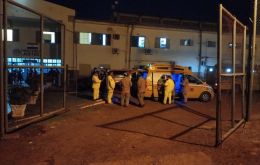
Clashes between inmates belonging to the autochthonous Rotela Clan and Brazil's First Capital Command (PCC) left four of them dead and three others wounded Wednesday at the Regional Penitentiary in Pedro Juan Caballero, in the Paraguayan department of Amambay. A team of the National Police's Special Operations Group (GEO) and the riot squad were deployed to restore normalcy.
-
Wednesday, March 13th 2024 - 09:08 UTC
Drug trafficking gangs: Brazil's PCC operating in Chile
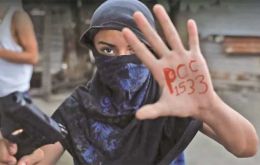
Following a confession from a Chilean prison inmate, it was determined that São Paulo's notorious First Capital Command (PCC) had expanded its operations, it was reported in Santiago. In addition, raids in correctional facilities in Brazil detected communications further corroborated the news since proof of communications between the two countries was detected.
-
Monday, November 27th 2023 - 08:07 UTC
Brazilian drug gang goes global, The Economist reports
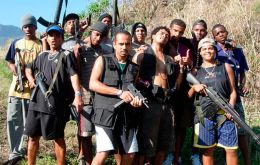
According to an article in The Economist last week, Brazil's largest drug gang now has links throughout Europe. The First Capital Command (PCC), a gang officially born after a deadly football match between prison inmates in São Paulo in August 1993, has grown to some 40,000 life members and another 60,000 “contractors,” which would make it one of the world's largest criminal groups.
-
Wednesday, August 7th 2019 - 08:30 UTC
Brazilian police in major operation against the country's most powerful gang
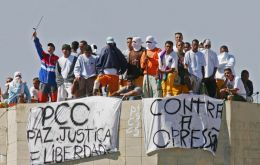
Brazilian police on Tuesday carried out a major operation against the First Capital Command (PCC) gang, in the latest attempt to try to hobble the country’s most powerful and sophisticated organized crime group.