MercoPress. South Atlantic News Agency
Tag: hantavirus
-
Tuesday, May 12th 2026 - 02:27 UTC
Labs across three continents confirm passenger-to-passenger spread on hantavirus cruise

A comparative genomic analysis of five people infected aboard the polar cruise ship MV Hondius has confirmed that the hantavirus spread from passenger to passenger during the voyage, according to a study published on the open scientific platform Viriological and produced jointly by laboratories in South Africa, Switzerland, and the Netherlands. The scientific finding supports the hypothesis handled since the outbreak began, which has left ten people infected and three dead, and completes the epidemiological picture after weeks of investigation.
-
Sunday, May 10th 2026 - 17:08 UTC
British paratroopers drop onto Tristan da Cunha to treat suspected hantavirus case

A British military team parachuted onto Tristan da Cunha on Saturday, the United Kingdom's most remote overseas territory, to assist a British national suspected of contracting hantavirus, in the first humanitarian operation of its kind carried out by the British Armed Forces. The island, home to 221 residents, has no airstrip and is normally accessible only by sea.
-
Saturday, May 9th 2026 - 06:43 UTC
Tenerife braces for race-against-time operation to evacuate 140 from MV Hondius
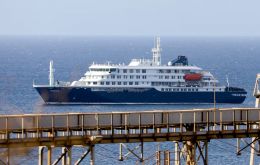
Spain faces a complex international operation in Tenerife on Sunday to evacuate the passengers and crew of the cruise ship MV Hondius, struck by a hantavirus outbreak that has left three dead and five laboratory-confirmed cases among the eight identified by the World Health Organization. The Dutch-flagged vessel, carrying more than 140 people and one body still on board, will anchor off the port of Granadilla between 3:00 and 5:00 a.m. local time.
-
Friday, May 8th 2026 - 15:40 UTC
Ushuaia landfill scrutinized in cruise ship hantavirus outbreak probe

Seven kilometers from downtown Ushuaia, the municipal landfill serving Argentina's southernmost city has become one of the focal points of the epidemiological investigation into the hantavirus outbreak aboard the MV Hondius cruise ship. Health teams are searching the site for traces of infected rodents. The landfill is frequented by birdwatchers from around the world, drawn by species such as the white-throated caracara, a scavenger bird endemic to the region.
-
Wednesday, May 6th 2026 - 16:10 UTC
WHO confirms Andes strain in MV Hondius outbreak and traces 23 passengers who disembarked at Saint Helena
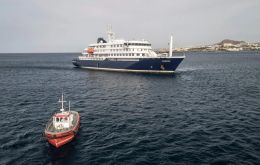
The World Health Organization (WHO) confirmed on Wednesday that the variant responsible for the hantavirus outbreak aboard polar cruise ship MV Hondius is the Andes virus, the only documented strain capable of human-to-human transmission, raised the total number of linked cases to eight, and launched the international tracing of 23 passengers who left the ship two weeks ago during a stop at the island of Saint Helena. The confirmation of the strain represents a significant epidemiological development and substantially widens the scope of the health investigation.
-
Tuesday, May 5th 2026 - 22:18 UTC
Falklands monitor MV Hondius hantavirus outbreak and clarify the route did not include the islands
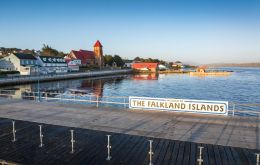
The Falkland Islands Government issued an official statement on Tuesday confirming that it is closely monitoring the hantavirus outbreak aboard the polar cruise ship MV Hondius — a vessel that frequently operates in the archipelago's waters — and took the opportunity to correct information reported by some international media outlets suggesting that the ship had stopped at the islands on its current voyage from Ushuaia. The Falkland Islands Maritime Authority clarified that this information is incorrect and that the Hondius's most recent visit to the archipelago was in mid-February, weeks before the journey that triggered the current health crisis.
-
Tuesday, May 5th 2026 - 21:58 UTC
Spain agrees to receive hantavirus-hit cruise ship in Canary Islands following WHO request
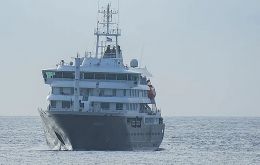
The Spanish government on Tuesday night authorised the docking in the Canary Islands of the polar cruise ship MV Hondius, on which a hantavirus outbreak has already left three people dead, after Cape Verdean authorities denied it entry to their ports and following a formal request from the World Health Organization (WHO) that invoked Spain's “moral and legal obligation” to assist the 147 passengers and crew on board, including 14 Spanish citizens.
-
Tuesday, May 5th 2026 - 03:23 UTC
Cape Verde denies docking to hantavirus-hit cruise ship as WHO confirms seven cases
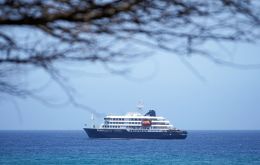
Cape Verde's health authorities on Monday denied permission to dock at the port of Praia to polar cruise ship MV Hondius, on board which the World Health Organization (WHO) has confirmed seven cases of hantavirus — two of them laboratory-verified — and three deaths linked to the voyage. The decision leaves the nearly 150 people remaining on board in prolonged isolation in Atlantic waters, while medical evacuations are coordinated for patients in the most serious condition and authorities evaluate the possibility of continuing the journey toward the Canary Islands, on Spanish territory.
-
Monday, May 4th 2026 - 01:45 UTC
Three dead in hantavirus outbreak aboard polar cruise ship from Ushuaia bound for Cape Verde
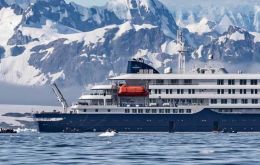
The World Health Organization (WHO) confirmed three deaths on Sunday aboard the polar cruise ship MV Hondius from a hantavirus outbreak, a disease typically transmitted through rodents. The vessel, operated by the Dutch company Oceanwide Expeditions, had set sail from the port of Ushuaia, in Argentina's Tierra del Fuego province, on March 20, bound for the port of Praia in Cape Verde, where its journey was scheduled to conclude on May 4.
-
Friday, January 25th 2019 - 10:07 UTC
Hantavirus outbreak in Argentine Patagonia: WHO news alert
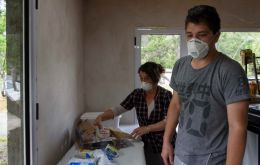
At least eleven people have died in Argentina after becoming infected with hantavirus, a disease carried by rats and other rodents, according to a news alert from the World Health Organization (WHO).

