MercoPress. South Atlantic News Agency
Tag: Ivan Cepeda
-
Saturday, August 8th 2026 - 07:52 UTC
De la Espriella sworn in before Congress in Cali, delivers first speech to the military
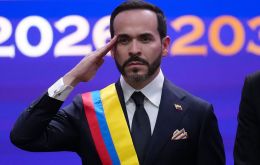
Abelardo de la Espriella took office as president of Colombia in Cali on Friday, the first time a Colombian leader has been sworn in outside Bogotá, and delivered his first speech at an Army battalion rather than before Congress, breaking with the country's institutional tradition.
-
Monday, July 6th 2026 - 20:14 UTC
Petro rejects Colombia election result, backs legal bid to annul De la Espriella win
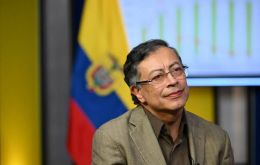
Colombia's outgoing president, Gustavo Petro, reiterated on Sunday that he does not recognize the legitimacy of the incoming government of Abelardo de la Espriella, insisting that the June 21 presidential runoff was marked by fraud — an accusation he has not backed with public evidence and which is contradicted by international observers and the official vote count itself.
-
Tuesday, June 30th 2026 - 22:19 UTC
Cepeda threatens 'civil disobedience' unless Colombia's president-elect renounces US citizenship

Left-wing senator Iván Cepeda, who lost Colombia's presidential runoff, announced on Tuesday that he will resort to “peaceful civil disobedience” against the incoming government of Abelardo de la Espriella if the president-elect does not renounce his US citizenship and clarify a series of questions before taking office on August 7. The Pacto Histórico leader, from the party of outgoing President Gustavo Petro, urged his voters to join the measure, which he described as not recognizing the new president's authority.
-
Monday, June 22nd 2026 - 13:24 UTC
De la Espriella gives a victory speech vowing unity as Cepeda awaits the final tally

Right-wing candidate Abelardo de la Espriella delivered a victory speech on Sunday in Barranquilla, in which he proclaimed himself the winner of Colombia's presidential runoff according to the preliminary count and called for national unity, while the official tally remained under way and his rival, left-wing senator Iván Cepeda, conditioned recognition of the result on the definitive count.
-
Monday, June 22nd 2026 - 04:30 UTC
De la Espriella wins Colombia's presidency in the preliminary count as Cepeda awaits the tally

Right-wing criminal lawyer Abelardo de la Espriella won Colombia's presidency, according to the preliminary count by the Registraduría, defeating left-wing senator Iván Cepeda by less than a point in the closest runoff in the country's history. With about 99.9% of the tables processed, De la Espriella took 49.66% of the vote against Cepeda's 48.70%, a difference of some 250,000 ballots. The governing-coalition candidate acknowledged the preliminary count but warned that he would not accept the result until the definitive tally, and challenged 33,000 of the 120,000 polling tables; President Gustavo Petro said that “neither can proclaim himself president.”
-
Friday, June 19th 2026 - 10:47 UTC
De la Espriella leads Colombia's runoff with contained triumphalism as Cepeda hopes for a late surge

Right-wing lawyer Abelardo de la Espriella heads into Colombia's presidential runoff, set for this Sunday, June 21, as the favorite, though with contained triumphalism, while left-wing senator Iván Cepeda trusts that a late push can still overturn the result. Both campaigns sense the election is closer than the polls reflect.
-
Friday, June 12th 2026 - 21:19 UTC
Colombia's far right eyes landslide amid fears Petro will reject runoff result

The campaign of Colombian presidential candidate Abelardo de la Espriella, of the far-right Defenders of the Homeland movement, is aiming for a decisive win in the June 21 runoff to shield the outcome from possible challenges, his campaign chief said.
-
Tuesday, June 9th 2026 - 07:44 UTC
Colombia's runoff: a united right behind De la Espriella faces a divided left

The first of the three campaign weeks ahead of Colombia's presidential runoff, set for June 21, has been marked by a contrast: a right that had failed to unite for the first round ended up aligned behind far-right candidate Abelardo de la Espriella, while the left of Senator Iván Cepeda and President Gustavo Petro has struggled to coordinate its effort. De la Espriella was the most-voted candidate on May 31, with 43.74% against Cepeda's 40.90%.
-
Monday, June 1st 2026 - 07:07 UTC
Colombia: far-right De la Espriella advances first to runoff as Petro disowns results

Far-right lawyer Abelardo de la Espriella took first place in the first round of the Colombian presidential elections held on Sunday, in a result that contradicted all previous polls and immediately opened an institutional crisis. With 99% of polling stations counted in the preliminary tally, De la Espriella, of the Defensores de la Patria movement, reached 43.7% of the vote —some 10.3 million ballots—, while leftist senator Iván Cepeda, of the ruling Pacto Histórico, obtained 40.9% with 9,649,081 votes. The runoff will be held on 21 June and the inauguration is scheduled for 7 August.
-
Sunday, May 31st 2026 - 19:30 UTC
Leftist Iván Cepeda leads in early bulletins of Colombia's presidential first round

Leftist senator Iván Cepeda, candidate of the ruling Pacto Histórico coalition, was leading on Sunday in the early bulletins of the count in the first round of Colombia's presidential elections, in which the electorate was to choose the successor of current President Gustavo Petro. With just 1% of the polling stations counted, according to data released by the National Registry Office, Cepeda was obtaining around 47% of the votes, followed by far-right lawyer Abelardo de la Espriella, of the Defensores de la Patria movement, with close to 40%. Right-wing uribista senator Paloma Valencia, of the Centro Democrático, registered around 6%. The effective electoral turnout will be known over the coming hours, in a country with more than 41 million eligible voters and a long historical pattern of high abstention.