MercoPress. South Atlantic News Agency


Argentina-US deal shakes up Uruguay
 “We don't have to take any position,” Lubetkin said
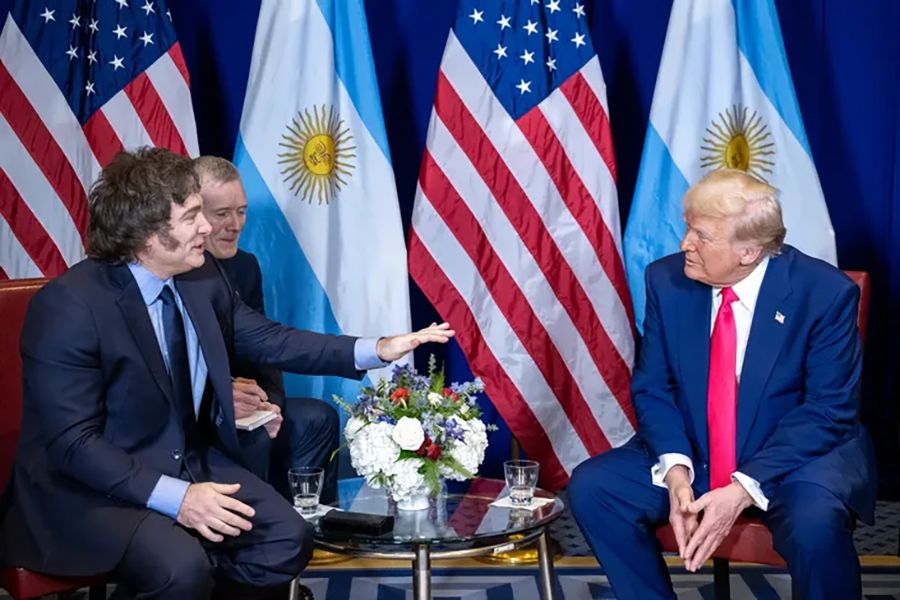
 The recent announcement by Washington and Buenos Aires of a joint trade agreement has generated controversy in Montevideo, where it is perceived as a violation of the Southern Common Market (Mercosur) rules, so the government of President Yamandú Orsi will monitor the case closely.
In this regard, Orsi plans to meet with the US Ambassador Lou Rinaldi on Saturday to discuss the matter, while Foreign Minister Mario Lubetkin will travel to Argentina next week for further talks with the Libertarian administration.
“We don't have to take any position,” Lubetkin said. “It's an agreement between two legitimate countries with whom we have extraordinary relations. We need to understand it a little better. What we've seen in the media is biased,” he clarified.
“Our position is that if it helps other countries and does not affect us, it is welcome. And we are keeping our ears open to see how it can be useful for our own economic development,” he added, noting that the Economy Ministry would evaluate the agreement to see what opportunities it brings for Uruguay.
However, Ignacio Bartesaghi, a Foreign Relations PhD holder at the Catholic University of Uruguay (UCU), told Ámbito that the initiative would directly affect Montevideo's exports and create internal friction within Mercosur, just one month before the virtual signing of the trade deal with the European Union (EU). In addition, Argentina approached the US unilaterally, without consulting with the other Mercosur members, the expert explained.
The case has rekindled the question debated during Luis Lacalle Pou's presidency (2020-2025) of whether Uruguay should resume its flexibilization strategy and seek deals on its own.
Bartesaghi noted that Argentina ”will grant preferences within the framework of the exceptions to the Common External Tariff (CET) that were approved months ago“ and considered that this ”represents an advantage over its Mercosur partners and could have an impact, such as improving access conditions for its meat.“
The specialist noted that [US President Donald] ”Trump is proposing preferential trade based on partners with a strong ideological component,“ adding that ”Uruguay feels uncomfortable in this situation because it does not intend to develop its trade strategy based on ideologies.“
Regarding the agricultural sector, Bartesaghi admitted: ”I imagine there is concern within the sector because there is a new price floor for meat in China, and Uruguay has offset this with a significant market in the United States.” Bartesaghi further foresaw the agreement reverberating across European anti-Mercosur FTA nations, such as France. He concluded that Uruguay should resume its stance of flexibilization, particularly ahead of Orsi's upcoming trip to China.


Top Comments
Disclaimer & comment rulesCommenting for this story is now closed.
If you have a Facebook account, become a fan and comment on our Facebook Page!