MercoPress. South Atlantic News Agency
Tag: Javier Milei
-
Thursday, October 22nd 2026 - 13:35 UTC
Milei hopes to exploit the Falklands’ oil dispute in next year’s election
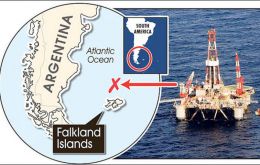
By Vicky Kapogianni Associate Professor of International and Environmental Law, University of Reading - Argentina is trying to stop a planned oil project near the Falkland Islands. On October 13, the government asked the International Tribunal for the Law of the Seas (Itlos), a court in Hamburg that deals with disputes over the sea, to halt the project. Argentina says the UK approved the drilling without its agreement and in breach of Argentina’s rights to the seabed.
Add your comment! -
Thursday, October 22nd 2026 - 00:07 UTC
Milei says Argentina will pursue the Falklands diplomatically: “We do not believe in military solutions”

Argentine President Javier Milei said in Madrid on Wednesday that he is confident of recovering the Falklands through diplomacy and repeated three times that his government “does not believe in military solutions”, amid an escalating dispute with the United Kingdom over the Sea Lion oil project.
3 comments -
Wednesday, October 21st 2026 - 14:31 UTC
Milei calls Sánchez an “unpresentable dictator” in Madrid in the middle of Spain’s election campaign

Argentine President Javier Milei on Wednesday called Spanish Prime Minister Pedro Sánchez an “unpresentable dictator”, “corrupt” and “authoritarian”, and urged Spaniards to “kick the socialists out” of power, at his first public event in Madrid, just over a month before the snap general election on November 29.
1 comment -
Tuesday, October 20th 2026 - 15:29 UTC
Milei calls Lula a “leftist thief” and says he hopes he will not “steal” Brazil’s election

Argentine President Javier Milei attacked his Brazilian counterpart Luiz Inácio Lula da Silva again on Tuesday, accusing him of a “dirty campaign” and saying he hoped Lula would not try to “steal” Sunday’s presidential runoff, in which he faces Senator Flávio Bolsonaro, whom Milei has publicly backed.
Add your comment! -
Tuesday, October 20th 2026 - 09:47 UTC
Milei arrives in Madrid mid-campaign and will meet Ayuso but not Sánchez

Argentine President Javier Milei flew to Madrid on Monday night on his third visit of the year to Spain and his seventh since taking office, in the middle of the campaign for the snap general election on November 29. His agenda includes a meeting with the president of the Madrid regional government, Isabel Díaz Ayuso, of the People’s Party, but, as on previous visits, no meeting with Spanish Prime Minister Pedro Sánchez.
Add your comment! -
Monday, October 19th 2026 - 19:46 UTC
Argentina spent US$445 million on weapons and military equipment under Milei

Argentina’s government spent some US$445 million on weapons, military and security equipment from when Javier Milei took office in December 2023 to August 2026, according to an analysis by the newspaper Infobae based on the state’s official procurement system and agreements signed with other countries. The figure already exceeds what was invested during the full terms of Alberto Fernández and Mauricio Macri.
Add your comment! -
Sunday, October 18th 2026 - 21:56 UTC
US fears Falklands-related sanctions could hit American companies
The US government has conveyed to Javier Milei’s administration its concern that the National Sovereignty Defence bill, which toughens sanctions against those involved in exploiting resources in the Falklands, could reach American companies, the Argentine newspaper Clarín reported, citing unnamed officials in Washington.
1 comment -
Thursday, October 15th 2026 - 20:59 UTC
Argentina’s bill toughening sanctions over Sea Lion stalls in Congress
The National Sovereignty Defence bill, with which Javier Milei’s government seeks to toughen sanctions against those involved in exploiting resources in the Falklands, failed to secure committee approval in the Chamber of Deputies and will not reach the special session planned for October 21, according to the Argentine press. The opposition is demanding that the text, which besides sanctions reforms security, defence and intelligence, be split.
1 comment -
Monday, October 12th 2026 - 08:56 UTC
Lawyers and opposition challenge Milei’s citizenship-by-investment scheme as unconstitutional

The citizenship-by-investment programme launched by Javier Milei’s government, which allows foreigners to obtain Argentine nationality in exchange for a US$350,000 contribution to the Treasury or the purchase of a US$800,000 bond, faces challenges from constitutional lawyers and from the opposition, which is trying to block it in Congress.
-
Thursday, October 8th 2026 - 08:18 UTC
What could happen when Argentina's Sea Lion ultimatum to the UK expires

The two-week deadline Argentina gave the United Kingdom to halt the Sea Lion oil project in the North Falklands basin expires around October 12. Its expiry will not in itself suspend the project or establish a British breach of the United Nations Convention on the Law of the Sea, according to a legal analysis published by specialist site Diplomacy & Law.