MercoPress. South Atlantic News Agency
Tag: Javier Milei
-
Thursday, September 3rd 2026 - 17:38 UTC
Trump hints he would not back the UK and doubts its “capacity” to retake the Falklands
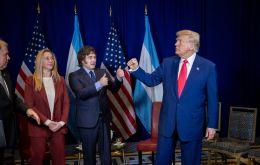
US President Donald Trump has suggested his country would not come to Britain's aid in a possible conflict with Argentina over the Falklands, linking that position to the lack of British support in Washington's war with Iran.
-
Wednesday, September 2nd 2026 - 21:22 UTC
China's embassy accuses a senior Argentine official of spreading “rumours” about the Nepal flood
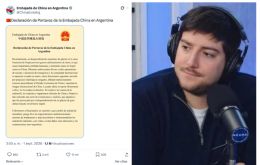
China's embassy in Buenos Aires has accused an official in Javier Milei's government of spreading “malicious rumours” and seeking to “stain the international image” of the Asian country, after he attributed to a Chinese state company responsibility for the flood that devastated the border corridor between Nepal and Tibet on August 26.
-
Wednesday, September 2nd 2026 - 07:50 UTC
The UK dismisses Trump's remarks and reaffirms its sovereignty over the Falklands
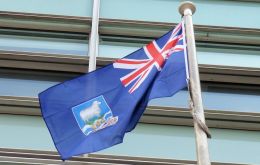
The British government on Tuesday dismissed US President Donald Trump's remarks about a possible review of Washington's position on the Falklands, and reiterated its commitment to the archipelago's status.
-
Tuesday, September 1st 2026 - 17:28 UTC
Milei announces a national address on Thursday over the Falklands claim
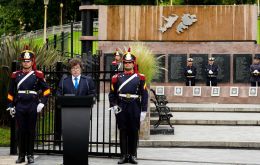
Argentine President Javier Milei announced on Tuesday that he will address the nation on Thursday evening to set out the state of the sovereignty claim over the Falklands, a day after US President Donald Trump said he was reviewing his country's position on the archipelago.
-
Thursday, August 27th 2026 - 08:09 UTC
Argentine lawmakers travel to Brasília to repair relations with Brazil
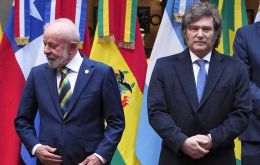
A delegation of Argentine deputies and senators from opposition parties will travel to Brasília next Wednesday with the aim of repairing bilateral relations, strained since President Javier Milei referred to his Brazilian counterpart, Luiz Inácio Lula da Silva, in offensive terms. The group is due to meet the Brazilian Senate's foreign relations committee, the foreign ministry and representatives of the presidency.
-
Monday, August 24th 2026 - 21:26 UTC
Milei links Lula to the case of the Argentine former adviser detained in Bolivia

Argentine President Javier Milei has attributed the criminal case against his former adviser Fernando Cerimedo, detained in Bolivia over an attempted femicide, to a regional plot in which he included Brazilian President Luiz Inácio Lula da Silva, former Bolivian president Evo Morales and Argentine lawmaker Marcela Pagano. He offered no evidence to support the claim.
-
Sunday, August 23rd 2026 - 22:41 UTC
Argentina votes this week on the reform barring the central bank from funding the Treasury
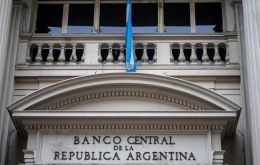
Argentina's Chamber of Deputies will on Wednesday debate the reform of the central bank's charter promoted by Javier Milei's government, which bars the monetary authority from financing the fiscal deficit through money creation and restores preservation of the value of the currency as its sole objective.
-
Friday, August 21st 2026 - 10:10 UTC
Bolivian prosecutors open a second case against the consultant who advised Milei and Paz

Prosecutors in La Paz have opened an investigation on their own initiative into alleged illicit enrichment by Argentine political consultant Fernando Cerimedo, who was charged this week in Santa Cruz with attempted femicide following the shooting of his former partner, lawyer Nadia Beller.
-
Thursday, August 20th 2026 - 08:13 UTC
A judge demands urgent reports from Argentina's government on the fate of road funds
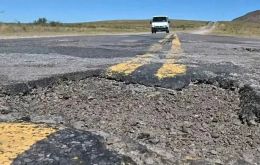
Federal judge Ernesto Kreplak, sitting in La Plata, this week admitted a class action and requested urgent reports from the Ministry of Economy, the National Roads Directorate and Banco Nación on the use of resources from the Integrated Road System (SisVial), a trust fund financed by the tax on liquid fuels whose legal purpose is the construction and maintenance of national highways.
-
Tuesday, August 18th 2026 - 06:52 UTC
Argentina's vice-president says she is “extremely worried” about those who cannot make ends meet
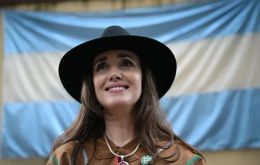
Argentina's vice-president, Victoria Villarruel, has again distanced herself from Javier Milei's government, voicing concern over unemployment and the financial difficulties facing households. “I am extremely worried about Argentines who today have no work or who cannot make ends meet,” she said at the opening of Expo Venado 2026, an agricultural fair in Venado Tuerto, Santa Fe province.

