MercoPress. South Atlantic News Agency
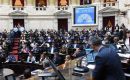


Falklands, Government congratulates newly elected Members of Legislative Assembly
The Falkland Islands Government has congratulated all newly elected Members of the Legislative Assembly following the General Election held on Thursday 11 December, followed by the swearing ceremony. Read full article


Comments
Disclaimer & comment rulesMonkey
Dec 22nd, 2025 - 02:22 pm - Link - Report abuse -1*the first line of your post references 1832 dumbass.*
I'll repeat myself because age is clearly affecting you. You're the only one referring to 1832.
There were NO protests during the Spanish and then Argentine occupation.
The only British protest, and in BAD FAITH, was in 1829.
The only country that didn't request meetings, negotiations, etc., was the United Kingdom.
Argentina was in possession of the islands.
*they all returned to Spain and remained Spanish, the fact Spain administer the islands from BA is irrelevant.*
The fact that Spain administers the islands from Buenos Aires IS relevant:
First: it demonstrates that the islands were in Spain's POSSESSION.
Second: that the islands are NOT British. There were no protests; otherwise, there would have been, right?
*Jewitt, Mistakenly arrived on the islands*
Jewett's comment isn't worth responding to; the taking of possession was a public ceremony that made headlines around the world and was reported by The Times of London.
*Vernet was aware of competing sovereignty claims, as evidenced by his letter to Woodbine Parrish*
As for Vernet, he contacted Woodbine Parrish to bring European settlers to the islands. And on January 3, 1833, the population of Port Soledad was evacuated by the United Kingdom, as proven by Pinedo's passenger list and his testimony in the military trial where he was tried for failing to resist the usurpation.
*Argieland had 22 years to put a thriving population on the islands, and utterly failed*
https://enaun.cancilleria.gob.ar/es/content/discurso-marcelo-luis-vernet
I have refuted you countless times; your aim is not to uncover the truth.
The islands were never British.
The UK after two diplomatic protests, moved to effect the only legal remedy open to it. Which was Argentina's eviction. They can point to at least two Anglo-Spanish treaties that exclude any possibility of an Argentinean legal claim. So in addition the UK has a peace treaty that legally recognises that Argentina has no claim, moreover also a right of conquest that was lawful at that time.
Dec 23rd, 2025 - 06:33 pm - Link - Report abuse +1“In the 19c international law allowed states to acquire territory by conquest ...
It is therefore not surprising that the General Assembly declared in 1970 that the modern prohibition against the acquisition of territory by conquest should not be construed as affecting titles to territory created 'prior to the Charter regime and valid under international law'. Siehr, Conflicts, Indian ”
Akehurst's Modern Introduction To International Law Seventh Revised Edition, Peter Malanczuk
There was a peace treaty, which was acknowledged as such in both the Argentine and the UK in their own archives, the Convention of Settlement, 1850. This is how legal scholars of the day and therefore nations viewed the effects of such a peace treaty to wit:
LAWS OF WAR By H. W. HALLECK, 1866, CHAPTER XXXIV, TREATIES OF PEACE.
§ 12. Principle of uti possidetes. A treaty of peace leaves every thing in the state in which it finds it, unless there be some express stipulations to the contrary. The existing state of possession is maintained, except so far as altered by the terms of the treaty. If nothing be said about the conquered country or places, they remain with the possessor, and his title cannot afterward be called in question. ... ...Treaties of peace, made by the competent authorities of such governments, are obligatory upon the whole nation, and, consequently, upon all succeeding governments, whatever may be their character.
What an utter and complete numpty you are troll, firstly you have refuted nothing, just posted your usual garbage that everyone laughs at, secondly the islands where British before you existed and long before France and Spain tried to steal them playing silly political games, the islands have never been Argentinian. posting your diatribe doesnt make it so, you need counselling and deprogramming, making a fool of yourself day in day out, week after week with your pathetic posts, and has many people have said if you had one shred of evidence that the Islands where not British but Argentinian your governments would have taken it to court decades a go, grow up wise up and wake up,
Dec 24th, 2025 - 01:02 pm - Link - Report abuse 0The UK can rely on the Peace of Utrecht, which explicitly bars any Argentine claim of succession.
Dec 24th, 2025 - 06:51 pm - Link - Report abuse 0“...it is hereby further agreed and concluded, that neither the Catholic King, nor any of his heirs and successors whatsoever, shall sell, yield, pawn, transfer, or by any means, or under any name, alienate from them and the crown of Spain, to the French, or to any other nations whatever, any lands, dominions, or territories, or any part thereof, belonging to Spain in America.”
The Nootka Convention: ”...Article VI provided that neither party would form new establishments on any of the islands adjacent to the east and west coasts of South America then occupied by Spain....... there was an additional secret article which stipulated that Article VI shall remain in force only so long as no establishment shall have been formed by the subjects of any other power on the coasts in question. This secret article had the same force as if it were inserted in the convention.......The United Provinces of the River Plate was not a party to the convention. Therefore it is defined in the convention as 'other power' and the occupation of the settlement (at Port Louis) by subjects of any other power negated Article VI and allowed Great Britain to re-assert prior sovereignty and form new settlements.
http ://en.wikipedia.org/wiki/Nootka_Convention
http://en.wikipedia.org/wiki/User:Apcbg/Nootka_Sound_Convention
*In the 19c international law allowed states to acquire territory by conquest *
Dec 26th, 2025 - 11:46 am - Link - Report abuse 0It is reasonable to suppose that if the mere use or threat of force in the absence of war had been recognized in the nineteenth century as a lawful means of acquiring territory or of establishing a title by conquest, Britain would have appealed to that title as a means of putting an end, once and for all, to the disputed status of the territory... But Britain – contrary to what would have been the advice of some present-day international lawyers – did not put forward the claim of conquest precisely because it had not been at war with Argentina, and war, in the traditional international system, was the only lawful means of acquiring rights to territory by force.
Sharon Korman.
How long will he continue repeating the same nonsense?
Sharon Korman was wrong, as The Caroline “anticipatory self-defense” in international relations, which holds that it may be justified only in cases in which the “necessity of that self-defense ...
Dec 26th, 2025 - 04:41 pm - Link - Report abuse 0https://en.wikipedia.org/wiki/Caroline_affair#
”The Caroline affair (also known as the Caroline case) was an international incident involving the United States, the United Kingdom, and the Canadas which started in 1837 and lasted until 1842.“
Regardless it is post retroactive law as it could be applied after 1842.
”...The rule of the intertemporal law still insists that an act must be characterized in accordance with the law in force at the time it was done, or closely on the next occasion. ...
The Acquisition of Territory in International Law By Robert Yewdall Jennings a Judge of the International Court of Justice from 1982. He also served as the President of the ICJ between 1991 and 1994. So in spite of your typical Argentine propensity for lying your argument is shown for the fraud that it is.
Whereas, Kelsen clearly states “It makes no difference whether the annexation takes place after an occupatio bellica or not.”
Commenting for this story is now closed.
If you have a Facebook account, become a fan and comment on our Facebook Page!