MercoPress. South Atlantic News Agency
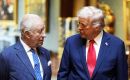


Falklands: Prime Minister Starmer says he is “proud of the bond with the Islands”
British Prime Minister Keir Starmer has sent a Christmas message to the people of the Falkland Islands, as well as to the British forces stationed in the territory. In his message, he also referred to the presence of British troops on the Islands. Read full article


Comments
Disclaimer & comment rulesARGENTINE EXPULSION FROM THE MALVINAS/FALKLAND ISLANDS: REBUTTAL TO A FUTILE ATTEMPT TO REWRITE HISTORY.
Dec 30th, 2025 - 12:51 pm - Link - Report abuse -3**This article was sent to mercopress in response to the Falkland Islands Association article and mercopress refused to publish it.**
Last January 4, an article entitled “The ”Expulsion Myth“ - Argentina's Greatest Historical Falsehood” by the Falkland Islands Association (FIA) was published on the Mercopress’ site. It begins by accusing Argentina of “brainwashing” its population and, apparently, also the United Nations General Assembly, and even blaming the Foreign Office for “having not researched the history of the Falklands properly”. THE MALVINAS/FALKALANDS BEFORE THE BRITISH EXPULSION). After its formal taking of possession of the islands in 1820, Argentina carried out innumerable acts of sovereignty, such as granting land and cattle concessions, appointment of authorities, application of legislation on hunting and fishing. During this period Britain recognized Argentine independence and establish diplomatic relations. Both countries concluded a Treaty of Friendship, Commerce and Navigation in 1825. This implied respect for the sovereign equality of the parties, which includes the respect for their territorial integrity. If Argentina would have violated British territorial sovereignty through its previous acts in the Falklands/Malvinas, that was the occasion for the British government to advance its claim. Yet no reference to the issue was made, simply because the UK did not claim sovereignty over the islands at that time. On June 10, 1829, Argentina created an administrative structure in accordance with the growing importance of its settlement. Thus, it issued decrees to create the Political and Military Command of the Malvinas Islands and the Atlantic Adjacencies of Cape Horn and appointed Luis Vernet as its Political and Military Commander. The islands had never witnessed a similar human development at the time the European colonial powers were present.
”Argentine President Javier Milei insisted on his country's claim to the Malvinas (Falkland) Islands, describing the case as “legitimate and inalienable.”
Dec 30th, 2025 - 02:00 pm - Link - Report abuse +3“For over 50 years prior to the armed conflict of April 2, 1982, Argentina failed to submit thed ispute to a body capable of adjudicating the competing claims.
There is no evidence that Argentina was in any way impeded from taking the issue of sovereignty over the Islands before these courts.
One must conclude that Argentina failed to do so through neglect.
Argentina's failure to use available world courts greatly enhances Great Britain's claim to sovereignty through extinctive prescription.
It is reasonable to assume that Great Britain acquired definitive titleto the Islands at this time. However, in any case, there is little reasonable doubt that Great Britain acquired definitive title to the Islands by prescription before 1982.”
Pamphlet NO. 27-100-107 DEPARTMENT OF THE ARMY; Washington, D.C., Winter 1985
It was the efforts of the new Argentine nation that produced this development and proved the usefulness of the islands. It was the British Empire, with its political, military and economic supremacy, which took advantage of these efforts through the use of force.
Dec 30th, 2025 - 03:09 pm - Link - Report abuse -4British protests of 1829 and 1832
The British protest of 1829, after 55 years of silence in front of a continuous and exclusive Spanish presence in the islands between 1774 and 1811 and the sovereign acts accomplished by Buenos Aires as successor of Spain, was motivated by the wish to put a feet in the South Atlantic. It was belated, limited and made in bad faith. Belated, because the British government knew the previous acts of public authority over the islands carried out by Buenos Aires between 1820 and 1829. Limited, because it is circumscribed to the decree of June 10th, 1829, without protesting against any previous acts. Finally the protest was made in bad faith, because of the grounds invoked, falsely alleging an inexistent Spanish recognition of British sovereignty and ignoring Spain´s continuous presence in the islands until 1811 and Argentina´s subsequent acts.
On September 28th, 1832, a second British protest was made, again only regarding a new decree. It is telling that during 1831-1832 The Argentine and the American governments were openly discussing about actions taken by the Argentine authorities in the islands and the partial destruction of the settlement by an American sailor (the “Lexington incident”) while the British government remained silent during the whole period. Both protests were merely assertive of a claim, without any specific requirement to the Argentine government, let alone any proposal to settle the issue. Not even a single warning about any further British action was included either.
'The British Foreign Secretary at the time, Lord Palmerston, ... ... On 27 July 1849, in reply to a question in the House of Commons, he said:
Dec 30th, 2025 - 04:44 pm - Link - Report abuse +3“... a claim had been made many years ago, on the part of Buenos Ayres, to the Falkland Islands, and had been resisted by the British Government. Great Britain had always disputed and denied the claim of Spain to the Falkland Islands, and she was not therefore willing to yield to Buenos Ayres what had been refused to Spain.” “The withdrawal of His Majesty's forces from these islands, in the year 1774, cannot be considered as invalidating His Majesty's just rights. That measure took place in pursuance of a system of retrenchment, adopted at that time by His Britannic Majesty's Government. But the marks and signals of possession and property were left upon the islands. When the Governor took his departure, the British flag remained flying, and all those formalities were observed which indicated the rights of ownership, as well as an intention to resume the occupation of that territory, at a more convenient season.”
Getting it right: the real history of the Falklands/Malvinas by Graham Pascoe and Peter Pepper
The UK can rely on the Peace of Utrecht, which explicitly bars any Argentine claim of succession.
”...it is hereby further agreed and concluded, that neither the Catholic King, nor any of his heirs and successors whatsoever, shall sell, yield, pawn, transfer, or by any means, or under any name, alienate from them and the crown of Spain, to the French, or to any other nations whatever, any lands, dominions, or territories, or any part thereof, belonging to Spain in America.
Still here boys?
Dec 31st, 2025 - 05:34 am - Link - Report abuse +2Whatever happened to Think?
Chagos Advisory Opinion rather put paid to Argentina's spurious claims, which is why Argentina does like to mention it. Too much reliance on self-determination. Argentina did not gain effective possession of the Islands in the short period they were there (1829-1831 and a few months in late 1832) while the UK has had effective possession for nearly 200 years. If Argentina tried to go to the ICJ they would literally be laughed out of court.
Still, gives you something to do, I suppose. Happy New Year
“Whatever happened to Think?”
Dec 31st, 2025 - 07:24 pm - Link - Report abuse +1I suspect that one of Gauchito Drink's alleged three ex wives may finally caught up with him. Life's funny that way... ;)
I think he writes under his own name on the facebook site Falklands Malvinas Gibraltar Lets settle this, some of the comments are very very similar.
Dec 31st, 2025 - 07:56 pm - Link - Report abuse 0Malvi
Jan 01st, 2026 - 09:16 pm - Link - Report abuse 0Argentina did not inherit anything from Spain, A bunch of Spaniards in Argentina stopped calling themselves Spaniards and started calling themselves Argentine. A bunch of Spaniards on the Falklands continued to call themselves Spaniards and retuned to Spain. Nobody on the islands became Argentine.
You then gibber on about Argentine “authorities” on the islands between 1810-1828, there were none, there we also no “Argentine acts of sovereignty” worthy of the name, and none that stand any scrutiny.
We have discussed Vernets business in depth many times, we know he was well aware of competing sovereignty claims, and he left voluntarily in 1831 anyway.
We know you lie through your teeth about the attempted usurpation of the islands by Argentine militia in October 1832, and then lie that they were forced to leave, even though Pinedos own logs show not a single person was forced to leave who did not already plan to do so. To say that this was “expulsion of Argentine civilians and authorities” just shows how pathetic your argument is.
In summary, if in 1832 Britain was well aware of the absence of any significant “Argentine sovereignty action” and if in October 1832 Argentina attempted to seize the islands by force in full knowledge of the British claim...then Britain allowing the mutinous murdering rapists to leave the island was actually doing Argentina a favour, we would have been well within our rights to sink the Sarandi, just as we were to sink the Belgrano 150 years later.
Your life to date has been spent chasing false myths and legends, and swallowing the poisonous semen of Kohen, it does you no good. Argentina will not have sovereignty of the islands until you can convince the islanders to want it (your president knows this).
Your own behavoiur, your lying, your deceit, your arrogance is actually seen by many of those you need to convince. I doubt you will make much headway when they see the type of person wishing to own their sovereignty.
The forcible expulsion of January 3rd, 1833
Jan 02nd, 2026 - 12:51 pm - Link - Report abuse -2On August 30th, 1832, the Under Secretary of Foreign Affairs, Sir George Shee, communicated to the Admiralty Britain´s decision to exercise “sovereignty rights” over the Falklands/Malvinas by sending a ship to Port Egmont and organizing an annual inspection trip. On November 28th, 1832, T. Baker, Chief Commander of the British Naval Station in South America, ordered John James Onslow, Captain of the “HMS Clio”, to set sail for Port Egmont. The order stated that, if necessary, he could use force to overcome any foreign resistance to Britain´s exercise of sovereignty. Having taken possession of Port Egmont on December 23rd, 1832, Onslow set sail for Puerto Soledad and proceeded to expel the Argentine forces present there on January 3rd, 1833. It is worth highlighting that this action was performed autonomously, since going to Isla Soledad was not among his instructions, which were limited to Port Egmont.
There is no doubt that these actions may be qualified as a forcible action, despite the fact that not a single shot was fired. The use of a war ship and military staff, the coercion exercised by requiring the lowering of the flag and withdrawal of Argentine forces within 24 hours with a warning that in case they failed to do so, he would do it himself, mean that possession was obtained by a military presence in the territory and by threatening the use of force.
This was the interpretation made by the government of Buenos Aires three weeks after the events, in qualifying Onslow´s actions as “an aggressive and violent dispossession” and “the most outrageous abuse of force.”
For crying out loud 1833, get a life and stop posting fantasies , lies and myths, you are making a complete fool of yourself with this endless silly diarrhoea, tell your President to go to the ICJ and present your case , then you can finally put a stop to this tedious incessant nonsense you keep posting, you need to grow up.10 years of your life wasted on this pointless drivel. all for nothing,
Jan 02nd, 2026 - 02:24 pm - Link - Report abuse 0The aim of the FIA’s article is quite clear: attempting to prove that the Argentine population was not evicted, thereby circumventing the argument which denies the application of the principle of the right of peoples to self-determination to the present British inhabitants of the islands. It would be hard to justify the application of this principle to a situation in which the colonial power replaced a population with its own and then claimed that the latter should decide the fate of the territory.
Jan 02nd, 2026 - 02:51 pm - Link - Report abuse -2The fact is that, as a consequence of the British invasion, 53 people who were living on the islands returned to Buenos Aires from Puerto Soledad. Only 22 remained on the islands. That is to say, the British eviction resulted in almost 70% of the inhabitants leaving the islands.
If the British eviction had not occurred, the population would have remained on the islands, and the reestablishment of order would have permitted the return of the population scattered by the “Lexington” in 1831. The Argentine settlement would have continued to develop, a task Luis Vernet was devoted to in Buenos Aires. It is of little use to claim that Captain Onslow tried to persuade some i inhabitants to stay: to place a population, established in the islands by the actions of Argentina, under the authority of a British subject is a typically colonial action.
The key point here is that: 1) there was a permanent human settlement in the islands, aiming atthe economic development of the territory promoted by the Argentine government and under its authority; 2) in 1831 the Lexington´s brutal actions disbanded most of the population; 3) in 1832, Argentina was making the necessary efforts to re- establish the situation and 4) in 1833 the British dispossession put an end to the first true human development of the Falklands/Malvinas.
@Esteban Domingo Happy new year to you and your family.
Wrong 1833, the multi national business venture failed, No Argentine settlement existed at all. another fantasy lie, everyone wanted to leave, Britain persuaded most to stay, only 4 left 2 Brazilians and 2 Uruguayans plus the murdering raping military who also wanted to leave, your whole case is filled with distortions and lies. and that is why you have never gone to court about it, a lie made up by Peron. the Junta, Kohen- Rodriquez and you cling on to it like a dog with a bone, unfortunately for you, their is no meat on the bone,
Jan 02nd, 2026 - 04:03 pm - Link - Report abuse 0“The forcible expulsion of January 3rd, 1833”
Jan 02nd, 2026 - 05:13 pm - Link - Report abuse 0Not according to this world renowned jurist Hans Kelsen, in his book General theory of law and state he writes:
“if the conquest is firmly established. Taking possession through military force of the territory of another State against the latter's will is possible, however, without any military resistance on the part of the victim. Provided that a unilateral act of force performed by one State against another is not considered to be war in itself (war being, according to traditional opinion, ”a contention between two or more States through their armed forces” and hence at least a bilateral action) annexation is not only possible in time of war, but also in time of peace. The decisive point is that annexation, that is, taking possession of another State's territory with the intention to acquire it, constitutes acquisition of this territory even without the consent of the State to which the territory previously belonged, if the possession is “firmly established.” It makes no difference whether the annexation takes place after an occupatio bellica or not.”
To all Argies who believe they have a claim to the Falkland Islands, Happy 3rd of January! This is the day, in 1833, when an illegal occupying regime was overthrown by the British Royal Marines. As it would be again in 1982.
Jan 03rd, 2026 - 03:59 am - Link - Report abuse 0https://falklandstimeline.wordpress.com/wp-content/uploads/2025/01/1830-to-1833.pdf
Great Britain expelled Argentina from the islands in 1833. They evicted the authorities and part of the population – men, women and children. The key point is that by this act of force Argentina was prevented from re-establishing the settlement that had been founded in the 1820s with so much effort. The FIA does not mention that, as a consequence of the 1833 use of force, the residents of the Argentine settlement in the Falklands/Malvinas who had been removed in 1831 were never able to return. The residents living in the Falklands/Malvinas in 1833 were only part of the population.
Jan 05th, 2026 - 11:56 am - Link - Report abuse -1British officials who analyzed this question in internal ministerial reports have referred to the act of January 3rd, 1833, in categorical terms. The preliminary Memorandum issued by the Foreign Office´s Investigation Department on September 17th, 1946, concludes: “the British occupation of 1833 was, at the time, an act of unjustifiable aggression which has now acquired the backing of the rights of prescription”. The 1946 Memorandum is correct only on one point. Even if acquisitive prescription were a title under international law, Argentine lack of renunciation of its rights, would prevent the UK to acquire sovereignty by the mere passing of time. The Malvinas/Falklands is a typical example of the policy of the force against the law.
CONCLUSION
The simple truth is that the British Government only “remembered” the existence of the islands when Argentina’s significant effort that had lasted a decade was beginning to bear fruit. Its aim was strategic. It took advantage of its power as the main colonial and naval authority of the time to confront a young State mired in fratricidal struggles that could not confront it militarily but that nevertheless protested immediately. Once again, imperial arrogance was the only reply to Argentina’s attempts at diplomacy.
The simple truth is that there was a peace treaty, which was acknowledged as such in both the Argentine and the UK in their own archives, the Convention of Settlement, 1850. This is how legal scholars of the day and therefore nations viewed the effects of such a peace treaty to wit:
Jan 05th, 2026 - 02:14 pm - Link - Report abuse 0LAWS OF WAR By H. W. HALLECK, 1866, CHAPTER XXXIV, TREATIES OF PEACE.
§ 12. Principle of uti possidetes. A treaty of peace leaves every thing in the state in which it finds it, unless there be some express stipulations to the contrary. The existing state of possession is maintained, except so far as altered by the terms of the treaty. If nothing be said about the conquered country or places, they remain with the possessor, and his title cannot afterward be called in question. ... ...Treaties of peace, made by the competent authorities of such governments, are obligatory upon the whole nation, and, consequently, upon all succeeding governments, whatever may be their character.
The simple truth is,
Jan 05th, 2026 - 02:16 pm - Link - Report abuse 01 The islands where British before Argentina existed, 1594, 1690, 1745, 1765.
2 The islands where British before France and Spain started playing silly games.
3 Argentina never had sovereignty of the island ever.
4 No inheritance from Spain, firstly the islands where not Spanish, Britain never accepted Spains claim secondly their is zero evidence of any inheritance for a break away rebel territory to claim any other countries land. and no law to say that it was legal.
5 No Argentine settlement, but an international business venture made up of many nations, it failed and everyone wanted to leave, only 4 did, not of them where Argentinian. and the murdering raping UP militia. who also where going to leave anyway.
6 Twice BA was warned not to send military to the islands and again told to leave immediately.
7 Vernet was only on the islands a short time with permission of the British government, he left as a failed business man,
8 the whole Malvinas myth is a pack of lies made up by an unpopular Peron, and continued with an unpopular Junta,
9 if their was one shred of evidence that showed the islands where not British and where indeed Argentine the you would have gone to the ICJ decades a go.
10 you are a very silly little boy who continues to post utter nonsense, your wife or husband deserves better than this,
11 Argentine diplomacy ? they never had any, and imperial arrogance is indeed what your country is when it stole all the land from its native owners,
12 grow up.
No prior warning was given to Argentina by the British Government before its use of force. There was no British proposal to resolve the issue through negotiations or any other means, in spite of the existence of diplomatic relations and a Treaty of friendship, commerce and navigation in force. The British protest of November 1829 was not followed by any action, in spite of the serious incident of the Lexington in 1831 and the dispute between Argentina and the United States regarding an issue that directly involved the exercise of the sovereignty over the Falkland/Malvinas Islands. The British Government simply took advantage of the situation and imposed is power through a unilateral act of force.
Jan 05th, 2026 - 02:24 pm - Link - Report abuse -1Argentina immediately protested and it maintained its protests over time. Great Britain refused to settle the dispute, in a typical show of a policy of force. Since then, the British Government created the Colony in 1843 and has control over migration to the territory until today.
The United Kingdom must fulfill its international obligations to settle disputes by peaceful means and to put an end to colonialism in all its forms.
Prof. Marcelo G. Kohen
Esq. Facundo D. Rodriguez
**This article was sent to mercopress in response to the Falkland Islands Association article and mercopress refused to publish it.**
“There was no British proposal to resolve the issue through negotiations ... ”
Jan 05th, 2026 - 03:19 pm - Link - Report abuse 0Excuse your sophistory; as Argentina ignored two offical Diplomatic Protests, thus was incommunicado.
'The British Foreign Secretary at the time, Lord Palmerston, ... ... On 27 July 1849, in reply to a question in the House of Commons, he said:
“... a claim had been made many years ago, on the part of Buenos Ayres, to the Falkland Islands, and had been resisted by the British Government. Great Britain had always disputed and denied the claim of Spain to the Falkland Islands, and she was not therefore willing to yield to Buenos Ayres what had been refused to Spain.” “The withdrawal of His Majesty's forces from these islands, in the year 1774, cannot be considered as invalidating His Majesty's just rights. That measure took place in pursuance of a system of retrenchment, adopted at that time by His Britannic Majesty's Government. But the marks and signals of possession and property were left upon the islands. When the Governor took his departure, the British flag remained flying, and all those formalities were observed which indicated the rights of ownership, as well as an intention to resume the occupation of that territory, at a more convenient season.”
Getting it right: the real history of the Falklands/Malvinas by Graham Pascoe and Peter Pepper
The UK can rely on the Peace of Utrecht, which explicitly bars any Argentine claim of succession.
”...it is hereby further agreed and concluded, that neither the Catholic King, nor any of his heirs and successors whatsoever, shall sell, yield, pawn, transfer, or by any means, or under any name, alienate from them and the crown of Spain, to the French, or to any other nations whatever, any lands, dominions, or territories, or any part thereof, belonging to Spain in America.
Here we go again . 1833. Kohen-Rodriguez are nobodies, they are of no importance, just false propaganda opinions, wake up and grow up,
Jan 05th, 2026 - 03:30 pm - Link - Report abuse 0@Terence
Jan 05th, 2026 - 03:46 pm - Link - Report abuse 0The simple truth is that there was a peace treaty, which was acknowledged as such in both the Argentine and the UK in their own archives, the Convention of Settlement, 1850.
Rosas’ 1849 address to the Legislature is of key importance, having been made a month after the signature of the Arana-Southern Treaty. The address relates in detail the negotiations that resulted in the signature of the agreement. Nothing emerges from the preparatory works of the treaty, nor from the debates in the British Parliament, that may prove that Argentina accepted to settle the issue of the Falkland/Malvinas Islands through that instrument. On the contrary, after presenting the Anglo-Argentine treaty, Rosas’ 1849 address to the Legislature continues by expressly mentioning the issue of the Falklands/Malvinas in relation to the reports in British newspapers concerning the exchange of notes between Moreno and Palmerston, and ratifies the actions of the Argentine representative in London. Therefore, it is absurd to claim that Rosas renounced the Falklands/Malvinas through the treaty, when he continued to officially claim the islands a month after having concluding the treaty! The fact of having discussed the subject separately clearly shows the difference between the two issues (the blockade of the Rio de la Plata and fluvial navigation on the one hand, and the issue of the Falklands/Malvinas on the other).
“Nothing emerges from the preparatory works of the treaty, nor from the debates in the British Parliament, that may prove that Argentina accepted to settle the issue”
Jan 05th, 2026 - 07:53 pm - Link - Report abuse 0Except.
The Argentine president Domingo Sarmiento’s Message to the Argentine Congress on 1 May 1869:
“El estado de nuestras relaciones exteriores responde á las aspiraciones del país. Nada nos reclaman las otras Naciónes: nada tenemos que pedir de ellas, sino es la continuación de las manifestaciones de simpatía con que de parte de pueblos y gobiernos ha sido favorecida la República por sus progresos y espíritu de justicia.” (Heraclio Mabragaña 1910, vol. III, p. 286 which can be found in Biblioteca Nacional de la República Argentina, Agüero 2502, Recoleta, Buenos Aires)
“The state of our foreign relations fulfils the aspirations of the country. Nothing is claimed from us by other nations; we have nothing to ask of them except that they will persevere in manifesting their sympathies, with which both Governments and peoples have honoured the Republic, both for its progress and its spirit of fairness.” (printed in: British and Foreign State Papers 1870-1871 (printed London 1877), p. 1227-1228).
Treaty? 1850? Followed by 32 years of Argie silence. Acquiesence indeed.
Jan 06th, 2026 - 06:58 am - Link - Report abuse 0@Terence
Jan 06th, 2026 - 11:46 am - Link - Report abuse 0Rosas’ words leave no room for doubt:
“The Government pays serious attention to the pending claims of the Republic before Great Britain for the unjustifiable retention of the Malvinas Islands (...) The government fully approved the well-founded complaint and protest of the Argentine minister against the inaccurate assertions of HM’s minister of foreign affairs and expressed that, through that protest it supported, as it should have and as it had to verify in any case, the proper rights of the Argentine Confederation in the Malvinas Islands, against the renewed disregard of HM’s Minister of foreign affairs, who made the unfounded supposition that the correspondence had ceased by reason of acquiescence on the part of the Confederation or of both parties, according to the different versions that appeared in the newspapers (...) the Government ordered its Minister that when discussing this, he always uphold the same principles and base himself on the same facts that resulted from the correspondence followed on this topic, and transmitted other orders for upholding the unquestionable rights of the Confederation in the Malvinas islands.” This address to the Legislature debunks any British pretension to make believe that through the Arana-Southern Treaty Argentina gave up to its sovereignty over the Falkland/Malvinas Islands.
Therefore, Terence, you must stop repeating the 1850 Convention like a mantra. It's just another lie that has been debunked countless times.
Regards.
No prior warning was given to Britain by the Argentine Government before its use of force. There was no Argentine proposal to resolve the issue through negotiations or any other means, in spite of the existence of diplomatic relations and a Treaty of friendship, commerce and navigation in force.
Jan 06th, 2026 - 01:00 pm - Link - Report abuse 0The Argentine knowledge of prior British sovereignty reaffirmed with its protest of November 1829 was not followed by any action, in spite of the serious incident of the Lexington in 1831 and the dispute between Luis Vernet and the United States regarding an issue that had no relevance to the exercise of the sovereignty over the Falkland/Malvinas Islands.
The Argentine Government simply took advantage of the situation and imposed is power through a unilateral act of force.
Britain immediately protested and it maintained its protests over time. Since then, the British Government created the Colony in 1843 and the Falkland islanders have control over migration to the territory until today.
The United Kingdom must fulfill its international obligations and ignore Argie whining as twice Argentina has invaded sovereign British territory and only lunatics suckling on Marcelo Kohens breast think they deserve anything other than contempt.
Corrected it for you Malvi.
The Argie guy is like a Hamster on a wheel peddling like mad but getting nowhere, and he cant get off it , his arguments are a complete joke and a waste of time, everything he has put forward has been disproven, his sheer ignorance and denial of British history is mind boggling. he knows very well he has no case but continues to spout rubbish, why ? because admitting he is wrong means he has wasted a good portion of his life for nothing. its people like him that hold Argentina back. a very weird guy indeed,
Jan 06th, 2026 - 01:25 pm - Link - Report abuse 0”stop repeating the 1850 Convention ... It's just another lie that has been debunked countless times.
Jan 06th, 2026 - 01:32 pm - Link - Report abuse 0Hmm your opinion
Oh yes there was a peace treaty, which was acknowledged as such in both the Argentine and the UK in their own archives, the Convention of Settlement, 1850. This is how legal scholars of the day and therefore nations viewed the effects of such a peace treaty to wit:
LAWS OF WAR By H. W. HALLECK, 1866, CHAPTER XXXIV, TREATIES OF PEACE.
§ 12. Principle of uti possidetes. A treaty of peace leaves every thing in the state in which it finds it, unless there be some express stipulations to the contrary. The existing state of possession is maintained, except so far as altered by the terms of the treaty. If nothing be said about the conquered country or places, they remain with the possessor, and his title cannot afterward be called in question. ... ...Treaties of peace, made by the competent authorities of such governments, are obligatory upon the whole nation, and, consequently, upon all succeeding governments, whatever may be their character.
Supported by the following international legal scholars:
GROTIUS, Vattel, HENRY WHEATON, LL.D, JAMES MADISON CUTT, T. J. LAWRENCE, M.A., LL.D,
GEORGE GRAFTON WILSON, Ph.D., LL.D, L. OPPENHEIM, M.A., LL.D, Hans Kelsen
Additionally supported by Argentine subsequent acquiescence.
The Argentine president Domingo Sarmiento’s Message to the Argentine Congress on 1 May 1869:
The nonsense you spout, Monkey, and your futile attempt to rewrite history.
Jan 06th, 2026 - 02:16 pm - Link - Report abuse -21- Argentina never used force against Great Britain.
2- Argentina was in possession of the islands.
3- Great Britain never protested, not during the French, Spanish, and then Argentine occupations.
4- Great Britain did not discover the islands.
5- Great Britain did not occupy the islands.
6- The brief British occupation was clandestine and took place after the islands were already occupied.
7- The 1829 protest was belated and made in bad faith, as explained in another post.
8- The islands were never British; they were incorporated into the Crown in 1843 after the usurpation.
The Malvinas/Falkland Islands IS Argentine.
Unfortunately for you, their is no meat on the bone, am i pronouncing it correctly?
Clandestine, an utter and complete lie, France and Spain already knew Britain claimed thee islands, its even recorded in Spanish records. Argentina never used force ? sending military to the islands twice to take them by force, Britain most certainly did protest, they threatened war with Spain, Spain backed down, and Argentina most certainly received the protests, no one knows for certain who discovered the Falklands but it 100% certain we where the first to claim the, the islands have always been British and never Argentina, you lie and lie and lie, grow up wake up wise up , you wouldnt know the truth if it bit you on the bum. you are a liar and all the world can see it,
Jan 06th, 2026 - 03:00 pm - Link - Report abuse 0Mr. Jones, if you have any knowledge of the legal norms of the time, you cannot fail to know that even assuming Great Britain claimed them first, the claim alone is invalid without actual occupation.
Jan 06th, 2026 - 03:31 pm - Link - Report abuse 0Therefore, if they neither discovered nor occupied them first, the islands are not British.
The only point on which I agree with you is that it is not known for certain who discovered the islands.
If our claim is invalid Mr Argentine, then your dubious claim is no more than a childs comic magazine fantasy, you have been invited to take your fantasist claim to court numerous times, never ever have you accepted that invitation, why is that ? because you have no legal standing thats why, explain that Pinocchio, the islands where are and will be British until the islanders decided other wise, and on top of all your spurious claim you are the actual colonists that stole what is now Southern and Central Argentina. , explain that ?
Jan 06th, 2026 - 03:40 pm - Link - Report abuse 0Commenting for this story is now closed.
If you have a Facebook account, become a fan and comment on our Facebook Page!