MercoPress. South Atlantic News Agency



NASA Chief pledges lunar base shortly
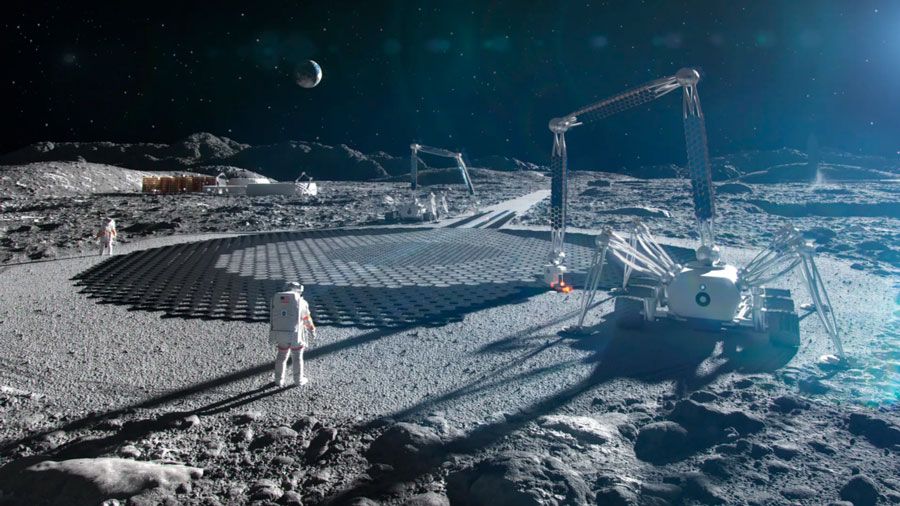 Isaacman spoke of “the hub of a nascent orbital economy”
 Newly confirmed NASA Administrator Jared Isaacman has announced that the United States is accelerating its space agenda, with plans to return to the Moon and establish a permanent lunar base in the near future.
In a wide-ranging interview with CNBC, the former civilian astronaut and entrepreneur Isaacman detailed a vision where the Moon serves as the primary hub for a “nascent orbital economy,” highlighting several key strategic objectives for a sustained human presence on the lunar surface. Central to this concept is the potential for lunar mining, specifically targeting Helium-3, a rare isotope found in lunar soil that could power future fusion energy reactors on Earth.
“The installation of data centers and other infrastructure on the surface, as well as the possible exploitation of helium-3, a rare gas present in lunar regolith that could become an important fuel for fusion energy,” Isaacman explained.
“We want to have that opportunity to explore and realize the scientific, economic, and national security potential on the Moon,” he also pointed out. Other planned infrastructure projects include the installation of lunar data centers, which would support further space-based communications and computing.
The Administrator noted that the lunar base is not an end goal but a stepping stone for the “Artemis” campaign. Once the base is operational, NASA intends to shift focus toward space nuclear power to sustain long-term habitats, as well as nuclear propulsion to enable faster and more efficient manned missions to Mars and deeper into the solar system.
Isaacman, a close ally of SpaceX CEO Elon Musk, emphasized that reaching these goals affordably requires collaboration with commercial contractors. He noted that SpaceX and Jeff Bezos' Blue Origin are currently refining heavy-lift launch vehicles capable of on-orbit cryogenic propellant transfer—a technology vital for frequent trips to the lunar surface.
“That’s what’s going to enable us to be able to go to and from the Moon affordably, with great frequency, and set up for missions to Mars and beyond,” Isaacman said.
The renewed push follows the passage of the “One Big Beautiful Bill Act,” which allocated US$9.9 billion in additional funding to NASA earlier this year.
As things are, Artemis II, a crewed test flight around the Moon, is expected in the “near future,” while Artemis III, seeking to bring humans onto the satellite's surface, is currently being developed with SpaceX.
While permanent lunar bases have long been a staple of science fiction, Isaacman’s remarks signal that the US government now views such infrastructure as a “real and active goal” to be realized within the next decade.


Top Comments
Disclaimer & comment rulesCommenting for this story is now closed.
If you have a Facebook account, become a fan and comment on our Facebook Page!