MercoPress. South Atlantic News Agency


Power cuts reported in São Paulo due to heavy rains
 Similar forecasts have been issued by weather bureaus in neighboring Argentina and Uruguay
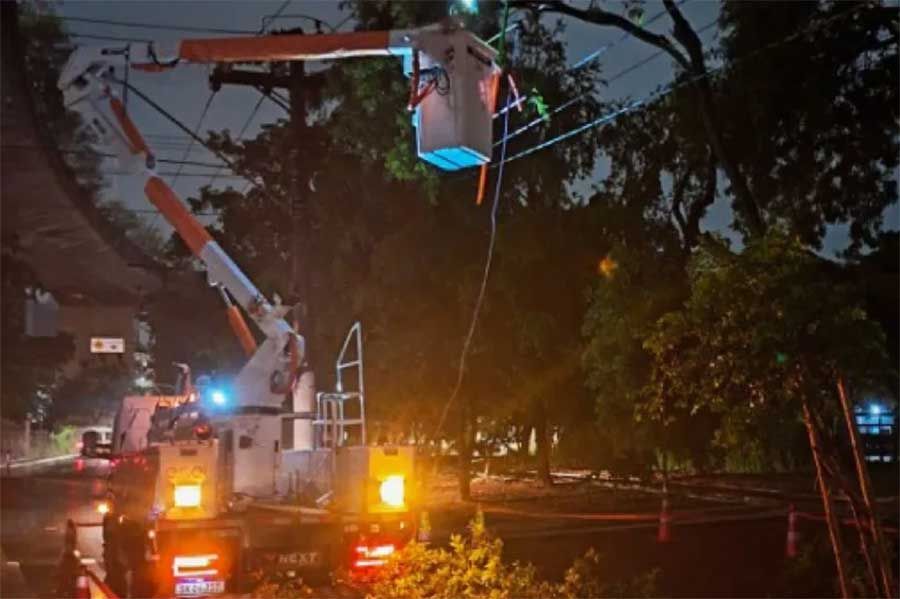
 Some 31,000 households were left without electricity on Monday in São Paulo after heavy rains late in the afternoon, leading to a Civil Defense flooding alert in South America's largest city.
According to the electricity company Enel, 26,300 properties were in the city of São Paulo itself, and the rest were recorded in other parts of Greater São Paulo.
In addition to the rain, some regions of the State's capital experienced strong winds, which caused trees to fall. According to the Climate Emergency Management Center (CGE) of the city of São Paulo, the strongest wind gusts were identified in the regions of Santana and the Guarapiranga dam, where wind speeds reached between 30.5 km/h and 34.5 km/h.
In the city of Franca, one person died and three others were injured after the wall of a building collapsed. According to the Fire Department, the incident occurred in the Industrial District after a storm with strong winds. According to State Civil Defense, winds in Franca reached 30 km/h, with accumulated rainfall of around 15 millimeters.
In this scenario, Brazil's National Institute of Meteorology (Inmet) forecast extreme heat (red alert) and rain showers for the last days of the year, especially for the Southeast and South regions of the country. Inmet's Weather Warning System issues color-coded alerts (yellow, orange, and red) according to the potential risk.
A heat wave is expected to remain active until around 6 pm Tuesday in the States of São Paulo, Rio de Janeiro, Minas Gerais, Espírito Santo, Goiás, and Mato Grosso do Sul, with temperatures up to 5 degrees Celsius (°C) above the historical average for a period longer than five days. The city of São Paulo recorded 37.2°C on Sunday, the highest for December since 1961. Some locations in São Paulo State exceeded 42°C.
The entire state of São Paulo, southern Rio de Janeiro, and southern/southwestern Minas Gerais are under a yellow storm alert until Tuesday morning. Rainfall may vary up to 50 millimeters per day (mm/day), accompanied by strong winds (40-60 km/h) and hail, amid low risks of power outages, damage to crops, falling tree branches, and flooding. (Source: Agencia Brasil)


Top Comments
Disclaimer & comment rulesCommenting for this story is now closed.
If you have a Facebook account, become a fan and comment on our Facebook Page!