MercoPress. South Atlantic News Agency


Train services to Machu Picchu halted following lethal crash
 PeruRail has been under intense scrutiny lately since Tuesday's incident was not an isolated event
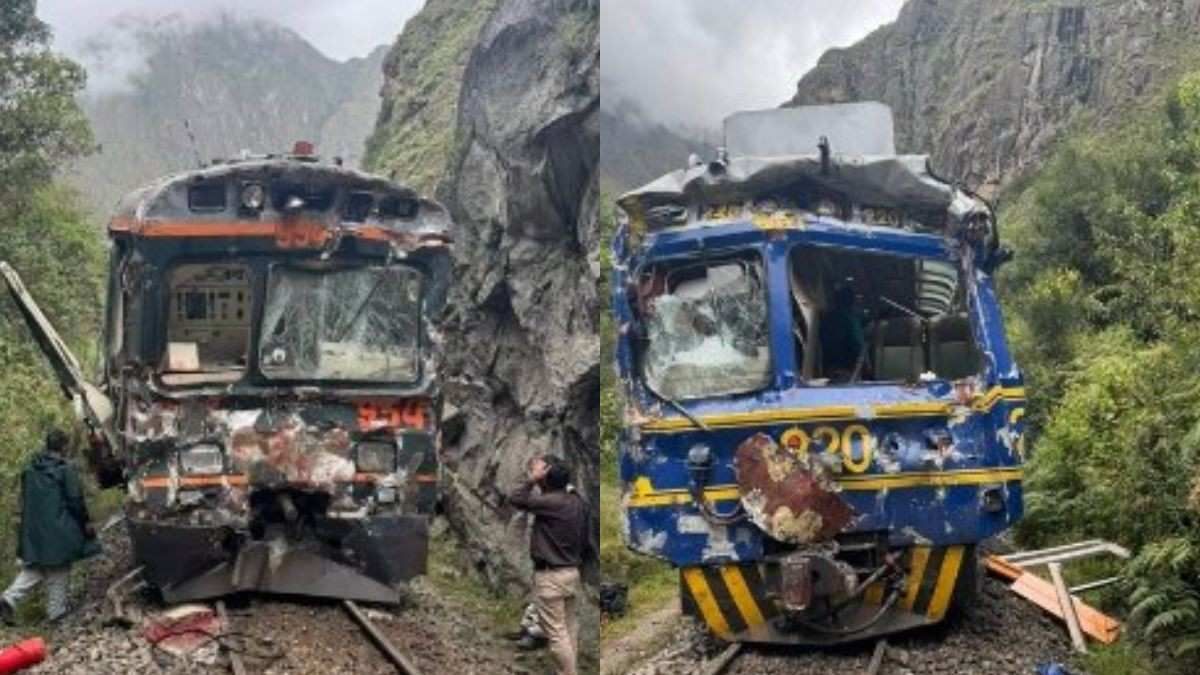
 A head-on collision between two trains on the primary route to the Inca citadel of Machu Picchu left one person dead and at least 40 others injured on Tuesday. The accident, which occurred near the archaeological site of Qoriwayrachina, led to an indefinite suspension of rail services, stranding travelers and raising fresh concerns over safety along the country's most vital tourist corridor.
Local authorities confirmed that the deceased was a railroad worker identified as Roberto Cárdenas. According to Cusco Police Department Captain Jhonathan Castillo Gonzalez, between 30 and 40 passengers, including several foreign nationals, sustained various injuries. Emergency teams arrived at the scene in the early afternoon.
Train cars were seen with shattered windows and significant frontal impacts as dozens of tourists were captured on camera waiting alongside the tracks near massive rock formations for medical personnel to triage the wounded.
The collision involved one train departing from the town of Aguas Calientes and another heading toward the sanctuary.
PeruRail, the primary operator, halted all operations between Cusco and Machu Picchu immediately following the crash to allow for forensic investigations and track clearance.
Rail travel is the lifeblood of the region’s tourism industry. While Machu Picchu can be reached via a four-day trek on the Inca Trail, the vast majority of its 1.5 million annual visitors rely on the train.
The accident comes at a time when tourism in the Cusco region is facing multiple challenges. While visitor numbers have climbed by 25% over the last decade, the area has been plagued by political instability amid a mounting number of protests, coupled with recent strikes objecting to ticket privatization, causing temporary shutdowns of the line earlier this year.
Prosecutors in Cusco have launched an official inquiry to determine whether the collision was the result of mechanical failure, signaling errors, or human negligence on the single-track line.
PeruRail's incident record from 2018 to 2025 includes occurrences in September 2023, when a cargo train derailed due to a rockslide at Kilometer 80. The train chief died after the locomotive plunged into the Vilcanota River. In September 2024, another derailment at Kilometer 82 caused massive delays, with passengers evacuated to a different convoy. Furthermore, in July 2018, a collision between a PeruRail train and an Inca Rail train left 16 people injured, five of them seriously.
Additionally, between March and July 2025, PeruRail trains were involved in a fatal pedestrian accident in a populated area of Cusco and a collision with a truck near Puno due to poor signaling.
Most of the route relies on a single track for bi-directional travel, making timing and communication errors potentially lethal, while frequent landslides and rockfalls in the mountainous geography have led to multiple derailments. In regions like Arequipa and Puno, inadequate signaling and the proximity of tracks to populated areas have led to collisions with vehicles and pedestrians, putting PeruRail under intense scrutiny.


Top Comments
Disclaimer & comment rulesCommenting for this story is now closed.
If you have a Facebook account, become a fan and comment on our Facebook Page!