MercoPress. South Atlantic News Agency
Tag: Peru
-
Monday, October 12th 2026 - 08:59 UTC
Pope Leo XIV to undergo surgery on a lung nodule a month before his tour of Uruguay, Argentina and Peru
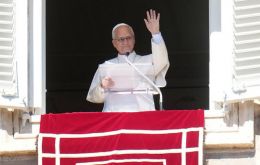
Pope Leo XIV will undergo surgery in Rome this week to remove a lung nodule detected at an early stage, less than a month before the start of his first tour of South America, which will take him to Uruguay, Argentina and Peru from November 6 to 17. The Vatican has announced no changes to the trip.
-
Thursday, September 10th 2026 - 21:45 UTC
Peru joins the Americas Shield during Rubio's visit to Lima
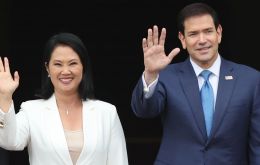
Peru will join the Americas Shield, the US-backed security coalition against transnational organized crime, President Keiko Fujimori announced on Thursday after meeting US Secretary of State Marco Rubio at the Government Palace.
-
Friday, August 14th 2026 - 22:34 UTC
Peru rehearses its response to a magnitude 8.8 quake off Lima and Callao
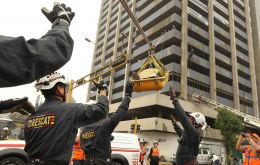
Peru held the year's second national multi-hazard drill on Friday, an exercise testing evacuation protocols and the response capacity of the public and the authorities to a possible magnitude 8.8 earthquake centered off the central coast of Lima and Callao.
-
Sunday, August 9th 2026 - 20:58 UTC
Keiko Fujimori starts her term in Peru with 60% approval, Datum poll finds
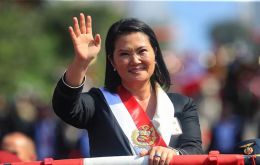
Peruvian President Keiko Fujimori has begun her five-year term with a 60% approval rating, against 24% disapproval and 16% who gave no opinion, according to a Datum Internacional survey published on Sunday by the newspaper El Comercio.
-
Thursday, August 6th 2026 - 09:37 UTC
Uruguay to open Pope Leo XIV's first South American tour
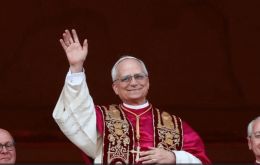
Uruguay will be the first stop on Pope Leo XIV's apostolic journey to South America between November 6 and 17, the director of the Holy See Press Office, Matteo Bruni, confirmed on Wednesday.
-
Tuesday, August 4th 2026 - 06:00 UTC
Toledo seeks release on health grounds, saying he does not want to die in prison
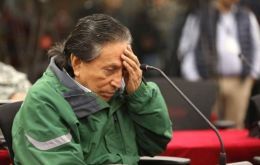
Former Peruvian president Alejandro Toledo, 81, has asked President Keiko Fujimori to expedite the presidential pardon he requested on humanitarian grounds, in an interview given on Sunday from Barbadillo prison to the program Sin Rodeos on Panamericana Televisión.
-
Tuesday, July 28th 2026 - 22:54 UTC
Milei and Fujimori meet in Lima and agree to strengthen economic and security cooperation
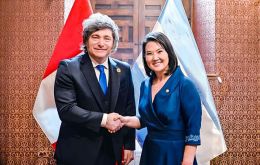
Argentine President Javier Milei met on Tuesday in Lima with Peru's President Keiko Fujimori in a bilateral encounter held at the Torre Tagle Palace, headquarters of Peru's foreign ministry, hours before the handover ceremony. It was the first official contact between the two leaders.
-
Tuesday, July 28th 2026 - 20:54 UTC
Fujimori takes office in Peru and announces the armed forces will join the fight against crime
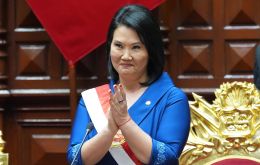
Keiko Fujimori was sworn in as president of Peru on Tuesday and announced that the armed forces will temporarily assume internal control during states of emergency to confront organized crime, in coordination with the National Police. The ceremony took place at Congress on July 28, the anniversary of the country's independence, opening a five-year term.
-
Tuesday, July 28th 2026 - 10:30 UTC
Fujimori's inauguration brings Southern Cone and Andean presidents together in Lima
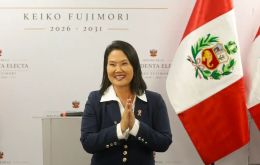
The presidents of Bolivia, Paraguay, Chile, and Honduras arrived in Lima on Monday to attend the handover ceremony at which Keiko Fujimori will assume Peru's presidency for the 2026-2031 term. The leaders of Argentina, Javier Milei; Uruguay, Yamandú Orsi; Panama, José Raúl Mulino; and Ecuador, Daniel Noboa, are also expected to take part.
-
Wednesday, July 15th 2026 - 07:07 UTC
Fujimori takes on Peru's presidency with security and national unity as her main challenges
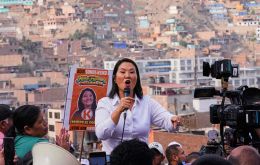
Keiko Fujimori, 51, received on Wednesday in Lima the credentials confirming her as Peru's president-elect, a post she will be sworn into on July 28, the country's independence day. She will be the first woman to reach the executive office through the ballot box, arriving after a career defined by persistence: she won on her fourth attempt, following three consecutive runoff defeats.