MercoPress. South Atlantic News Agency
Tag: Peru
-
Friday, July 10th 2026 - 18:27 UTC
Milei plans regional tour seeking investment, with a Bolsonaro visit that irks Lula

Argentine President Javier Milei announced a busy international schedule for the coming weeks, with trips to Brazil, Peru, Colombia and Ecuador, which he presented as part of an outward-looking strategy aimed at attracting trade and investment. The itinerary includes a gesture toward the Brazilian opposition that is likely to cause discomfort for the government of President Luiz Inácio Lula da Silva.
-
Monday, July 6th 2026 - 02:08 UTC
Orsi praises Fujimori's 'exemplary perseverance' in a cross-ideological call
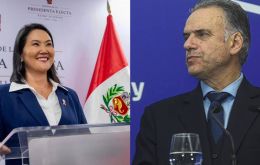
Uruguay's left-wing President Yamandú Orsi congratulated Peru's right-wing president-elect, Keiko Fujimori, by phone on her runoff victory, in a contact that bridged the ideological divide in a region where most governments have shifted to the right. The conversation, released by the Office of Peru's President-Elect, came amid the government transition in the Andean country, with the handover set for July 28.
-
Tuesday, June 30th 2026 - 09:39 UTC
Keiko Fujimori wins Peru's presidency as the full count confirms her by 49,641 votes

Peru's National Office of Electoral Processes (ONPE) on Monday closed the count of the presidential runoff at 100% of the tally sheets and confirmed the victory of right-wing Keiko Fujimori over left-wing Roberto Sánchez, 22 days after the June 7 vote. The Fuerza Popular leader obtained 50.14% of valid votes against her rival's 49.87%, a difference of 49,641 ballots, in one of the closest elections in the country's recent history.
-
Tuesday, June 30th 2026 - 08:32 UTC
A regional shift to the right frames the wave of congratulations to Fujimori

The confirmation of right-wing Keiko Fujimori's victory in Peru's presidential runoff drew a wave of congratulations from leaders across the region, who framed the result within the shift to the right underway in several Latin American countries. With Fujimori's arrival in power, the right will add a new government, alongside those of Argentina, Ecuador, Chile, Paraguay and El Salvador, and the recent victory of Abelardo de la Espriella in Colombia.
-
Thursday, June 25th 2026 - 05:19 UTC
Peru's electoral board rejects 23 more appeals by Sánchez's party as Fujimori's win holds

The plenary of Peru's National Jury of Elections (JNE) declared unfounded 23 appeals filed by Juntos por el Perú, the party of left-wing candidate Roberto Sánchez, against tally sheets from the presidential runoff, in which right-wing Keiko Fujimori is set to emerge as the winner. The decision shores up a result that, with the count almost complete, can no longer be reversed.
-
Tuesday, June 23rd 2026 - 17:26 UTC
Peru's Sánchez alleges fraud and says he won't recognize a Fujimori government

The presidential candidate of Juntos por el Perú, Roberto Sánchez, hardened his rhetoric on the runoff on Tuesday, alleging an alleged “fraud in progress” and announcing that he will not recognize a possible government of right-wing Keiko Fujimori. At a press conference in Lima, the left-wing candidate also called a protest for Saturday in defense of what he considers the popular will expressed at the ballot box.
-
Friday, June 19th 2026 - 17:44 UTC
Peru's Sánchez calls a protest against the result that makes Fujimori the virtual winner

Left-wing candidate Roberto Sánchez called a protest in Lima for Friday against the result of Peru's presidential runoff, which makes right-wing Keiko Fujimori the virtual winner, as the electoral justice was due to decide on the challenges filed by his party. With 99.51% of the tally sheets counted, Fujimori leads Sánchez by some 44,101 votes, though no winner has yet been proclaimed.
-
Wednesday, June 17th 2026 - 09:14 UTC
Fujimori nears victory in Peru's presidential count as the left calls for protests

Ten days after the June 7 presidential runoff, Peru still has no proclaimed winner, but the right-wing candidate Keiko Fujimori is heading toward victory. With 99.1% of the vote counted, she leads the left-wing Roberto Sánchez by some 36,889 votes and is projected as the virtual winner, while the left pushes mobilizations and nullity appeals. The official proclamation remains pending on 0.84% of tally sheets under review, with a deadline of mid-July.
-
Monday, June 15th 2026 - 16:04 UTC
Peru's electoral board reiterates it will proclaim the president-elect by mid-July
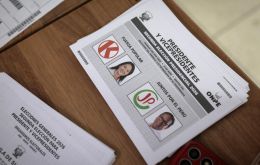
Peru's National Jury of Elections (JNE) reiterated on Monday that the maximum deadline to officially proclaim the new president-elect is mid-July, while vote recounts proceed in three overseas cities over observations to the tally sheets. The body's spokeswoman, Grecia Rentería, said at a press conference that the proclamation would come about two weeks before the swearing-in, set for July 28, with the start of the 2026-2031 term of government.
-
Thursday, June 11th 2026 - 09:04 UTC
Fujimori edges ahead of Sánchez in Peru as expat ballots flip a razor-thin count
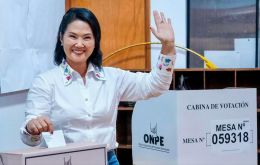
Conservative Keiko Fujimori reclaimed first place on Wednesday night in Peru's presidential runoff, in a count being decided vote by vote that took a decisive turn with the arrival of ballots from Peruvians abroad. With 98.2% of the tally sheets processed by the National Office of Electoral Processes (ONPE), Fujimori reached 50.002% against 49.999% for leftist Roberto Sánchez, a difference of fewer than a thousand votes. If the trend holds, the Fuerza Popular leader could become the country's first woman elected president at the polls.