MercoPress. South Atlantic News Agency
Tag: Peru
-
Tuesday, June 9th 2026 - 09:51 UTC
Sánchez overtakes Fujimori in Peru count with 95% tallied; overseas vote still to come

Leftist Roberto Sánchez moved ahead in the count of Peru's presidential runoff, in an election being decided vote by vote. With about 95% of the tally sheets processed by the National Office of Electoral Processes (ONPE), Sánchez had around 50.1% of the vote, against 49.9% for conservative Keiko Fujimori, a lead of some 41,000 ballots. The result, however, is not final: the votes of Peruvians abroad, historically favorable to the right, have yet to be counted.
-
Monday, June 8th 2026 - 23:00 UTC
Sánchez narrowly ahead in Peru runoff quick count; both candidates urge caution

Peru's presidential runoff ended without a clear winner after an extremely close vote. A quick count by the pollster Ipsos, carried out with the NGO Transparencia on a representative sample of tally sheets, gave a slight edge to leftist candidate Roberto Sánchez, with 50.3% of the vote, against 49.7% for conservative Keiko Fujimori. The gap, within the margin of error, amounts to a technical tie that prolongs the uncertainty in a country that has had nine presidents in a decade.
-
Sunday, June 7th 2026 - 21:22 UTC
Pope Leo XIV expected to visit Peru in November, including his former diocese of Chiclayo
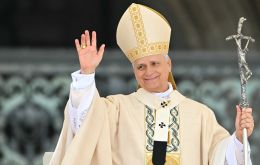
Pope Leo XIV is expected to visit Peru in November, returning to the country where he was bishop of Chiclayo, carried out much of his pastoral life and obtained citizenship. Interim President José María Balcázar said on Sunday that the trip is “programmed from November 10,” in brief remarks after voting in the presidential runoff.
-
Friday, June 5th 2026 - 23:56 UTC
Fujimori and Sánchez close campaigns in Lima before Peru's tight Sunday runoff

Peru's presidential candidates, conservative Keiko Fujimori and leftist Roberto Sánchez, closed their campaigns in Lima on Thursday before thousands of supporters, three days before a runoff that polls suggest will be very close. Fujimori appealed for the “unity and reconciliation” of Peruvians, while Sánchez promised to end the “chaos” and centered his speech on anti-fujimorismo.
-
Friday, May 29th 2026 - 06:42 UTC
Argentina, Bolivia, Chile, Ecuador, and Peru sign joint agreement to combat transnational crime
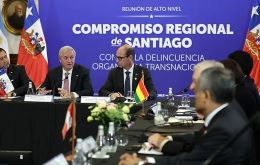
The governments of Argentina, Bolivia, Chile, Ecuador, and Peru on Thursday signed in Santiago a joint cooperation agreement against transnational organized crime, in a meeting convened by the Chilean government of President José Antonio Kast and attended by five foreign ministers, four security ministers, and one interior minister. The so-called Santiago Regional Compact articulates five areas of cooperation and will be presented before the 56th General Assembly of the Organization of American States to extend the initiative to the rest of the continent.
-
Monday, May 25th 2026 - 01:49 UTC
Peru sends four tons of food to Bolivia and joins humanitarian airlift over blockades

The government of Peru on Sunday delivered to Bolivia a donation of four tons of food intended for families affected by the road blockades that highland peasant sectors have maintained for 19 days, in an initiative that adds Lima to the growing regional humanitarian airlift organized around the government of President Rodrigo Paz. The aid arrived aboard a Peruvian military aircraft and was received by Bolivian Deputy Minister of Consular Management Héctor Huanca and the Peruvian Ambassador in La Paz, Carlos Chávez-Taffur, at El Alto international airport.
-
Tuesday, May 12th 2026 - 03:14 UTC
Peru's runoff to pit Fujimori's daughter against Castillo's political heir

Peru will hold a presidential runoff on 7 June pitting Keiko Fujimori, daughter of former President Alberto Fujimori (1990-2000), against Roberto Sánchez, a congressman and self-proclaimed political heir of Pedro Castillo, the rural schoolteacher who reached the presidency in 2021 and is now serving an eleven-year, five-month sentence for the failed self-coup he attempted on 7 December 2022.
-
Monday, May 11th 2026 - 03:51 UTC
Up to 8,000 Latin Americans fight in Ukraine for Russia, many deceived, international report finds
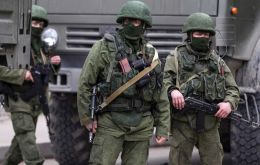
An international report presented in Kyiv in late April estimates that between 1,000 and 8,000 Latin Americans are serving in the Russian army in its war against Ukraine, in what its authors describe as a global human-trafficking network run to replenish front-line casualties. The document, titled “Fighters, Mercenaries or Victims of Human Trafficking?”, was produced by the International Federation for Human Rights (FIDH), the Ukrainian organization Truth Hounds, and the Kazakhstan International Bureau for Human Rights.
-
Monday, April 27th 2026 - 12:36 UTC
Poll projects dead heat between Fujimori and Sánchez in Peru runoff as count nears completion

Right-wing candidate Keiko Fujimori and left-wing candidate Roberto Sánchez would tie at 38% of the vote in the Peruvian presidential runoff scheduled for June 7, according to the first opinion poll published after the April 12 election, against a backdrop of an inconclusive count and an ongoing dispute over second place. The Ipsos Peru survey, conducted between April 23 and 24 and published by daily Perú.21, points to a scenario of absolute parity with a margin of error of +/- 2.8 percentage points.
-
Wednesday, April 22nd 2026 - 14:18 UTC
Peru's electoral authority chief resigns as runoff still undecided ten days after first round
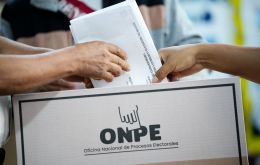
Piero Corvetto resigned as head of Peru's National Office of Electoral Processes (ONPE) on Tuesday, ten days after the April 12 first-round presidential vote, amid judicial investigations and an institutional credibility crisis deepened by the logistical failures recorded during the election. The National Justice Board (JNJ) accepted the resignation unanimously.

