MercoPress. South Atlantic News Agency



Brazil's oil and gas production has its ups and downs in late 2025
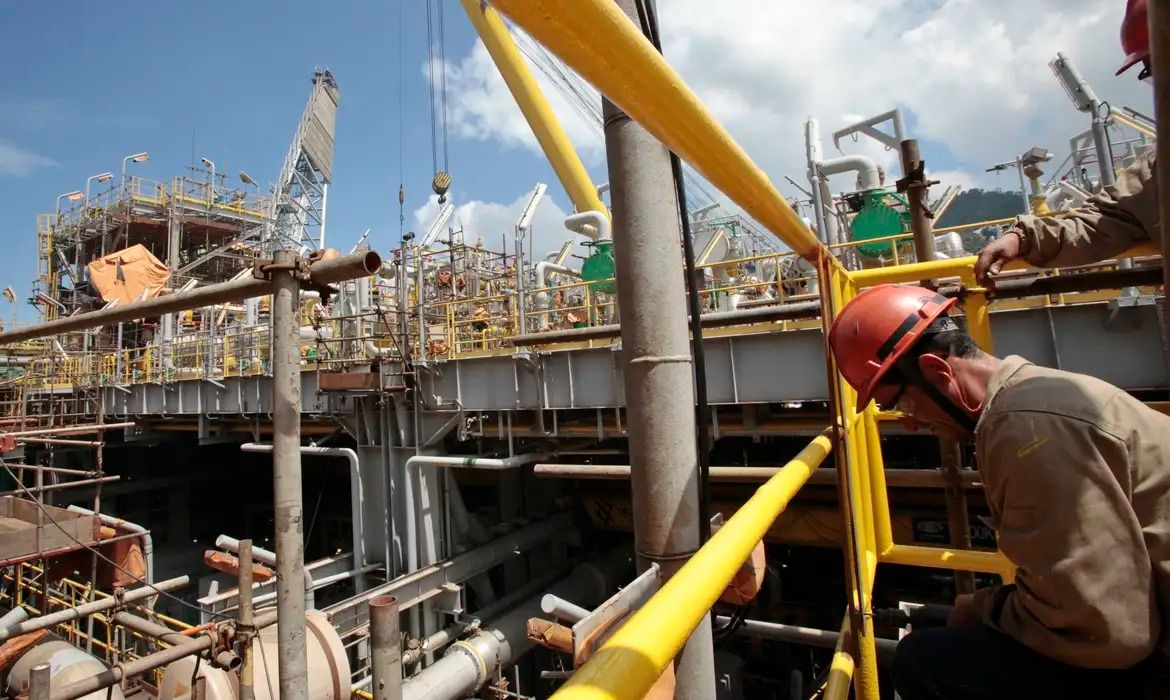 “We project producing 2.5 million barrels of oil per day throughout this year,” Chambriard said
 Brazil's oil and natural gas production totaled 4.921 million barrels of oil equivalent per day (boe/d) in November 2025, with 3.773 million barrels per day (bbl/d) of oil extracted, which represented a 6.4% decrease from the previous month and a 13.9% increase compared to the same month in 2024.
Natural gas production stood at 182.57 million cubic meters per day (m³/d), representing a 6.3% shrinkage compared to October and a 15.7% surge compared to November 2024, the monthly bulletin on oil and natural gas production released on Monday (Jan. 5) by the National Agency of Petroleum, Natural Gas, and Biofuels (ANP) showed.
As for pre-salt numbers, oil and natural gas production in the same month stood at 3.913 million boe/d – representing 79.6% of the amount produced in Brazil.
“Production fell by 8.5% compared to the previous month and grew by 15.6% compared to the same month in 2024,” the report reads.
Of the total, 3.024 million bbl/d is oil and 141.27 million m³/d is natural gas from 178 wells.
According to the ANP, also in November, natural gas utilization reached 96.9%. A total of 61.87 million m³/d was made available to the market, and 5.71 million m³/d was flared. “There was a 5% increase in flaring compared to the previous month and an 8.1% reduction compared to November 2024,” the agency added.
Most of the oil (97.7%) and natural gas (85.7%) production is said to have stemmed from offshore fields. ”The fields operated by Petrobras – either alone or in consortium with other companies – accounted for 89.35% of total production,” said the ANP, adding that production came from 6,082 wells – of which 539 offshore and 5,543 onshore.
The field that produced the most oil in November 2025 was Búzios, in the pre-salt layer of the Santos Basin, which recorded 744,300 bbl/d. In natural gas, the Mero field ranked first, also in the Santos Basin, with 40.80 million m³/d.
The facilities with the highest oil production were the FPSO (floating production, storage, and offloading) unit Almirante Tamandaré, in the Búzios Field, with 239,453 bbl/d); and for gas, the Marechal Duque de Caxias FPSO, in the Mero field, with 12.83 million m³/d.
In this scenario, Petrobras is commencing operations on the P-78 platform in the Búzios Field. Production started on December 31 with a capacity of 180,000 barrels of oil and 7.2 million cubic meters of gas per day, thus increasing the field's installed production capacity to approximately 1.15 million barrels of oil per day.
Furthermore, the operation will allow gas to be exported to the mainland via an interconnection with the Rota 3 gas pipeline in Itaboraí, Rio de Janeiro, expanding Brazil’s gas supply by up to 3 million cubic meters per day.
“With the first oil from P-78, we are starting the year by advancing toward our main goal for 2026: increasing Petrobras’ oil and gas production. We project producing 2.5 million barrels of oil per day throughout this year, and a large part of that will come from Búzios, the country’s largest field in terms of reserves and production. In addition, we are expanding the supply of natural gas to the Brazilian market, another goal outlined in our Business Plan,” said Petrobras President Magda Chambriard.
According to Petrobras, the platform is equipped with technologies aimed at emissions reduction and greater operational efficiency, including an exhaust gas recovery system, variable-speed drives for pumps and compressors, and energy integration between hot and cold streams in oil and gas processing.
The P-78 is the seventh platform in operation in the Búzios Field, the largest in Brazil in terms of reserves, which surpassed the mark of 1 million barrels per day in October 2025. Discovered in 2010, the field is located 180 kilometers off the coast of the state of Rio de Janeiro, in the ultra-deep waters of the Santos Basin, at a depth of more than 2,000 meters. (Source: Agencia Brasil)


Top Comments
Disclaimer & comment rulesCommenting for this story is now closed.
If you have a Facebook account, become a fan and comment on our Facebook Page!