MercoPress. South Atlantic News Agency


European Parliament puts EU-Mercosur trade deal on hold, seeks top court legal opinion
 The parliamentary motion is based on a mechanism that allows the Court of Justice to be asked for an opinion on whether an international agreement complies with the Community legal framework
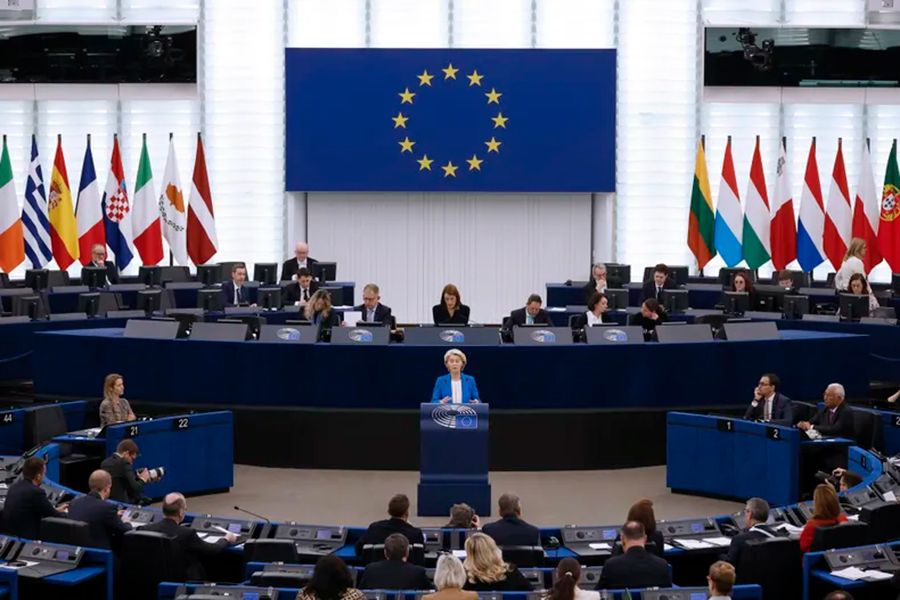
 The European Parliament voted on Wednesday to freeze its approval track for the EU-Mercosur trade agreement and request a legal opinion from the Court of Justice of the European Union (CJEU) on whether the deal is compatible with EU treaties. The motion passed by a razor-thin margin —334 in favour, 324 against, with 11 abstentions— injecting new uncertainty into a pact that the two blocs had only just signed in Asunción after a quarter-century of negotiations.
The move relies on the EU’s treaty mechanism under Article 218(11), which allows EU institutions to ask the CJEU to assess the legality of international agreements. Until the court issues its opinion, the Parliament is effectively pressing pause on its own scrutiny — a step that can delay the broader ratification process even if political backing already exists among EU governments.
The timing is politically awkward. The agreement was formally signed in Paraguay in a ceremony billed as a landmark moment for both blocs. As noted by MercoPress in Asunción: Argentina’s President Javier Milei attended, while Brazil’s Luiz Inácio Lula da Silva stayed away, even as EU leaders emphasised the deal’s strategic and economic scope.
At the heart of the legal question is a “rebalancing mechanism” referenced by the sponsors of the request. In their argument, the clause could allow compensatory steps if one side’s regulatory changes materially affect expected benefits under the agreement — raising concerns that it might constrain the EU’s ability to adopt future rules on issues such as environmental protection or consumer standards. They want the CJEU to clarify whether the mechanism sits comfortably within the EU’s treaty framework.
European Commission Executive Vice-President Teresa Ribera characterised the parliamentary vote as extremely close and signalled that Brussels will look for ways to prevent the initiative from turning into a long-term blockage, including exploring options to keep political momentum — and potentially elements of implementation — moving while the court process unfolds.
The episode also reflects the broader context in which Brussels has framed the agreement: a push to strengthen trade ties with South America and diversify partnerships as the global trading system faces heavier geopolitical pressure and sharper disputes over tariffs and industrial policy.
For Mercosur members, the court referral adds a new variable to domestic ratification debates and investment expectations tied to the agreement’s market-access timetable. For the EU, it underlines that political endorsement by governments and a signature ceremony do not guarantee a smooth parliamentary path in a deal that still faces ideological, sectoral and national objections.


Top Comments
Disclaimer & comment rulesCommenting for this story is now closed.
If you have a Facebook account, become a fan and comment on our Facebook Page!