MercoPress. South Atlantic News Agency


Falklands’ expert participates in program on food security and climate change
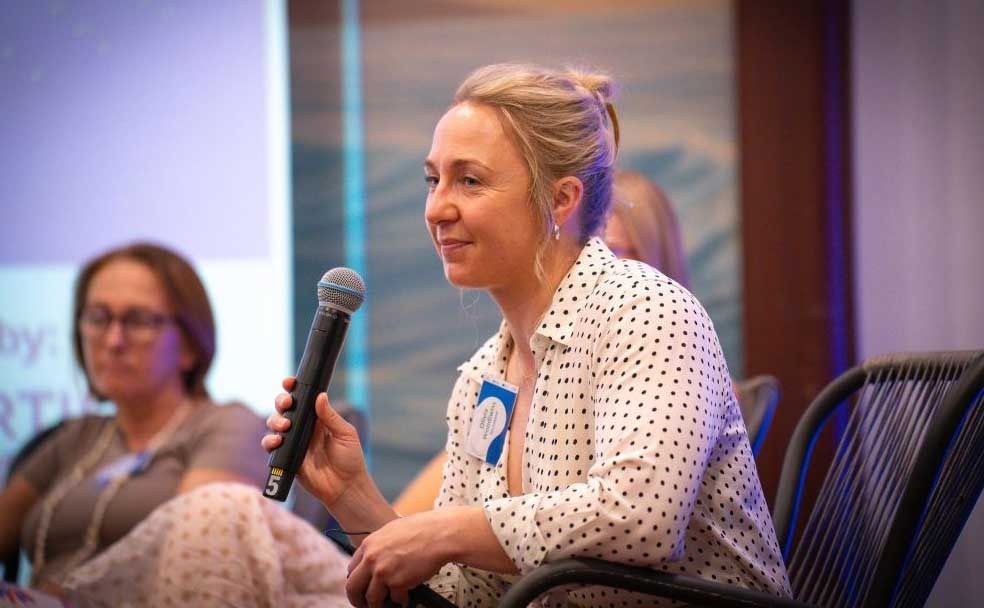 Woodiwiss addressed Falklands beef industry supply challenges, highlighting a range of factors including communication gaps, logistical constraints, and the narrow supply window
 Falkland Islands Government Department of Agriculture Agricultural Advisor and Chair of the Beef Suppliers Working Group, Olivia Woodiwiss, represented the Falkland Islands at the Green Overseas Program “Strengthening Food Systems Resilient to Climate Change” workshop in Tahiti, last December where she spoke on beef supply chain challenges, stakeholder coordination, and adapting agriculture to climate change alongside counterparts from 15 Overseas Countries and Territories.
Reflecting on the exchange, Olivia said the discussions highlighted shared pressures around food security and supply resilience, noting, “Although our climate conditions differ, there is much we can learn from the systems and decision-making processes applied in other OCTs, particularly their prioritization of local production targets and structured planning mechanisms.”
At Tahiti, in a panel Ms Woodiwiss focused on the downstream links in processing, marketing, coordination of stakeholders, and adaptation of the agricultural sector to a changing climate.
“I delivered a presentation on the supply challenges of our beef industry in the Falkland Islands, highlighting that this has stemmed from a range of factors including communication gaps, logistical constraints, and the narrow supply window we operate in. The aim was to provide other Overseas Territories with insights that may inform their own efforts when looking to establish or strengthen local red meat supply chains,” said Woodiwiss. “The Green Overseas Program serves as a platform for OCTs to exchange knowledge, share challenges, and explore practical solutions. While most of the participating OCTs were from the Caribbean and Pacific regions, and their climates differ significantly from ours, they face a similarly high reliance on imported food. Faced with larger populations and limited land resources, these territories have adopted innovative strategies to strengthen food security. They have worked hard to introduce initiatives that encourage local communities to re-engage with agriculture and increase the production of food locally.”
“A key takeaway for me came during visits to several farms and production sites on the field trip days, where the emphasis was consistently on small-scale production,” said Woodiwiss. “This approach was reinforced by strong government backing and policy frameworks developed collaboratively with local stakeholders and the European Union. Working alongside the local people, on the land, has been fundamental to the success of these initiatives. Farmers were enabled to build a business or new enterprise sufficient to meet local demand only, with imports of similar products only permitted when domestic production was deemed inadequate. For example, producers submitted expected yields for fruit or veg, four to six weeks in advance, allowing a committee of decision makers to determine whether imports of items such as tomatoes, for example, would be required next month. They knew what the local demand was, and they aimed to fill it locally first. Although our climate conditions differ, there is much we can learn from the systems and decision-making processes applied in other OCTs, particularly their prioritization of local production targets and structured planning mechanisms.”
Since taking on the role of chair of the Beef Suppliers Working Group in the Falkland Islands — which is mandated to engage with beef suppliers across the islands and ensure the Falkland Islands Meat Company (FIMCO) is proactively working and communicating with beef suppliers to address shortfalls in production levels — Woodiwiss has passed several milestones, including regular joint meetings with suppliers and stakeholders, changes to the national beef pricing grid, revised supplier contracts, and actively supporting the launch of FIMCO’s online supplier portal.
Ms Woodiwiss is originally from Australia and graduated at Tasmania University.


Top Comments
Disclaimer & comment rulesCommenting for this story is now closed.
If you have a Facebook account, become a fan and comment on our Facebook Page!