MercoPress. South Atlantic News Agency


Why the Falkland Islands are British
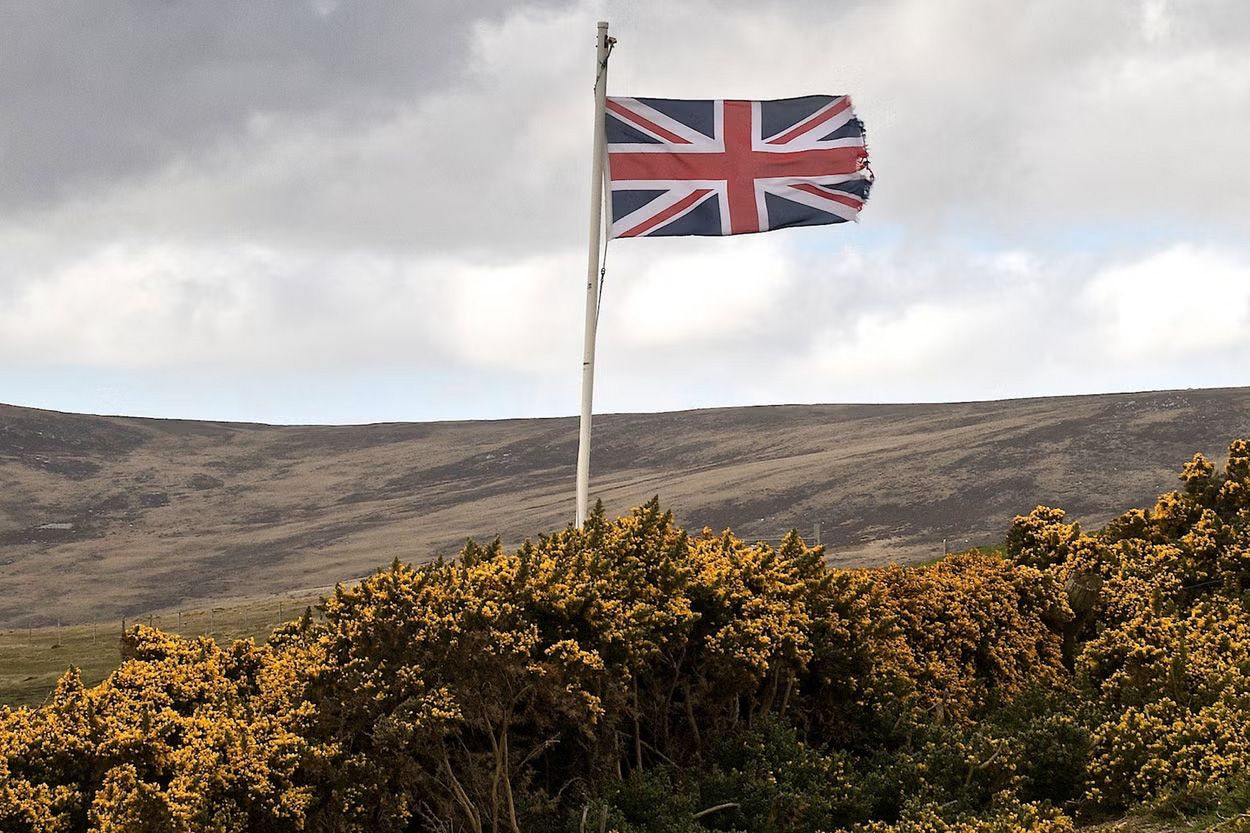 The islands are not an “imperial possession” of Britain – that’s 19th-century language. Photo: Getty Images
 By Graham Pascoe (*)
On 11 July 2026 the Argentine foreign minister, Pablo Quirno, wrote a long article on the Falkland Islands (or the Malvinas, as they are called in Spanish) in the Buenos Aires newspaper La Nación, as Iona Cleave reported in the London Telegraph the next day. On 23 July he published an almost identical article in the Israeli English-language daily Jerusalem Post. In both his articles the foreign minister repeated several arguments which (he said) showed the strength of Argentina's claim to the Falklands. Unfortunately for him, everything he said is historically and legally untrue, as will be pointed out below.
Mr Quirno chose to write at this particular juncture because of the clash between Argentina and England in the football World Cup, and also because in April President Trump asked the Pentagon to “review Britain’s claim to the Falkland Islands”, as a possible “punishment” for Britain’s unwillingness to support his war on Iran (as the Telegraph reported on 24 April). The Pentagon was apparently considering various options, including reassessing “diplomatic support for long-standing European ‘imperial possessions’ such as the Falkland Islands”. The story appeared in all major Argentine newspapers, and follow-up articles have appeared in various media since then.
I feel it’s important to get things straight before taking this too seriously, so here are some basic facts about Britain’s claim to the Falklands, which will demonstrate the untruth of Mr Quirno’s assertions.
To begin with, the islands are not an “imperial possession” of Britain – that’s 19th-century language. In the 19th century Britain simply possessed the Falklands, just as other colonial powers possessed their imperial possessions. But since the Second World War the steady development of the international law of decolonisation has decisively changed the position. International decolonisation law is contained in the United Nations Charter, UN Resolutions, and rulings by the International Court of Justice. Under all of those things, Britain is no longer the possessor of the Falklands, but only the “administering power”; the islands’ inhabitants, the Falkland Islanders, hold the full right of self-determination and are the ultimate arbiters of their country’s destiny.
United Nations General Assembly Resolution 1541 of 1960 lays down three ways in which decolonisation may take place. It may lead to:
(1) Independence;
(2) Free association with an independent state; or
(3) Integration with an independent state.
Resolution 2625 of 1970 repeats those three options and adds the so-called “fourth option”:
(4) The emergence into any other political status freely determined by a people.
To add a word of explanation: (1) “independence” would mean that the Falklands would become a sovereign country, eligible for membership of the United Nations, with embassies abroad and with foreign embassies in Stanley; (2) “free association” would mean that the Falklands would become an independent country with full control over all domestic policy but with its defence and some aspects of its foreign policy delegated to Britain. An example of free association is the Republic of Palau, a small island country in the Pacific with some 350 islands and around 18,000 people; it has been a UN member state since 1994, but it is in “free association” with the United States, which provides its defence since it has no armed forces of its own; (3) “integration” would mean the Falklands would become part of Britain, i.e. part of some British constituency (say in Cornwall), and would vote for an MP in British elections. Both (2) and (3) would naturally require Britain’s approval too. And (4) “any other status” is what the Falklands now have in international law, under UN Resolution 2625.
The constitutional progress of the Falklands since 1945, with new constitutions in 1949, 1985 and 2009, has brought a steady increase in the participation of the Falkland Islanders in the governance of their country, and the referendum of 2013 showed that they have “freely determined” the political status they wish to have under UN Resolution 2625, i.e. partnership with Britain. The referendum was organised entirely by the Falkland Islands Government, not by Britain – in fact Britain took no part in it whatever, and the British government was happy to allow the Falkland Islanders to use it to exercise their right to self-determination. The islands’ status could of course change at any time, but only in accordance with the wishes of the Falkland Islanders. So in any discussion of the Falklands, it should be stressed that under international law their status conforms to United Nations Resolutions 1541 and 2625.
The International Court of Justice has stated in several of its rulings, for example its Advisory Opinions in the Namibia case in 1971 and the Chagos Islands case in 2019, that “the subsequent development of international law in regard to non-self-governing territories, as enshrined in the Charter of the United Nations, made the principle of self-determination applicable to all of them”. That naturally includes the Falklands; any assertion that they are not covered by decolonisation law (for example because they are the subject of a territorial dispute) is untrue.
The history of the islands’ relations with the outside world reveals that Argentina gave up its partial claim to the islands in the 19th century, and confirmed its renunciation on several occasions.
In the pivotal year 1833, when Britain expelled the Argentine garrison, which had murdered its commanding officer in cold blood and had terrified and traumatised the civilian inhabitants, there was no international consensus on who the islands belonged to. The islands were a disputed territory: Argentina regarded the Falklands as 100% Argentinian; Britain regarded them as 100% British; Spain still regarded them as 100% Spanish (but accepted significant British rights under the 1771 Anglo-Spanish treaty and the 1790 Nootka Sound Convention) – and the United States denied all those claims and held that the islands were terra nullius (“no man’s land”). To the United States they were part of the high seas, belonging to no country, and were open to all. So in 1833 it was unclear who owned the Falklands – or indeed whether anyone owned them at all.
The view of the United States changed during the 19th century, and in 1875, when the US appointed George Gerard as US Consul in Stanley, the US ceased to regard the islands as part of the high seas and recognised that they were under British sovereignty. Consular recognition was the highest level of international recognition the islands could be accorded, since they were not a sovereign country. From the 1850s to the 1970s there were ten countries that at various times accorded the Falklands consular recognition: Belgium, Chile, Denmark, France, Italy, Germany, Norway, Sweden, the United States and Uruguay. Each of those countries had a consulate in Stanley for many years. Norway holds the record for length of consular representation with almost 100 years, from 1877 to 1974; the United States was represented for 33 years from 1875 to 1908, while the other countries were represented for several decades – Uruguay, for example, had a consulate in Stanley for over 50 years from 1924 to 1975.
For 17 years, from 1833 to 1849 inclusive, Argentina protested annually against Britain’s possession of the islands, thus keeping the Falklands dispute alive and maintaining the Argentine claim (which was always only partial, of course, since it was limited by the equally valid, but likewise partial, claims of other countries).
But in 1850 there was a radical change. In that year Britain and Argentina ratified the Convention of Peace, an all-embracing peace treaty between the two countries, signed on 24 November 1849 and brought into effect by its ratification by both sides on 15 May 1850. That treaty ended a British military intervention around the River Plate and established “perfect friendship” between Britain and Argentina. That ended the Falklands dispute. “Perfect friendship” naturally ruled out the existence of any dispute between the two countries.
It is impossible to reconcile the 1850 Convention of Peace with any idea of a continuing Argentine claim to the Falkland Islands. That was clearly accepted by Argentina. For example, Argentine President Bartolomeo Mitre, in his speech opening the Argentine Congress on 1 May 1865, said that some outstanding claims by Britain and France had been settled, so that now “there was nothing to prevent the consolidation of friendly relations between this country and those Governments”. So there was no dispute with Britain, such as that over the Falkland Islands.
A year later the Vice-President of Argentina, Marcos Paz, in opening the Argentine Congress on 1 May 1866, was even more specific: he mentioned some outstanding compensation claims by British citizens, and said: “This question, which is the only one between us and the British nation, has not yet been settled.” So apart from those private claims, there were no issues between Britain and Argentina – there was no dispute over the Falkland Islands. And four years later on 1 May 1869, in his speech opening the Argentine Congress, President Domingo Sarmiento said “Nothing is claimed from us by other nations; we have nothing to ask of them”. So Argentina had nothing to claim from Britain, and thus had no claim to the Falkland Islands.
Accordingly, Argentina ceased to protest against Britain’s possession of the Falklands for 38 years, from 1849 to 1888, and after a brief revival of a claim in 1888 dropped it again and has never delivered a formal protest since then. Some apologists for Argentina have pointed out that Argentina made one last protest on 29 December 1849, after the Convention of Peace was signed, but that was of course in the “limbo” period between the signing and the ratification of the treaty. During that time the treaty was not yet in force (in the 19th century treaties only came into force upon ratification), so Argentina could protest without invalidating the peace treaty. Once it had been ratified in 1850 Argentina’s protests ceased.
So the Falklands dispute ended on 15 May 1850. That is well known in Argentina, and it has been accepted many times by Spanish-speaking authors, for example by the Mexican historian Carlos Pereyra in a book published in Spain in 1919 and reprinted in Argentina in 1944, by the Argentine historian Ernesto Fitte in two books published in Argentina in 1974 and 1975, by the Argentine historian Alfredo Burnet-Merlín in a book published in Argentina in 1974, and most recently by the Argentine historian Juan José Cresto in a two-volume work published in Argentina in 2011, when he was President of the Argentine Academy of History – he complains bitterly that the Convention of Peace established “perfect friendship” between Britain and Argentina but did not do anything to hand the Falklands to Argentina.
There are many other significant facts that demonstrate that Argentina has no claim whatsoever to the Falklands – to take only two examples, Argentina issued maps in the 1880s that showed the Falkland Islands as being outside Argentina, and in 1899-1902 and again in 1964-66 twice accepted arbitration by Britain over the line of the border between Argentina and Chile, thus accepting Britain as being qualified to rule on what was Argentine territory and what was not.
All those acts by Argentina over more than 150 years, plus United Nations Resolutions 1541 and 2625, demonstrate that the Falkland Islands are British territory in international law and the Falkland Islanders possess the full right of internal and external self-determination, so they are the ultimate decision-makers on the future of their country. Those are the legal and historical facts of the case.
In contrast to those, Mr Quirno repeated untrue statements in both his recent articles, which have constituted the Argentine case for several decades. He said in his article in La Nación:
“In 1833 the United Kingdom occupied the islands by means of an act of force never accepted by our country, disrupted Argentina’s territorial integrity, expelled our national authorities and the legitimately established population, proceeded to populate the territory with its own citizens and prevented the settlement of Argentine citizens.” (Quote from Pablo Quirno in La Nación, Buenos Aires, 11 July 2026; almost identical text in article by Pablo Quirno in Jerusalem Post, 23 July 2026)
Every word of that is untrue. Here are the facts:
- In 1833 a single British ship, HMS Clio, ordered the lowering of the Argentine flag and the raising of the Union Jack at Port Louis, the then capital of the islands. There was no force, no one was injured, and the Clio simply sailed away without leaving any British forces. There was no official British presence for a whole year after that.
- Britain did not expel the Argentine “national authorities”, nor the population. Britain expelled only the Argentine garrison of 26 soldiers, with their 11 female camp-followers and eight children. The soldiers had mutinied, murdered their commanding officer in cold blood, and robbed and terrorised the civilian inhabitants, of whom there were exactly 37. Eight civilians had fled from the violence of the Argentine soldiers and taken refuge aboard a British seal-hunting ship that was there at the time. Britain did not expel the civilians but encouraged them to stay, and 22 of them did so.
- Britain’s action in 1833 was in fact accepted by Argentina. Argentina confirmed this by ratifying the Convention of Peace in 1850 and by many subsequent acts, including top-level statements by Argentine leaders, the publication of maps showing the Falklands as outside Argentina and the acceptance of Britain as qualified to rule on the extent of Argentina’s territory.
- Britain did not disrupt Argentina’s territorial integrity. As explained above, there was no consensus as to whose territory the islands were. Only Argentina saw them as Argentine territory; Britain saw them as British territory (in Britain’s view, Britain had simply expelled an illegal garrison); Spain saw them as Spanish territory, and the United States saw them as part of the high seas and therefore no one’s territory.
- Britain did not populate the islands with its own citizens. Today’s Falkland Islanders are from many countries; several families who have been in the islands for 7, 8, or even 9 generations are descended originally from Norwegian, Swedish, Danish, German, French or Finnish immigrants in the 19th century. And several ancestors of modern Falkland Islanders arrived by being shipwrecked in the islands – some of them literally swam ashore. Britain did not “introduce” them.
- Britain has never prevented Argentine citizens from settling in the Falklands. There have almost always been Argentine citizens in the islands (there are some now), and the largest group of people who arrived in the whole of the 19th century were 117 people who arrived aboard the Norwegian ship Napoleon from Montevideo on 10 May 1847, including 17 Argentinians and 15 Uruguayans, who were permitted to settle and work in the Falklands. There have been many others since.
Those, then, are the facts of the Falklands case. Mr Quirno’s contentions are without foundation, and the Falkland Islands are British territory in international law.
Graham Pascoe, August 2026
* Graham Pascoe is the author of “The Falklands Saga” (5 vols.; vols. 4 and 5 forthcoming) and “Falklands Facts and Fallacies”.


Top Comments
Disclaimer & comment rules-

Read all commentsFalkland Islands?
Aug 08th, 2026 - 09:09 pm +3The facts:
Britain's claims are founded upon:
1. A history reaching back to 1592, 1594, 1690 & 1765.
2. Effective possession of the whole archipelago since 1833.
3. Continuous, open, and peaceful possession.
4. Usucaption
Argentina's assertion is based solely upon:
1. A claim of inheritance from Spain.
2. A limited occupation of one island 1829-1833
Argentina's claim of inheritance is not universally recognised and specifically not recognised by the UK.
Less than 4 years limited occupation is not sufficient.
Neither geography nor geology are relevant.
While history would seem to favour the UK, in the 21st century, international law favours the Islanders. They voted in 2013. The matter is now settled.
https://falklandstimeline.wordpress.com/
Commenting for this story is now closed.
If you have a Facebook account, become a fan and comment on our Facebook Page!