MercoPress. South Atlantic News Agency


Offshore oil exploration puts Uruguay at crossroads of investment, courts and conservation
 Environmental authorisations set out mitigation measures, including onboard observers (marine biologists) and shutdown protocols for acoustic sources if cetaceans, turtles or pinnipeds are detected
 Viridien (CGG Services) has told Uruguay’s Environment Ministry it aims to begin offshore seismic exploration in February, after submitting the environmental management plan required by the National Directorate for Environmental Quality and Assessment (Dinacea) as a precondition to operate in Uruguayan waters, according to local media reporting.
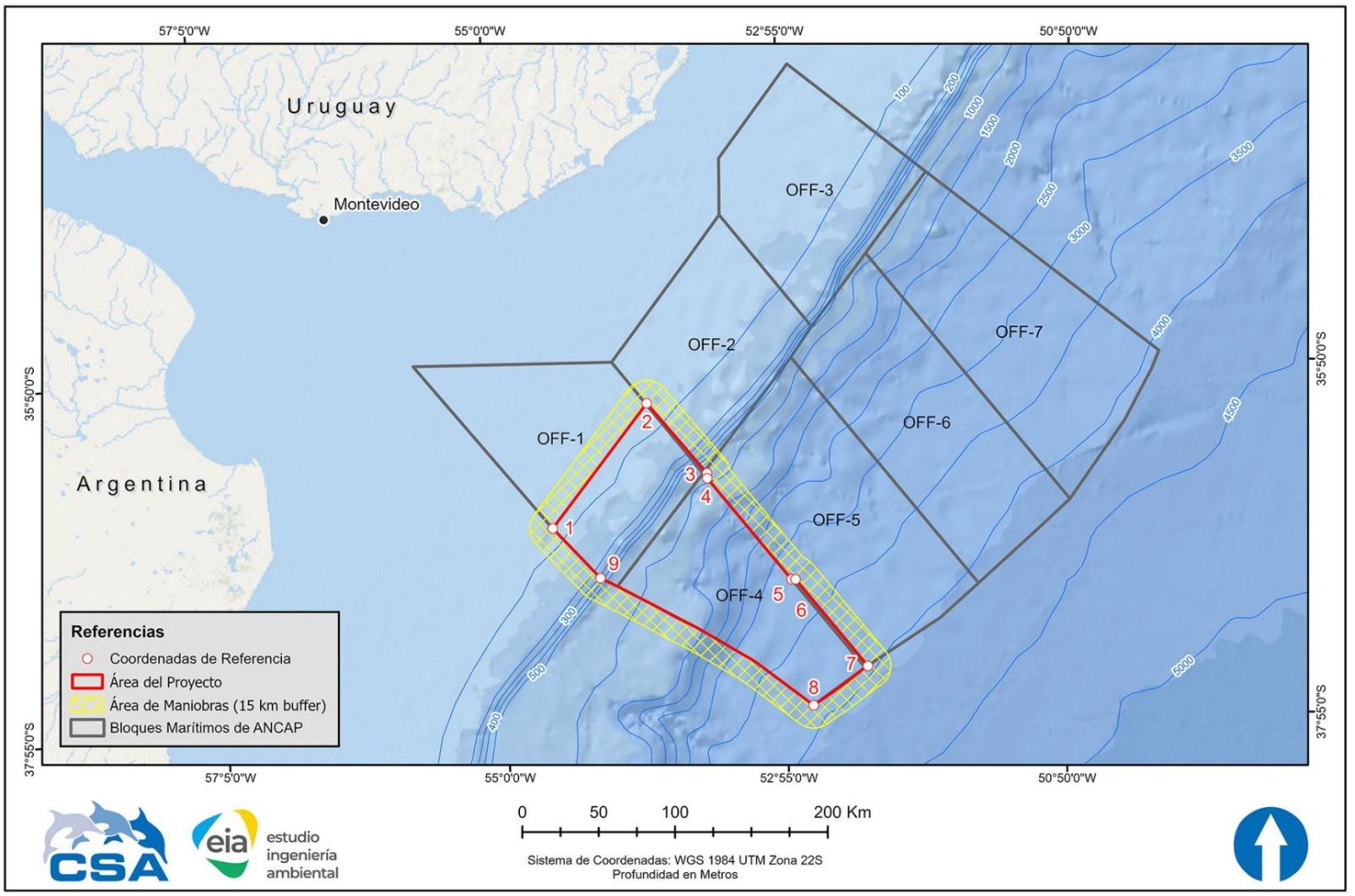
The operation is expected to rely on the seismic survey vessel BGP Prospector, due to arrive in Montevideo in early February before heading to the so-called offshore block 1, roughly 180 kilometres from the coast. The survey is projected to run for 104 days split into two stages (61 and 43 days), with a pause between April and November due to overlap with industrial fishing activity and seasonal environmental sensitivities in the area, as outlined in reporting based on project documentation.
Environmental authorisations set out mitigation measures, including onboard observers (marine biologists) and shutdown protocols for acoustic sources if cetaceans, turtles or pinnipeds are detected within defined safety radii. The survey area overlaps with conservation sites designated by Uruguay in 2022, including a permanent hake spawning area (full overlap) and parts of the continental shelf linked to submarine canyon heads and coral mounds (partial overlap), which has intensified public scrutiny of the campaign.

Survey vessel BGP Prospector, due to arrive in Montevideo in early February before
heading to the so-called offshore block 1, roughly 180 kilometres from the coast
At the same time, civil society groups are pursuing legal action against the permits. The platform Mar Libre de Petroleras said it wants “the courts to rule before activities begin” and called for a suspension of any contract-related action until there is a final judgment.
BGP Prospector is built for 3D seismic acquisition and multi-streamer operations, part of a broader fleet designed to collect geophysical data for the energy industry. Technical sources describe such vessels as specialised platforms that map subsurface geology using acoustic pulses and the recording of reflected signals from beneath the seabed.
Viridien’s planned campaign fits into Uruguay’s broader push to revive offshore hydrocarbons exploration along its Atlantic margin. In earlier rounds, state-owned Ancap awarded offshore areas to international players including Chevron, Shell and APA Corporation, alongside arrangements involving YPF, as part of a strategy to attract exploration capital to a basin where commercial discoveries have yet to be confirmed. Regionally, investor interest in comparable Atlantic margins has been shaped by recent discoveries in Namibia, which shifted expectations about South Atlantic geology, Reuters has reported.
For Uruguay’s authorities, the immediate test will be compliance with environmental conditions and maintaining an orderly operating framework. For opponents and environmental groups, the priority is enforceable oversight and legal clarity before seismic acquisition begins offshore.


Top Comments
Disclaimer & comment rulesCommenting for this story is now closed.
If you have a Facebook account, become a fan and comment on our Facebook Page!