MercoPress. South Atlantic News Agency
Tag: South Atlantic
-
Saturday, August 8th 2026 - 07:48 UTC
Falklands: 'South Atlantic Sentinel' exercise involves all three services
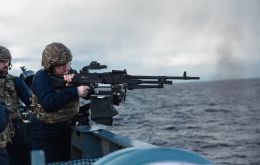
In late July, forces from the three services stationed at Mount Pleasant Complex in the Falkland Islands — headquarters of British Forces South Atlantic Islands (BFSAI) — took part in a series of military exercises designed to demonstrate their speed of response and operational integration, under the banner of the deployment's name, South Atlantic Sentinel.
-
Thursday, August 6th 2026 - 08:18 UTC
Navitas broadens its US Gulf portfolio with stakes in two oil discoveries, oil industry media
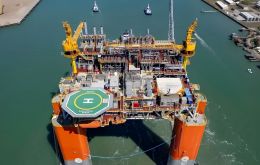
Navitas Petroleum has signed agreements to obtain a 33.33% interest in the Tiberius and Logan oil discoveries in the Gulf of America (Gulf of Mexico) from Occidental and Kosmos Energy, expanding its Gulf of America hydrocarbon portfolio.
-
Tuesday, July 21st 2026 - 20:18 UTC
Argentina joins FAO treaty against illegal fishing, tightening control in the South Atlantic
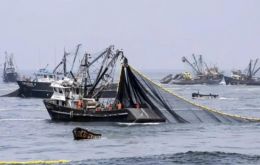
Argentina on July 17 enacted the law approving its accession to the Port State Measures Agreement (PSMA) of the United Nations Food and Agriculture Organization (FAO), a significant step for fisheries governance in the southwest Atlantic. The treaty, in force since 2016, is the only binding international instrument specifically designed to combat illegal, unreported and unregulated (IUU) fishing.
-
Friday, July 10th 2026 - 09:51 UTC
SAERI launches new research projects across the Falklands and South Atlantic
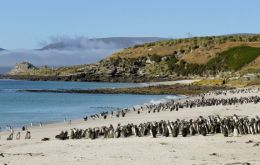
The South Atlantic Environmental Research Institute (SAERI) has secured funding for a series of new scientific projects aimed at strengthening environmental monitoring, conservation science and evidence-based management across the Falklands and the wider South Atlantic.
-
Monday, July 6th 2026 - 20:12 UTC
Argentine lawmaker files criminal complaint against Milei over US military exercises

An opposition lawmaker has filed a criminal complaint against President Javier Milei and four current and former government officials for authorizing, by decree, the entry of US troops that took part in military exercises on Argentine soil without congressional approval.
-
Thursday, July 2nd 2026 - 09:55 UTC
A Spanish investigation tracks how Asia's squid fleet is upending the South Atlantic market
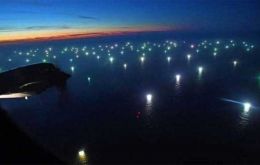
An international investigation published by the Spanish newspaper El Confidencial, with an extensive interactive report, describes how the expansion of Asian fishing fleets in international waters —mainly Chinese— has transformed the global market for frozen squid, with a direct impact on the European fleet and consequences for fishing in the South Atlantic, one of the main sources of income for the Falklands.
-
Sunday, June 7th 2026 - 07:56 UTC
Report warns foreign fleets off Argentina catch up to four times the national industry's haul
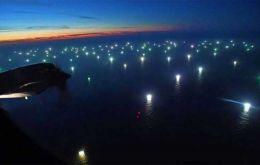
Foreign fleets operating along the outer edge of Argentina's Exclusive Economic Zone (EEZ) —the so-called Mile 201— extract up to four times the volume caught by the entire national fishing industry, according to a report by the Latin American Foundation for Fisheries Sustainability (FULASP) released on the International Day for the Fight against Illegal, Unreported and Unregulated Fishing. The organization called the activity one of the main threats to the fishery resources of the South-West Atlantic.
-
Wednesday, May 20th 2026 - 23:59 UTC
Milei authorizes US Southern Command to patrol Argentine southern sea in strategic shift
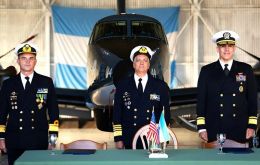
Javier Milei's government on Wednesday announced the signing of a letter of intent with the United States for joint patrolling of the South Atlantic over the next five years, in a military cooperation agreement that ratifies Buenos Aires's strategic alignment with the Donald Trump administration and that has triggered alarms over Argentine sovereignty in its maritime spaces. The agreement, signed by the US Southern Command and Argentine Navy authorities, involves the supply of US technology to modernize the South American country's naval equipment and, at the same time, authorizes the participation of US forces in patrolling the Argentine southern sea.
-
Wednesday, February 18th 2026 - 03:12 UTC
Argentina clears US oceanographic cruise in the South Atlantic as debate grows over “dual-use” data
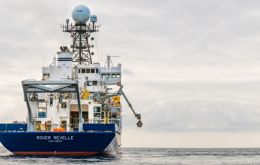
Argentina’s Federal Fisheries Council (CFP) recorded that it had “no objections,” within its remit, to a United States request for a marine scientific research cruise by the R/V Roger Revelle inside Argentina’s Exclusive Economic Zone between March 5 and March 30, 2026. In the same document, the council asked for “all basic data” plus “preliminary and final reports” to be submitted to Argentine authorities prior to any publication of results.
-
Tuesday, February 17th 2026 - 12:00 UTC
Under Antarctic ice, Earth’s deepest gravity “low” points to a 70-million-year story
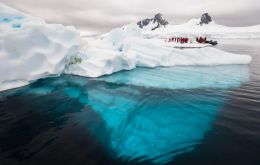
A new study has reconstructed the evolution of the planet’s strongest nonhydrostatic geoid depression —the Antarctic Geoid Low (AGL)— finding that the feature has persisted for at least 70 million years and underwent a major shift in both position and strength between roughly 50 and 30 million years ago.