MercoPress. South Atlantic News Agency



Why a U.S. military plane landed in Ushuaia: lawmakers, ports and geopolitics
 In 2024, Milei pitched the Ushuaia naval project as a logistics hub for a new Argentine base, alongside the head of U.S. Southern Command
 The landing in Ushuaia of a U.S. Air Force aircraft carrying a bipartisan delegation of U.S. lawmakers has reignited political controversy in Argentina’s Tierra del Fuego province and sharpened attention on the country’s strategic footprint in the South Atlantic and Antarctica, amid deepening ties between President Javier Milei and U.S. President Donald Trump.
TN reported that the aircraft transported members of the U.S. House of Representatives linked to the Energy and Commerce Committee. The visit included activities tied to natural environments, critical minerals and public health issues. Argentine officials, quoted by the same outlet, said the Foreign Ministry was aware of the trip and played down its significance: “There is nothing unusual about it.”
Read also: U.S. Air Force C-40 landing in Ushuaia fuels scrutiny of Argentina’s southern agenda
The arrival came days after Argentina’s federal government moved to take over, for one year, the administration of Ushuaia’s port, previously run by the provincial government. The national executive cited alleged irregularities and operational concerns, while Governor Gustavo Melella rejected the measure and said he would challenge it in court. “What they did is illegal; there are no grounds,” Melella said in remarks cited by TN.
In Tierra del Fuego, the combination of both developments — the port intervention and the U.S. military flight — fueled speculation about geopolitical and economic motives, especially given the growing international interest in maritime routes, Antarctic logistics and strategic resources. Provincial officials said they lacked details about the delegation’s agenda and demanded clarifications from the federal government, while opposition figures renewed calls for public transparency.
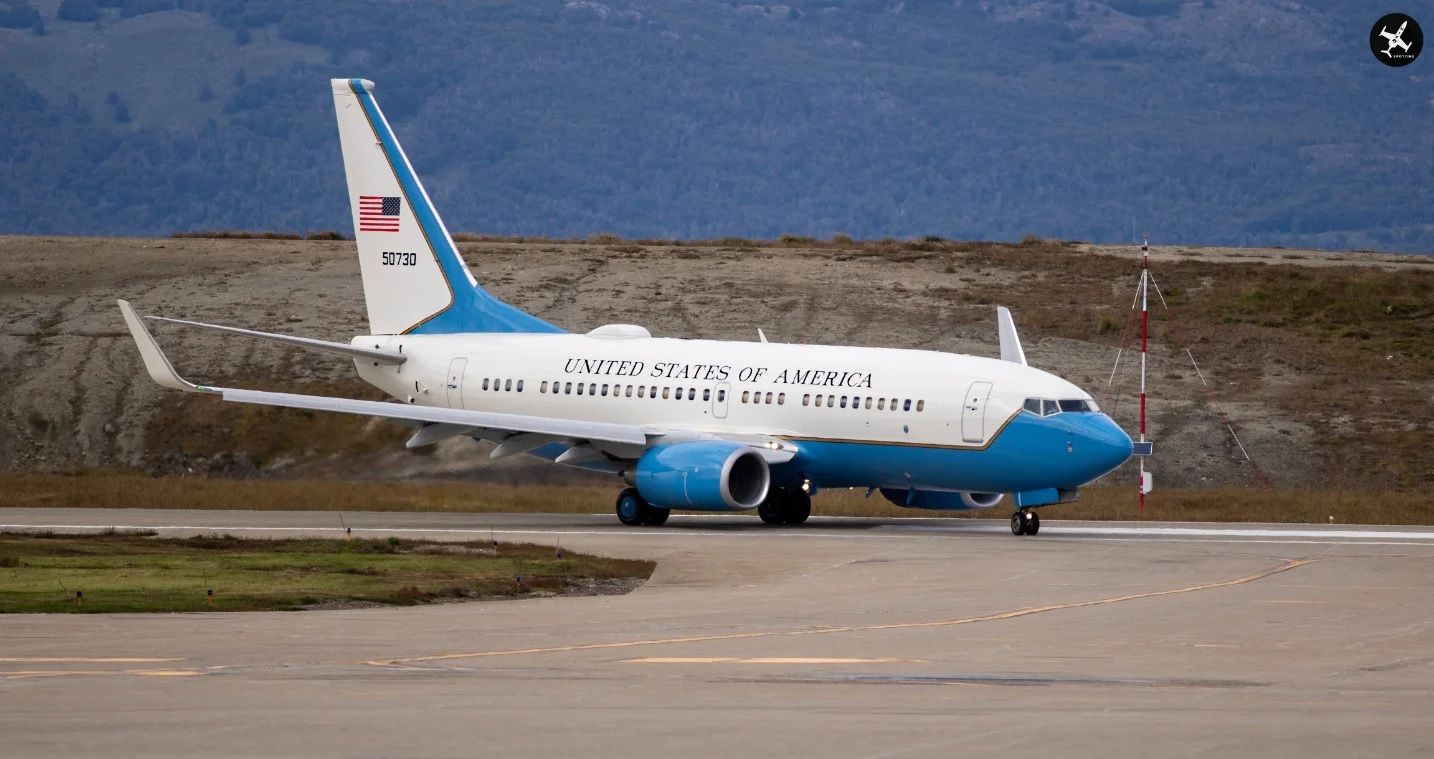
A U.S. Air Force Boeing C-40 Clipper landed Sunday at Ushuaia’s international airport — an
unusual arrival that drew immediate attention from local media
The broader backdrop includes Milei’s explicit alignment with Washington and U.S. regional strategy. Reuters has noted that Milei, in 2024, presented a Ushuaia naval project as a logistics hub linked to the base Argentina is building there, alongside the then head of U.S. Southern Command. The agency also referenced subsequent visits by senior U.S. officials and the sensitivity of the issue amid competition for influence with China in South America.
Argentina’s government has framed the lawmakers’ trip as routine and technical, without political implications. Yet the presence of a U.S. congressional mission focused on critical minerals and environmental management in a key Antarctic gateway has again pushed sovereignty and strategic infrastructure to the center of the domestic debate — and raised questions about how far Buenos Aires’ pivot toward Washington may reshape decision-making in the far south.
With the port takeover already headed to court and no fully detailed public readout of the delegation’s meetings, the episode is set to keep straining federal-provincial relations, while placing Ushuaia at the heart of a larger contest over Antarctic logistics, resources and geopolitical positioning.


Top Comments
Disclaimer & comment rulesCommenting for this story is now closed.
If you have a Facebook account, become a fan and comment on our Facebook Page!