MercoPress. South Atlantic News Agency
The RRS Shackleton incident when an Argentine destroyer opened fire on the research vessel
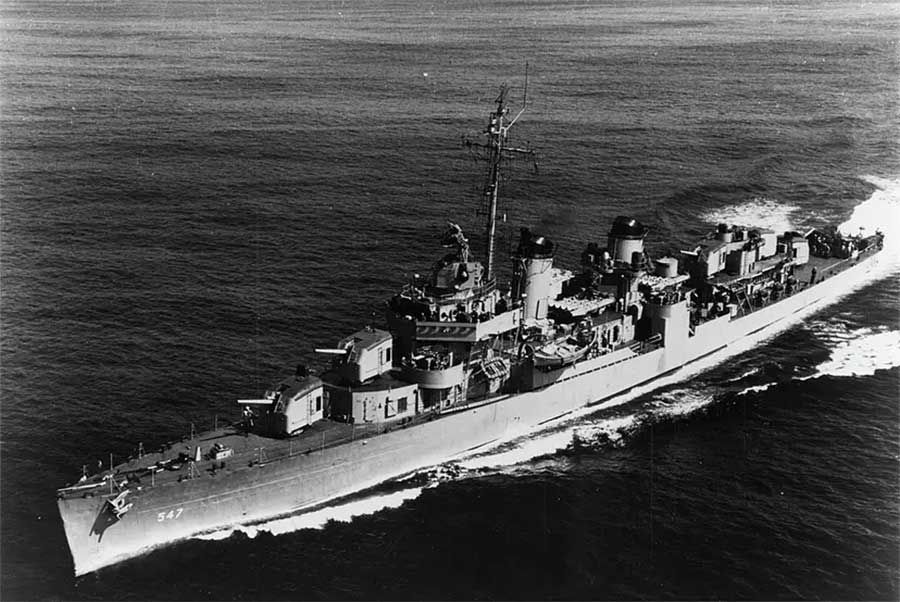 ARA Almirante Storni was a former US destroyer Fletcher Class
 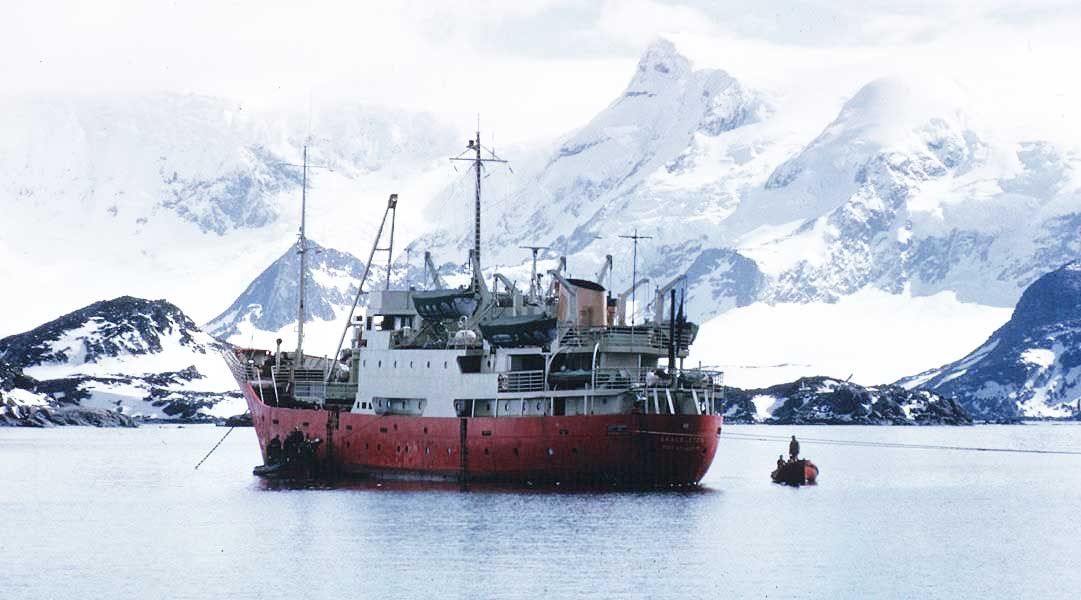 RRS Shackleton built in Sweden was operated by the Falkland Islands Dependencies Survey (FIDS), British Antarctic Survey, BAS, and NERC (NERC) in the Antarctic from 1955 to 1983.
 On this day but in 1976 a very serious incident occurred in the South West Atlantic when the British research vessel RRS Shackleton was intercepted and fired upon by the Argentine destroyer ARA Almirante Storni, some 78 miles south of Cape Pembroke in the Falkland Islands.
The Argentine navy attempted to force the vessel to sail to the port of Ushuaia, in Tierra del Fuego, but Captain Philip Warne refused, continued toward the Falkland Islands, and received support from the British Governor.
The Almirante Storni fired three shots across the RRS Shackleton’s bows at 12:30 GMT 4 February to force it to stop. The RRS Shackleton was conducting a scientific survey and returning from a mission.
The incident occurred amid high tension, shortly after the announcement of a British survey team (the “Shackleton Report”) to investigate the economic and social future of the Falklands, plus the potential for alternative industries to complement the static sheep/wool situation.
Captain Warne consulted with Falklands Governor Neville French and informed the Argentines he was carrying explosives and continued to the Falklands despite further threats to shell the hull.
The Argentine destroyer followed the Shackleton until it reached the safety of the Falkland Islands. The vessel was subsequently detained for 10 days in Port Stanley, and Captain Warne was later awarded an OBE for his handling of the situation.
As can be expected the following day the Under Secretary for Foreign and Commonwealth Affairs, Edward Rowlands explained in Parliament what measures the British government had taken.
“On learning of the incident, I immediately instructed the chargé d'affaires at Buenos Aires to deliver the strongest protest to the Argentine Government and to request that the Argentine destroyer immediately be ordered to stop harassing the ´Shackleton´“. Rowlands also protested to the Argentine chargé in London in equally vigorous terms.
Furthermore, “I have made very clear to the Argentine Government that we do not expect a repetition of this incident and that any further incidents will call into question the basis of our commercial and political relationship. I am sure the House will not expect me to think aloud about action we might have to take in the light of further incidents. I can confirm that there are 37 Royal Marines on the Islands.
Rowlands added that HMS ”Endurance” was in Port Stanley and “her helicopters proved useful in reconnaissance work in yesterday's incident. We shall obviously consider what further action is required in the light of developments and the response to our demands from the Argentine Government.”
We shall do everything possible to cool the situation because we appreciate the worries and concern of the Islanders. I am not quite sure what our next course of action should be or what steps should take, especially in view of the fact that we have no ambassador in Buenos Aires and the Argentine does not have an ambassador here (*). However, we shall take every possible diplomatic initiative to cool the situation.
Mr- Rowlands insist that “the government are conscious of our responsibilities to the Islanders, as previous Governments have been. The Argentine chargé d'affaires did not give me an explanation when I saw him last night. They have served a note upon us saying that they claim the waters for 200 miles around the Falkland Islands as part of their claim for the Islands and dependencies themselves. However “the position of the Government is very clear. We respect the wishes of the Falkland Islanders”.
Following the March 1976 military coup, the new Argentine Junta launched Operation Sol, secretly establishing a military outpost, Corbeta Uruguay, on Southern Thule in the South Sandwich Islands. Britain protested the move but did not take military action at the time. On 19–20 June 1982 a British special force in Operation Keyhole, recovered Southern Thule. A 10-person Argentine garrison surrendered without resistance to Royal Marines from the frigate HMS Yarmouth.
(*) On October 1975, the Argentine military Junta withdrew its ambassador to London and requested that Britain recall its own ambassador in January 1976.


Top Comments
Disclaimer & comment rules-

-

Read all commentsWell done Capt. Warne. You must never give in to bullies. Sad that the Argentine's did not take heed.
Feb 05th, 2026 - 03:12 pm 050 years later and still that countries government and Malvinas fanatics have not grown up,
Feb 05th, 2026 - 05:12 pm 0Commenting for this story is now closed.
If you have a Facebook account, become a fan and comment on our Facebook Page!