MercoPress. South Atlantic News Agency


Venezuelan National Assembly speaker meets US Senate envoys
 The Venezuelan government framed the opening as part of a broader agenda of stabilization and gradual normalization of ties.
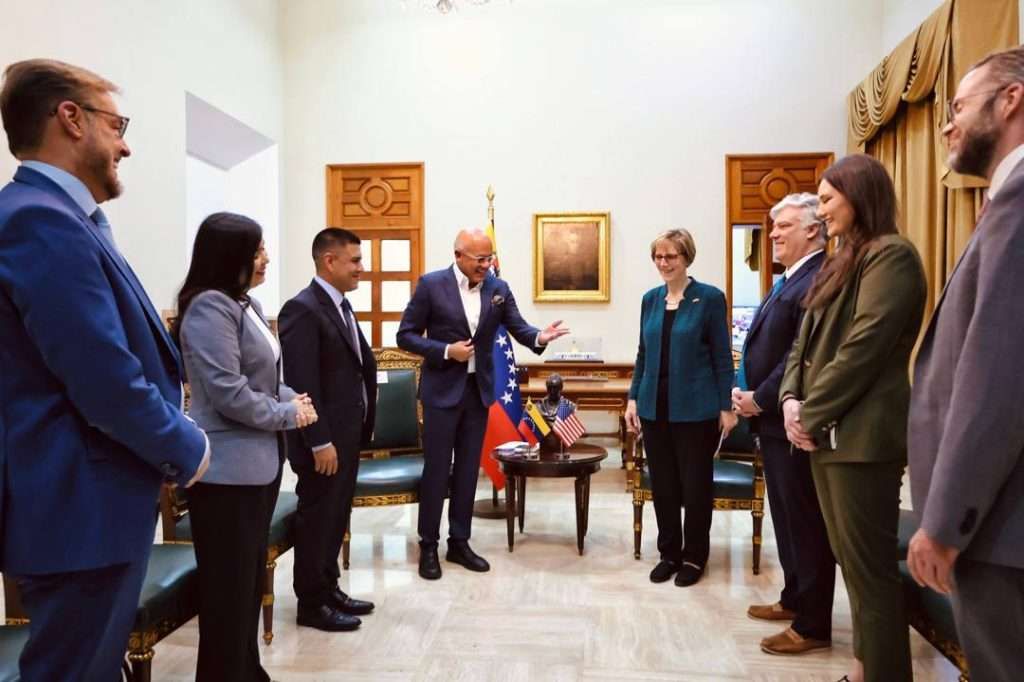
 Venezuelan National Assembly speaker Jorge Rodríguez said on Wednesday that he met in Caracas with representatives of the U.S. Senate Foreign Relations Committee and with U.S. Chargé d’Affaires Laura Dogu, in the latest sign of the bilateral opening that began after January’s political shift. Rodríguez said the agenda forms part of a dialogue “always based on mutual respect and cooperation between nations.”
According to the senior lawmaker, the meeting took place at the Federal Legislative Palace. Images released after the encounter also showed parliamentary vice presidents Pedro Infante and Grecia Colmenares, suggesting the contact had an institutional format rather than being merely exploratory. So far, Rodríguez has not disclosed the issues discussed or publicly identified the members of the U.S. legislative delegation.
The visit comes as parliament continues work around the Amnesty Law passed in February. Opposition lawmaker Nora Bracho, a member of the special follow-up commission, said days earlier that the body would review “case by case” files not explicitly covered by the law, with the aim of broadening its practical reach. That framework helps explain why some opposition sectors see contacts with Washington as relevant to the development and implementation of the measure.
The meeting also fits into a broader sequence of contacts between Caracas and Washington. In early February, Delcy Rodríguez received Laura Dogu at Miraflores and, according to the official account released at the time, both sides agreed to move forward on a roadmap to address issues of bilateral interest through diplomatic dialogue. On that occasion, the Venezuelan government framed the opening as part of a broader agenda of stabilization and gradual normalization of ties.
That channel remained active in the following weeks. On March 4, during a visit by U.S. Interior Secretary Doug Burgum, Delcy Rodríguez said talks were advancing on mining and energy, while the U.S. side framed the process within a broader push for investment and economic restructuring in Venezuela. Reuters reported then that Jorge Rodríguez had already steered changes through parliament to oil regulations aimed at encouraging new investment.
Against that background, the meeting at the National Assembly reinforces the view that dialogue between the two countries is no longer limited to the executive branch and is beginning to include the legislature as well. Although no concrete outcomes from the talks are yet known, the political signal is clear: Caracas and Washington are keeping parallel channels open on institutional affairs, amnesty and cooperation as Venezuela’s transition continues to reshape its internal and external balance.


Top Comments
Disclaimer & comment rulesCommenting for this story is now closed.
If you have a Facebook account, become a fan and comment on our Facebook Page!