MercoPress. South Atlantic News Agency
Tag: Delcy Rodriguez
-
Wednesday, October 14th 2026 - 22:02 UTC
US lifts sanctions on Jorge Rodríguez, president of Venezuela’s National Assembly
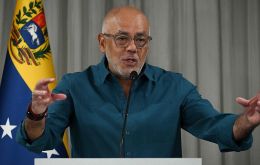
The US Treasury Department on Wednesday removed from its sanctions list Jorge Rodríguez, president of Venezuela’s National Assembly and brother of acting president Delcy Rodríguez. The Treasury did not explain the reasons for the decision.
Add your comment! -
Thursday, September 24th 2026 - 10:47 UTC
Delcy Rodríguez tells the UN there will be elections in Venezuela, without setting a date
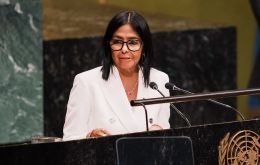
Venezuela's acting president, Delcy Rodríguez, announced on Wednesday before the United Nations General Assembly that her country will hold elections, without specifying when, and thanked US President Donald Trump for “his willingness to return to the path of diplomatic relations and cooperation”.
-
Wednesday, September 23rd 2026 - 08:55 UTC
Delcy Rodríguez calls her meeting with Trump “historic” and thanks him for his support
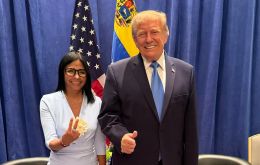
Venezuela's acting president, Delcy Rodríguez, described her first meeting with US President Donald Trump as “historic”. The encounter took place on Tuesday evening in New York behind closed doors and with no press access. Her post on the social network X is the only available account of what was discussed: the White House confirmed the meeting and those present but released no agenda or outcomes.
-
Monday, September 21st 2026 - 10:15 UTC
Delcy Rodríguez arrives in New York for UN General Assembly, ahead of meeting with Trump
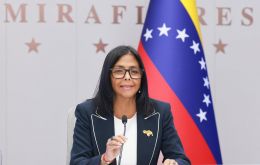
Venezuela's acting president, Delcy Rodríguez, arrived in New York in the early hours of Monday to take part in the 81st session of the UN General Assembly, days ahead of a planned meeting with US President Donald Trump on Tuesday.
-
Saturday, September 19th 2026 - 06:23 UTC
Trump and Delcy Rodríguez to meet in New York, first encounter with a Venezuelan leader in 11 years
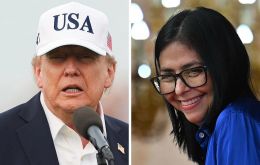
US President Donald Trump will meet on Tuesday with Venezuela's acting president, Delcy Rodríguez, on the sidelines of the UN General Assembly in New York, in what will be the first encounter between a US president and a Venezuelan leader in more than eleven years, since the brief meeting between Barack Obama and Nicolás Maduro at the Summit of the Americas in Panama in 2015.
-
Thursday, September 17th 2026 - 08:35 UTC
US removes Venezuela and Bolivia from list of countries failing on drugs
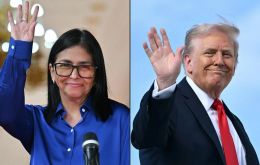
The United States government removed Venezuela and Bolivia from the category of countries that Washington says have failed to demonstrably combat international drug trafficking, while keeping Colombia, Afghanistan and Myanmar on that list. The determination, sent to Congress on Tuesday and released by the State Department on Wednesday, is part of the annual assessment of the 23 countries deemed major drug transit or producing states, five of which had been designated last year as having “failed demonstrably.”
-
Wednesday, September 2nd 2026 - 21:00 UTC
Trump says Venezuela is “not ready” to hold elections and sets no timetable
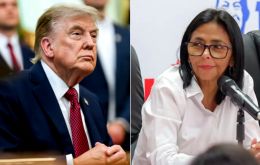
US President Donald Trump said on Wednesday that Venezuela does not yet meet the conditions to call elections, five days after announcing the agreement granting Washington majority control over a fifth of the country's oil reserves for a century.
-
Tuesday, September 1st 2026 - 09:23 UTC
The Venezuelan oil concession goes to Alejandro Betancourt's firm, under investigation in Europe

The White House on Monday identified the company that will operate seventeen Venezuelan oil fields for a century in partnership with the US government: North American Blue Energy Partners, owned by Venezuelan businessman Alejandro Betancourt, who is under investigation in Switzerland and Spain over his alleged involvement in a scheme to launder funds from the state oil company PDVSA. There is no conviction against him.
-
Saturday, August 29th 2026 - 04:58 UTC
The US will control 55% of output from the new oil company in Venezuela
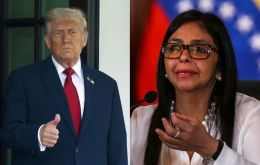
US President Donald Trump announced on Friday an agreement with Venezuela's interim government granting Washington majority control over more than 65 billion barrels of proven Venezuelan crude reserves, around 21% of the country's total. Acting president Delcy Rodríguez confirmed the deal.
-
Thursday, August 13th 2026 - 08:59 UTC
Venezuela's government and opposition agree to renew the Supreme Court and claim the London gold
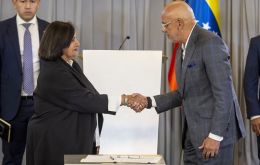
The government of acting president Delcy Rodríguez and a section of Venezuela's opposition closed the first round of negotiations in Caracas on Wednesday with two agreements: restarting from scratch the renewal of the Supreme Court of Justice, and acting jointly to recover Venezuelan gold reserves held at the Bank of England.