MercoPress. South Atlantic News Agency


Venezuelan parliament passes law opening mining sector to private capital amid rapprochement with US
 The law repeals the Mining Law in force since 1999, enacted by decree under then-President Hugo Chávez using special powers
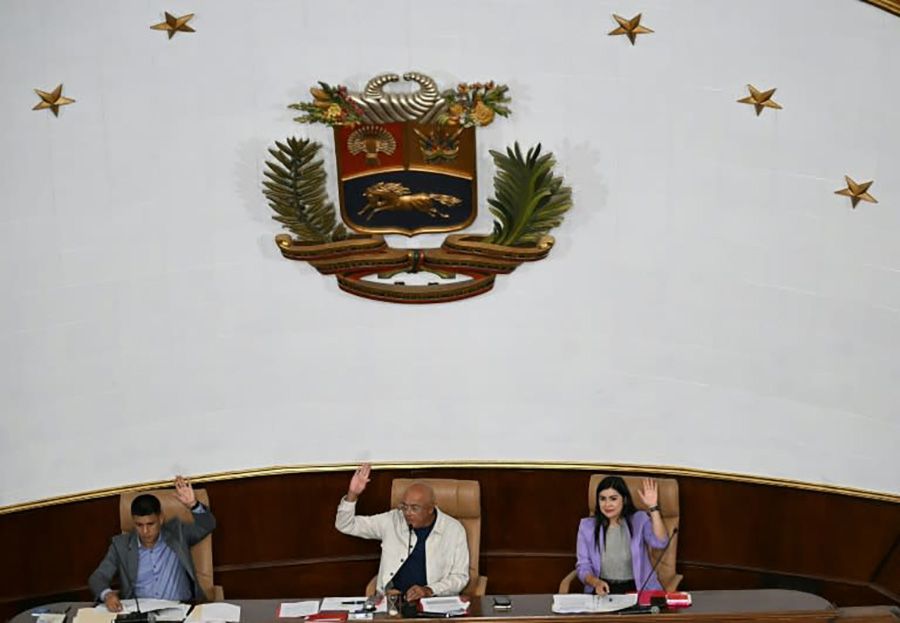
 Venezuela's National Assembly unanimously approved on Thursday a new 131-article Organic Mining Law that opens the door to private and foreign investment in the mining sector, on a day also marked by police repression of thousands of workers who marched to demand an increase in the minimum wage, frozen since 2022.
The law repeals the Mining Law in force since 1999, enacted by decree under then-President Hugo Chávez using special powers. The text was referred to the Supreme Court for review of its organic status before promulgation by the executive branch.
The reform, championed by acting President Delcy Rodríguez, comes in the context of a rapprochement between Caracas and Washington following the capture of Nicolás Maduro on January 3 in a U.S. military operation. U.S. Interior Secretary Doug Burgum visited Caracas weeks ago and expressed the interest of American companies in operating in Venezuela. The State Department estimates the value of gold extracted in the country averages $2.2 billion annually.
Among its central provisions, the law establishes concessions for 30 years, renewable for two consecutive periods of up to 10 years each. Royalties to the state will be up to 13% of gross production, calculated on the commercial value of the final product, payable in cash or in kind. The Central Bank of Venezuela retains a preferential right to purchase gold during the first five days after extraction. The law also introduces mediation and arbitration mechanisms for resolving disputes with investors.
Article 74 prohibits state officials and their family members from obtaining mining titles or participating as shareholders in sector-related companies until five years after leaving office. Mining activities in areas under special environmental protection carry penalties of 10 to 15 years in prison.
Parliament Speaker Jorge Rodríguez called the law “a vehicle for building future prosperity.” The mining reform follows the recent modification of the hydrocarbons law, as part of an economic opening strategy aimed at redefining the state's role in extractive sectors.
Parallel to the parliamentary session, some 2,000 workers, union members and retirees marched from Plaza Venezuela toward the Miraflores Presidential Palace to demand a salary increase. The minimum wage remains at 130 bolívares per month, equivalent to $0.27 at the official exchange rate, against a family basic food basket estimated at $645 by private consultants. The Bolivarian National Police dispersed the march with tear gas and riot shields, AFP confirmed.
At least one member of the opposition party Primero Justicia was detained, according to the NGO Foro Penal, which counts more than 480 political prisoners in the country. The National Press Workers' Union reported assaults on 10 journalists during the protests. “Is this the transition that Donald Trump talks about? Is this what the transition is about?” asked José Patines, leader of the National Union Coalition. Unions announced a rally for April 17 outside the U.S. Embassy.


Top Comments
Disclaimer & comment rulesCommenting for this story is now closed.
If you have a Facebook account, become a fan and comment on our Facebook Page!