MercoPress. South Atlantic News Agency
Argentina seeks a trade pact that would link it with the UK for the first time since 1982
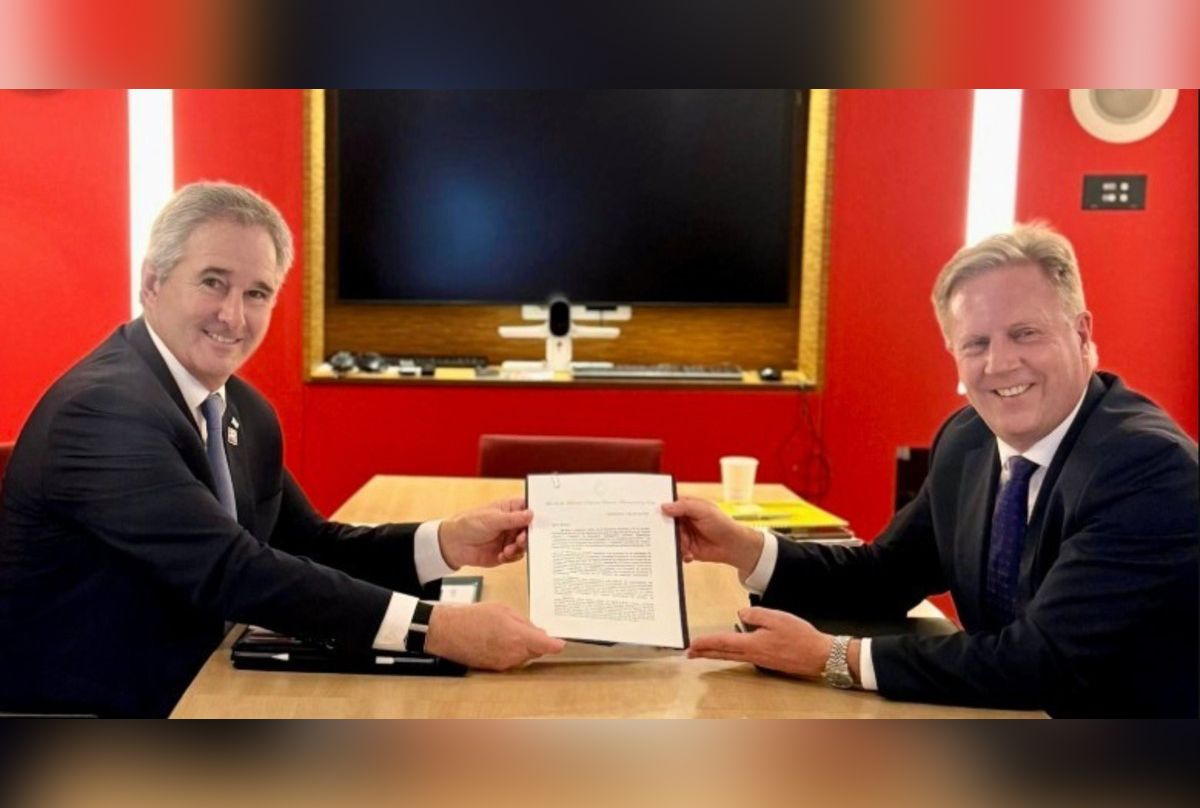 “I handed over the formal letter of intent to join one of the broadest, most modern and dynamic trade agreements in the world,” Quirno said
 Argentina has applied to join the Comprehensive and Progressive Agreement for Trans-Pacific Partnership (CPTPP), a step that, if completed, would place it for the first time since the 1982 Falklands War in a trade agreement that also includes the United Kingdom. Foreign Minister Pablo Quirno announced the decision during a tour of Europe and handed the formal letter of intent to New Zealand, the treaty's depositary.
“I handed over the formal letter of intent to join one of the broadest, most modern and dynamic trade agreements in the world,” Quirno said. Accession, however, is not immediate: the process can take between two and five years, requires all members to agree to open negotiations, and is not guaranteed.
The CPTPP today brings together twelve economies —Australia, Brunei, Canada, Chile, Japan, Malaysia, Mexico, New Zealand, Peru, Singapore, the United Kingdom and Vietnam— which account for close to 15% of world goods trade and some 600 million people, making it one of the largest free-trade areas on the planet. The United Kingdom joined in 2024, while China and Taiwan have expressed interest in entering. The United States, by contrast, withdrew from the original agreement and never ratified it.
The move is part of President Javier Milei's trade-opening policy, which has already advanced a reciprocal agreement with the United States, backed the deal between Mercosur and the European Union, and sought the country's entry into the OECD. Amid tensions over Washington's tariff increases, the trans-Pacific bloc is seen by several countries as an alternative platform to reorganize international trade.
For Argentina, the step carries a singular political dimension. Because the United Kingdom left the European Union after Brexit, the CPTPP would be the first trade framework the two countries shared since the 1982 war, with clauses in which the dispute over the Falkland Islands weighs heavily. British membership does not currently include the islands: the treaty can only be extended to territories under the United Kingdom's international responsibility if all members accept it through an exchange of diplomatic notes, and for now that mechanism covers Gibraltar, Guernsey, Jersey and the Isle of Man, but not the Falklands.
Experts consulted noted that, because the CPTPP does not allow reservations —under the Vienna Convention— Argentina would have to make special declarations about its sovereignty claim, though the government has not explained whether it did so or how. British accession, they stressed, does not today imply the inclusion of the Falklands, even if a mechanism exists that would permit a possible future extension.
The matter has caused concern in the Falkland Islands Government, whose exports depend largely on fishing, particularly squid. Before Brexit, the islands had preferential access to the European market as an overseas territory associated with a member state; after the British departure from the EU, they lost those automatic preferences. Analysts also warned that even if the islands were incorporated in the future, the benefits would be different, because much of their exports historically went to Europe. The picture, however, could change with the plans of the firms Navitas, of Israel, and Rockhopper, of the United Kingdom, to extract oil in waters near the islands by 2028, in an operation Argentina rejects.
On the domestic front, parliamentary and business sources said the government had not summoned Congress or business leaders to explain the scope of the CPTPP, unlike previous administrations. From the opposition, Buenos Aires provincial cabinet chief Carlos Bianco and former foreign minister Jorge Taiana questioned the move over the sovereignty issue. At the end of the month, Quirno and the area's secretary, Paola Di Chiaro, will travel to the UN to defend, before the Decolonization Committee, the resolution that promotes a dialogue with London over the archipelago.


Top Comments
Disclaimer & comment rulesCommenting for this story is now closed.
If you have a Facebook account, become a fan and comment on our Facebook Page!