MercoPress. South Atlantic News Agency

Caracas and Washington launch direct flights after seven years and sign two oil deals
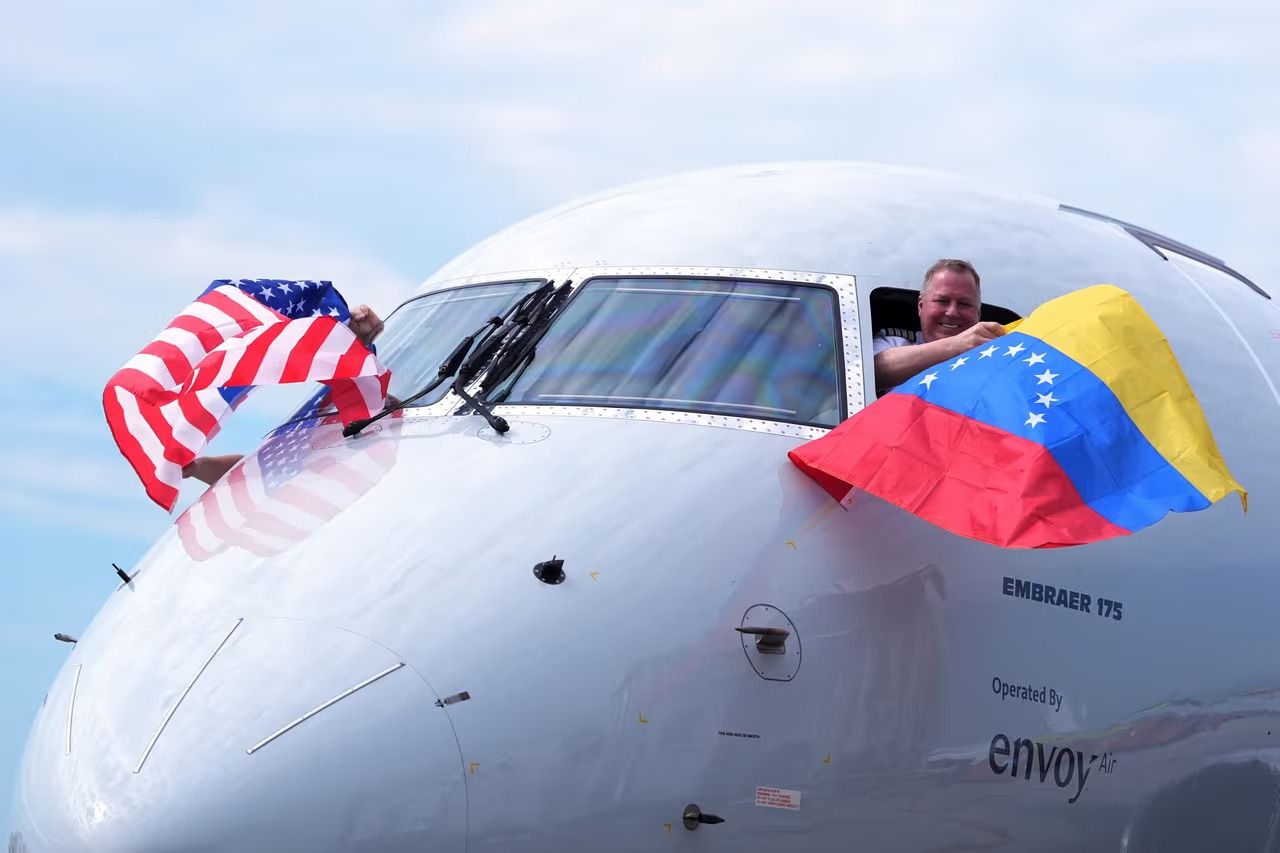 The first American Airlines flight took off from Maiquetía airport bound for Miami, completing the journey in just over three hours
 The United States and Venezuela inaugurated on Thursday the first direct air connection between the two countries since 2019 and signed two new energy agreements, in a day the White House described as a substantive advance in the “economic revitalization” phase of the three-stage plan designed by President Donald Trump and Secretary of State Marco Rubio to reorganize the bilateral relationship following the capture of former president Nicolás Maduro by US troops on January 3.
The first American Airlines flight took off from Maiquetía airport bound for Miami, completing the journey in just over three hours, following a ceremony in which the aircraft was received with the traditional water arch. The route will operate with daily frequency until May 20 and will expand to two daily flights from May 21, according to the airline. Venezuelan Transport Minister Jacqueline Farías anticipated that the country expects to receive more than 100,000 passengers through this new connection and to consolidate itself as a “regional hub” in aviation terms. Tickets on the inaugural flight cost more than $2,000, although the airline announced that the average fare would drop to approximately $1,000 in May.
In parallel, the government of acting President Delcy Rodríguez signed two oil exploration and exploitation contracts with US firms Overseas Oil Company and Crossover Energy Holding, in a ceremony held at Miraflores Palace with the participation of officials from the United States embassy in Caracas. The agreements cover fields in the Anzoátegui, Monagas, and Barinas states, and include the extraction of oil and associated gas intended to boost the Venezuelan electricity system, as Rodríguez explained. “This is the path for bilateral relations,” the acting president said during the ceremony.
The director of the US National Energy Dominance Council, Jarrod Agen, said the agreements reflect “the strength” of the bilateral relationship and stressed that the Trump administration is moving “at the speed” of the president to attract investment. The US chargé d'affaires in Caracas, John Barrett, described Rodríguez's government as Washington's “partner” in this stage of the process. “This will allow Venezuela to put down deep roots of economic growth that consolidate in such a way that it is well positioned to move toward the transition in the third stage of this plan,” Barrett explained, referring to the future democratic phase of the bilateral framework.
The new dynamic has accelerated following the partial lifting of sanctions by the US Treasury's Office of Foreign Assets Control (OFAC), which in April authorized financial operations with four Venezuelan state-owned banks, including the Central Bank of Venezuela. Despite this shift, the State Department maintains a level 3 alert for US citizens travelling to Venezuela, recommending they “reconsider travel to the country” due to risks linked to crime, kidnapping, terrorism, and shortcomings in the healthcare system. The European Parliament, on the same Thursday, voted on a resolution urging that European sanctions remain in place until Caracas adopts “significant measures toward a peaceful transition to democracy.”


Top Comments
Disclaimer & comment rulesCommenting for this story is now closed.
If you have a Facebook account, become a fan and comment on our Facebook Page!