MercoPress. South Atlantic News Agency



Spain agrees to receive hantavirus-hit cruise ship in Canary Islands following WHO request
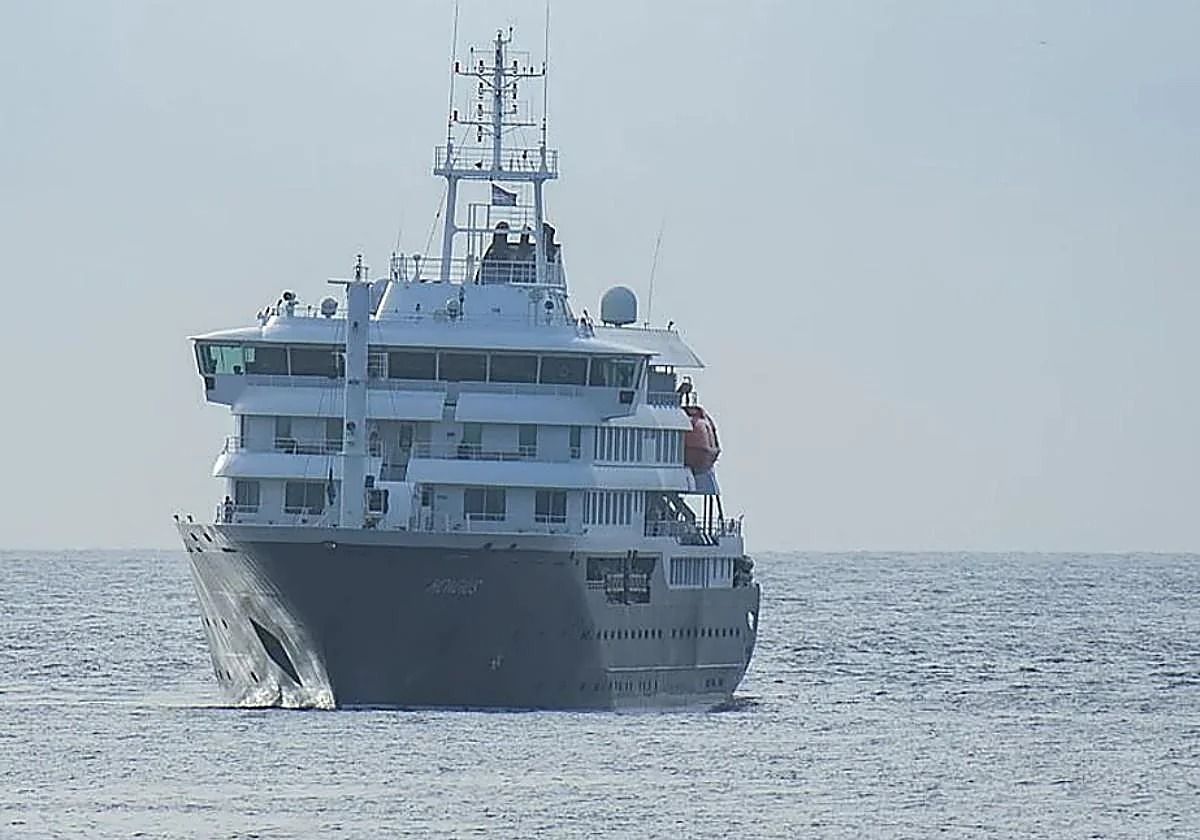 The reception protocol will be developed by the WHO and the European Centre for Disease Prevention and Control (ECDC)
 The Spanish government on Tuesday night authorised the docking in the Canary Islands of the polar cruise ship MV Hondius, on which a hantavirus outbreak has already left three people dead, after Cape Verdean authorities denied it entry to their ports and following a formal request from the World Health Organization (WHO) that invoked Spain's “moral and legal obligation” to assist the 147 passengers and crew on board, including 14 Spanish citizens.
The Health Ministry, led by Mónica García, justified the decision by pointing to the Canary Islands as the “nearest location with the necessary capabilities” to handle the situation, according to an official statement released after 10:00 p.m. local time. The acceptance came after hours of resistance, during which the Canary Islands' regional president, Fernando Clavijo, had said from Brussels that “the ship should be attended where it is,” arguing that medical assistance should be provided in Cape Verde itself before the vessel returned to the Netherlands, the ship's flag state. The ship is expected to reach the Canary archipelago in three or four days, possibly at either Gran Canaria or Tenerife, according to Dutch operator Oceanwide Expeditions, with the exact port still to be determined.
The reception protocol will be developed by the WHO and the European Centre for Disease Prevention and Control (ECDC), and provides for prior aerial evacuations from Cape Verde of three patients requiring urgent medical attention: the ship's doctor — in serious condition — will be flown to the Canary Islands in a hospital aircraft, while two other passengers will travel to the Netherlands and Germany. WHO Director-General Tedros Adhanom Ghebreyesus sent a letter of thanks to Spanish Prime Minister Pedro Sánchez, in which he emphasised that rapid disembarkation “is a humanitarian imperative” and warned against “unnecessary restrictions without public health justification.”
Seven cases linked to the outbreak have been identified to date: three fatalities — two confirmed as hantavirus and a German national whose cause of death has yet to be established — a British patient in critical condition in an intensive care unit in Johannesburg, and three passengers with mild or moderate symptoms on board. The WHO suspects that the initial infections may have occurred outside the ship during the South American journey of the first two victims, and that subsequent person-to-person transmission may have occurred inside the vessel, an unusual route documented only in the so-called Andes virus, predominant in Argentina and Chile. WHO Director of Epidemic and Pandemic Preparedness and Prevention Maria Van Kerkhove said “the risk to the wider public remains low” and confirmed the absence of rodents on board.
The MV Hondius set sail from the Argentine port of Ushuaia on March 20 on an expedition that included stops in Antarctica, the South Georgia Islands, Tristan da Cunha, Saint Helena, and Ascension, before reaching Cape Verdean waters on May 3. Symptoms manifested between April 6 and April 28.


Top Comments
Disclaimer & comment rulesCommenting for this story is now closed.
If you have a Facebook account, become a fan and comment on our Facebook Page!