MercoPress. South Atlantic News Agency



WHO confirms Andes strain in MV Hondius outbreak and traces 23 passengers who disembarked at Saint Helena
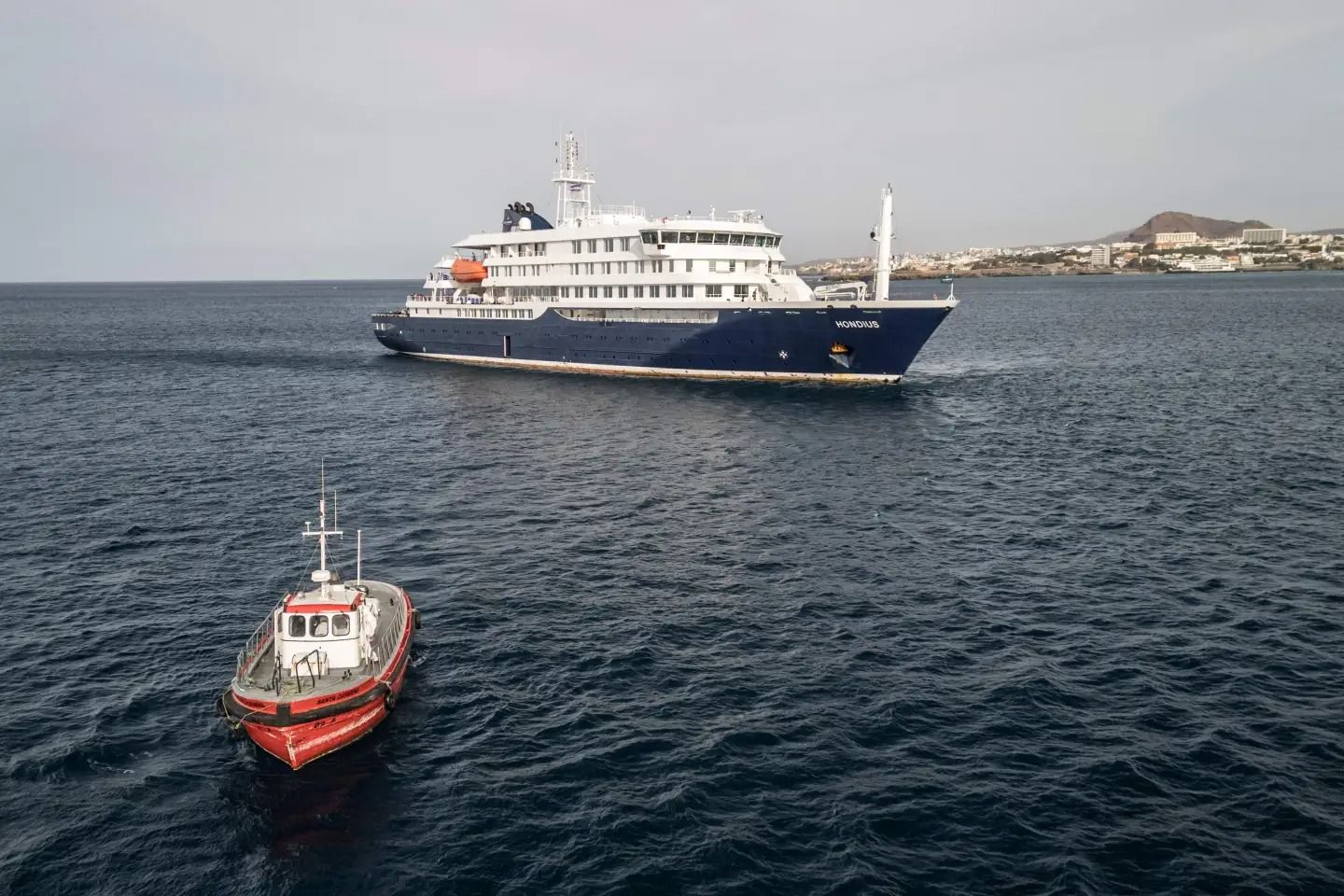 The MV Hondius is expected to take between three and four days to reach the Canary Islands from its current position off Cape Verde
 The World Health Organization (WHO) confirmed on Wednesday that the variant responsible for the hantavirus outbreak aboard polar cruise ship MV Hondius is the Andes virus, the only documented strain capable of human-to-human transmission, raised the total number of linked cases to eight, and launched the international tracing of 23 passengers who left the ship two weeks ago during a stop at the island of Saint Helena. The confirmation of the strain represents a significant epidemiological development and substantially widens the scope of the health investigation.
The eighth identified case is that of a Swiss citizen who disembarked at Saint Helena with his wife before the outbreak became known and who is currently receiving treatment in Zurich. The Andes strain is predominant in the southern cone of South America and can cause a pulmonary syndrome with a fatality rate of up to 40% in its most aggressive variants, according to WHO data. Its confirmation as the causative agent reinforces the hypothesis that the initial infections occurred outside the ship during the South American journey, before the vessel set sail from Ushuaia on March 20. The virus's incubation period of up to eight weeks makes it necessary to trace all passengers who shared spaces with those affected.
The three passengers who remained on board with suspected symptoms were transferred on Wednesday to the Netherlands, including the ship's doctor, whose destination was changed from the Canary Islands to Amsterdam in the past few hours. An air ambulance transporting them from Cape Verde made an unplanned refuelling stop in Gran Canaria after Morocco denied permission to enter its territory for the purpose. Canarian authorities confirmed to EFE that they authorised the technical stopover on condition that no person enter or leave the aircraft.
Spanish Health Minister Mónica García announced that the 14 Spanish citizens on board will be examined in the Canary Islands and subsequently flown to the Gómez Ulla military hospital in Madrid, where they will be treated under isolation conditions. García specified that all passengers still on board remain asymptomatic. The costs of treating infected individuals will be covered by insurance companies or their countries of origin, while the transfer of the wider passenger group will be financed through the European Union's joint evacuation mechanism, which covers 75% of costs, with the remaining 25% borne by Spain as the receiving country.
The announcement of the docking in Tenerife keeps alive a friction between Spain's central government and the Canary Islands executive, led by Fernando Clavijo, who has publicly maintained that the ship should receive care in Cape Verde before sailing back to the Netherlands without stopping at the archipelago. The MV Hondius is expected to take between three and four days to reach the Canary Islands from its current position off Cape Verde.


Top Comments
Disclaimer & comment rulesCommenting for this story is now closed.
If you have a Facebook account, become a fan and comment on our Facebook Page!