MercoPress. South Atlantic News Agency



Bolivia: Ten thousand Evo Morales supporters descend on La Paz as government warns of armed groups
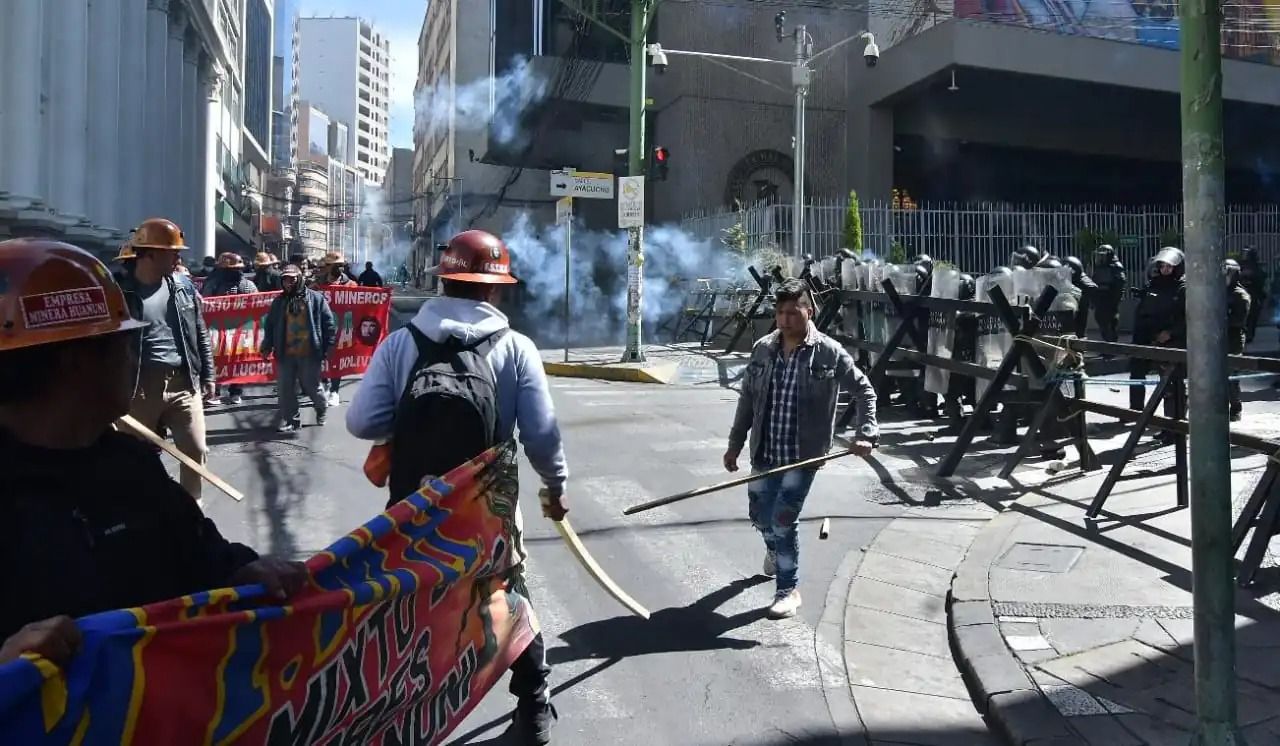 The march, described by its organizers as a “pro-Evo and coca-grower” mobilization, is made up of peasant, indigenous, and labor sectors
 The Bolivian government on Monday denounced the presence of “armed groups” in the march of peasant farmers and supporters of former president Evo Morales that descended on the city of La Paz, the seat of the executive and legislative branches, after a six-day walk from the highlands, demanding the resignation of President Rodrigo Paz. Deputy Interior Minister Hernán Paredes estimated at “somewhat more than ten thousand people” the column of protesters that entered the capital from the neighboring city of El Alto, in what authorities described as an attempt by the former leader to destabilize the executive six months into his term.
“Unfortunately, it has been identified that there are groups that have moved on to the use of weapons. That has us worried,” said presidential spokesperson José Luis Gálvez. The official singled out the responsibility of a former Defense Ministry official identified as Bernabé G.P., who currently chairs the conflict committee of the “Ponchos Rojos,” a radical faction of Aymara peasant farmers from the La Paz highlands characterized by a militarized form of organization and by the display of antique weapons during protests. Gálvez circulated a video shared in recent hours on social media in which some twenty alleged members of the group appear on an Andean road brandishing weapons and chanting slogans referring to “civil war.”
The march, described by its organizers as a “pro-Evo and coca-grower” mobilization, is made up of peasant, indigenous, and labor sectors, and includes the Ponchos Rojos, the Bolivian Workers' Central (COB), and the Tupac Katari Peasant Federation of La Paz, all of them historic allies of the Movement Toward Socialism. Other sectors that had initially joined the conflict, including mining cooperatives, teachers, and labor federations from El Alto, reached agreements with the government in recent days and stepped back from the protest. Paredes described the mobilization as an action “with conspiratorial aims” that is “at the limit of legality” and said the activities surrounding Morales “show an attempt to return to government in the most undemocratic way one can imagine.”
The conflict, now in its thirteenth day, keeps the main overland routes of the department of La Paz closed, blocking transit toward the country's interior and toward Chile and Peru. Other partial road closures are reported in the regions of Oruro, Cochabamba, and Chuquisaca. The blockade has caused severe shortages of food, fuel, and medical supplies in La Paz and El Alto, leading the government last week to request support from Argentina, which dispatched two Hercules aircraft to reinforce an airlift personally authorized by President Javier Milei.
President Paz arrived on Monday at the Casa Grande del Pueblo, the seat of the executive, while Plaza Murillo, which also houses the Congress, awoke under several police cordons and barricades. Officials warned that any damage to public property or to state institutions will be sanctioned and will lead to immediate detentions, in what is shaping up as one of the tensest political days since the start of the centrist administration.


Top Comments
Disclaimer & comment rules-

Read all commentsThis ought to make good footage...
May 18th, 2026 - 11:33 pm 0Commenting for this story is now closed.
If you have a Facebook account, become a fan and comment on our Facebook Page!