MercoPress. South Atlantic News Agency
Tag: Evo Morales
-
Thursday, July 30th 2026 - 06:37 UTC
Bolivia issues arrest order against Morales over May and June road blockades
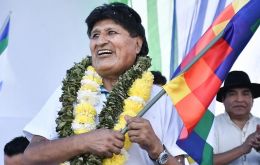
The Santa Cruz departmental prosecutor's office issued an arrest order on Wednesday against former president Evo Morales (2006-2019) over his alleged role in the road blockades and protests that paralyzed parts of Bolivia for 53 days in May and June.
-
Monday, May 25th 2026 - 00:38 UTC
Evo Morales demands elections in Bolivia in 90 days “to avoid deaths” and warns against militarization
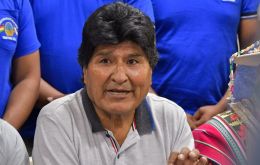
El expresidente boliviano Evo Morales (2006-2019) elevó este domingo la presión sobre el Gobierno de Rodrigo Paz al exigir la convocatoria de elecciones generales en un plazo de 90 días “para que no haya muertos, para que no haya heridos”, en una nueva escalada del pulso político que mantiene paralizadas a las ciudades de La Paz y El Alto desde hace tres semanas. El líder cocalero, prófugo de la justicia boliviana por un caso de presunta trata agravada de menores, advirtió que cualquier decisión del Ejecutivo de “militarizar” el país para desbloquear las rutas constituiría una alternativa “suicida”.
-
Wednesday, May 20th 2026 - 23:18 UTC
Bolivia escalates internal conflict into diplomatic clash with Colombia and divided regional backing

The political and social crisis that has been shaking Bolivia for 15 days escalated on Wednesday into a regional diplomatic confrontation, with the government of Rodrigo Paz expelling the Colombian ambassador to La Paz, Elizabeth García, denouncing before the Organization of American States an attempt at “institutional destabilization,” and receiving public backing from the United States and from several governments in the region. The decision was taken after Colombian President Gustavo Petro described the protests as a “popular insurrection” and said that in Bolivia “there is a people in the streets being killed,” statements considered “interfering” by La Paz.
-
Tuesday, May 19th 2026 - 12:10 UTC
Bolivia: miners' dynamite and peasants' siege reach the heart of power in La Paz
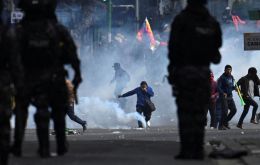
The center of La Paz turned on Monday into the stage of a more than three-hour pitched battle in which thousands of salaried miners and peasants clashed with police forces trying to prevent their entry to Plaza Murillo, the seat of Bolivia's executive and legislative branches. The protesters threw dynamite charges at the police, who responded with tear gas. The cordons were not overrun, and the Army, deployed around the square as the last line of defense, did not intervene directly. The mobilization is the largest challenge President Rodrigo Paz has faced since taking office six months ago.
-
Monday, May 18th 2026 - 18:31 UTC
Bolivia: Ten thousand Evo Morales supporters descend on La Paz as government warns of armed groups
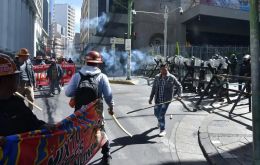
The Bolivian government on Monday denounced the presence of “armed groups” in the march of peasant farmers and supporters of former president Evo Morales that descended on the city of La Paz, the seat of the executive and legislative branches, after a six-day walk from the highlands, demanding the resignation of President Rodrigo Paz. Deputy Interior Minister Hernán Paredes estimated at “somewhat more than ten thousand people” the column of protesters that entered the capital from the neighboring city of El Alto, in what authorities described as an attempt by the former leader to destabilize the executive six months into his term.
-
Wednesday, May 13th 2026 - 12:05 UTC
Bolivian prosecutors confirm they will seek 20 years in prison for Evo Morales on trafficking charges

Bolivia's Public Prosecutor's Office on Tuesday confirmed it will maintain its request for a 20-year prison sentence against former president Evo Morales (2006-2019) for aggravated human trafficking, in proceedings that are moving forward despite the former leader's absence and a fresh arrest warrant issued against him after his failure to appear at Monday's hearing. Prosecutors argue that Morales had a relationship during his second term with a 15-year-old girl, with whom he allegedly fathered a daughter, and that the minor's parents are said to have consented to the relationship in exchange for political favors and economic improvements.
-
Monday, May 11th 2026 - 23:18 UTC
Evo Morales fails to appear at minor-trafficking trial; court orders his arrest
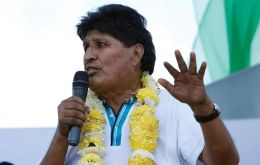
The First Criminal Sentencing Court of Tarija, in southern Bolivia, on Monday declared former president Evo Morales (2006-2019) in contempt and ratified the arrest and travel-ban orders against him after he failed to attend the opening of his oral trial for alleged aggravated human trafficking. The same measure was applied to Idelsa Pozo Saavedra, mother of the alleged victim. Judge Carlos Oblitas suspended the proceedings without a new date, pending the arrest or voluntary appearance of the defendants.
-
Thursday, December 18th 2025 - 08:11 UTC
Bolivian President ends fuel subsidies, raises minimum wage

Bolivian President Rodrigo Paz Pereira has announced a drastic economic overhaul, declaring a state of “economic, financial, energetic, and social emergency,” which includes ending fuel subsidies that have been in place for over 20 years and implementing a significant increase in the minimum wage to offset the resulting inflation.
-
Wednesday, July 9th 2025 - 09:09 UTC
No presidential candidacy for Evo Morales possible
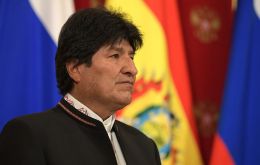
Bolivia's Supreme Electoral Tribunal (TSE) rejected on Tuesday all requests from supporters of former President Evo Morales, confirming that he will not be a candidate in the upcoming August 17 presidential elections.
-
Wednesday, July 9th 2025 - 08:15 UTC
Evistas split between those loyal to the former president and those endorsing Andrónico Roodríguez

Followers of former Bolivian President Evo Morales are split between those who will endorse the candidacy of his former proegé Andrónico Rodríguez and those who find the latter a traitor and would rather cast a null vote in next month's elections if Morales himself is not allowed to run, which he should not after srving more than the constitutional limit on mandates.