MercoPress. South Atlantic News Agency

Venezuela: Mother of political prisoner Víctor Quero dies days after identifying his exhumed body
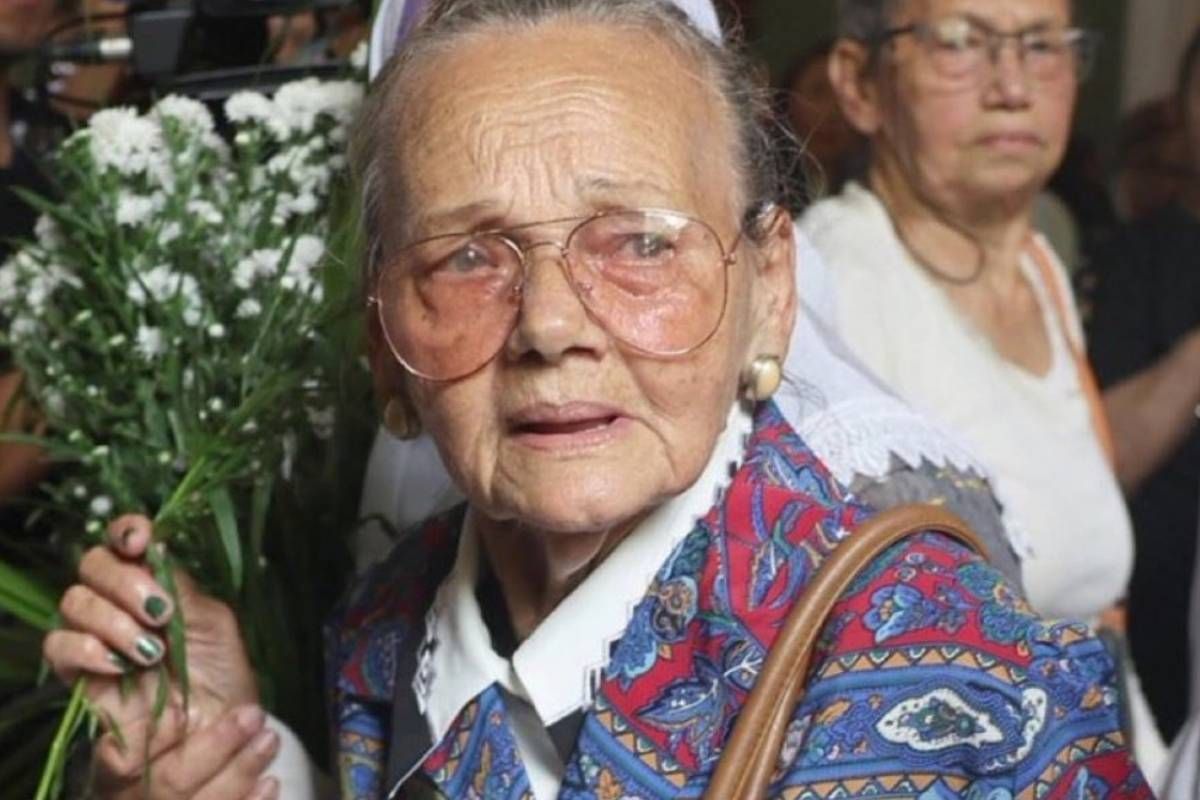 Carmen Navas had become a symbolic figure in the search for Venezuelan political prisoners subjected to enforced disappearance. Photo: Miguel Gutiérrez / EFE
 Carmen Teresa Navas, 83, the mother of Venezuelan political prisoner Víctor Hugo Quero, died on Sunday in Caracas, days after she had identified the exhumed body of her son, who had been buried in secret nine months earlier. The octogenarian, who had been hospitalized in recent days, was seen this same week alongside her relatives at the large memorial mass for her son. Physicians have not officially reported the clinical causes of her death. Her passing closes one of the most disturbing episodes in the country's recent human rights record.
Carmen Navas had become a symbolic figure in the search for Venezuelan political prisoners subjected to enforced disappearance. For 16 months she traveled through prisons, courts, and public offices demanding information on the whereabouts of her son, detained on 3 January 2025 near the central Plaza Venezuela in Caracas and charged with terrorism, treason, and conspiracy. Quero, a 51-year-old merchant, remained missing for months despite his mother's repeated approaches to the Public Prosecutor's Office, the Ombudsman's Office, and the El Rodeo prison, a maximum-security facility known for the harsh conditions in which it holds detainees on political grounds.
The case escalated to the national level following the US military operation of 3 January, which led to the capture of former president Nicolás Maduro and the assumption of office by acting President Delcy Rodríguez under a political tutelage stemming from Washington. The informational opening arising from that shift allowed the Ministry for the Penitentiary Service to publicly acknowledge in May 2026 that Quero had died in July 2025 of respiratory insufficiency. The family received no official notification at the time, and the burial took place in private at the Jardín La Puerta Memorial Park on 30 July of last year.
Last week, Carmen Navas was required to witness the exhumation of her son's body for formal identification, an act that human rights organizations described as an extreme expression of institutional cruelty toward detainees' relatives. “I haven't wanted to speak to the press; they killed my son; they never let me see him. No one overcomes the pain of a mother,” she said in the days before her death, in one of her few public declarations.
Neither the government of Delcy Rodríguez nor any senior authority of the Venezuelan cabinet has issued official statements on the Quero case, despite the indignation voiced by civic organizations, jurists, and religious figures in recent weeks. The Inter-American Commission on Human Rights had issued Resolution 27/2026 on 18 April 2026, granting precautionary measures in favor of Quero and his mother on the grounds that both faced a risk of irreparable harm, an exhortation to which the state did not respond despite the fact that the detainee had already died. The Foro Penal rights organization reports that since January 776 political prisoners have been released, 186 of them following the enactment of the Amnesty Law promoted in February by Rodríguez.


Top Comments
Disclaimer & comment rulesCommenting for this story is now closed.
If you have a Facebook account, become a fan and comment on our Facebook Page!