MercoPress. South Atlantic News Agency



HMS Iron Duke quietly decommissioned; RN has five active frigates left
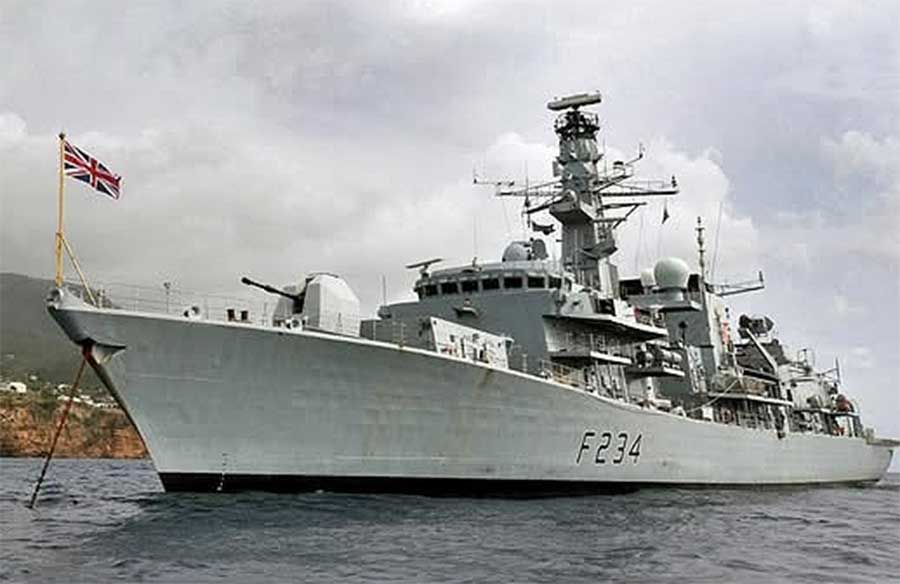 After emerging from the 5-year refit in May 2023, Iron Duke spent the best part of a year on sea trials, workup and FOST certification.
 Royal Navy Type 23 frigate HMS Iron Duke has been stripped of her weapons and sensors and has not been to sea since October 2025, despite no formal decommissioning announcement being made, reports Navy Outlook. As RN Atlantic Patrol Tasking, South, she was well known in the Falkland Islands which she visited on several patrol duties.
Her withdrawal from active service, less than three years after a £103M refit, raises uncomfortable questions about the Royal Navy’s ability to sustain even its much-reduced surface fleet.
Having been laid up in Portsmouth since 2017, Iron Duke arrived in Devonport to begin life extension refit (LIFEX) in May 2019. She was so badly corroded that the structural work carried out on her hull was almost twice that required for any previous ship in the class. The refit began in May 2019, was the most complex undertaken on any Type 23 frigate, took 49 months, and required more than 1.7 million man-hours of labor. During the refit which included many upgrades and extensive refurbishment, her obsolete Harpoon system was removed, and she was fitted for, but never received the Naval Strike Missile (NSM) system. On completion of LIFEX, the expectation was that she would return to the fleet and serve for at least 5 years alongside her sisters.
After emerging from the 5-year refit in May 2023, Iron Duke spent the best part of a year on sea trials, workup and FOST certification. In September, she attended DSEI 2023 and hosted the King, making his first state visit to France in Bordeaux. What followed was a productive but very brief front-line career. The frigate’s main duty was to monitor Russian vessels passing through the English Channel. She never conducted a major overseas deployment other than a few weeks in the Baltic, which included hosting the Prime Minister in Tallinn following the Joint Expeditionary Force summit in December 2024. She also visited Norway in March 2025, and her commanding officer stated the ship had been activated to monitor Russian vessels in or close to UK waters 13 times in the preceding 12 months.
If the time spent working up, on FOST or in Fleet Time Support periods is deducted, the ship managed a maximum of about 16 months of full operational availability. Extending her life effectively cost approximately £6.4 million per operational month (this does not include the actual running costs of the ship). This is spectacularly poor value for the taxpayer and hard to justify. (A misstep on a par with spending £72 million on HMS Bulwark’s refit before selling her to Brazil for around £20 million.)
In November 2025, the MoD confirmed that provisional plans to fit Iron Duke with the towed array sonar (removed from the decommissioned HMS Westminster) had been abandoned “Given the platform’s remaining Service life, the time required to complete the conversion, and competing operational priorities, the benefits of proceeding did not justify the additional cost”. This was the first sign that there were already doubts about her future. The Minister also refused to give the out-of-service date for the ship when requested by an MP, as the MoD has given up publishing such information to save embarrassment.
Iron Duke was supposed to go back to sea in March 2026 and still retained most of her ship’s company in January. However, as previously reported it was rumored that personnel shortages meant Iron Duke’s crew would mostly be transferred to HMS Kent, as she is due to emerge from a major refit this year. It is possible that during dry-docking, a show-stopping defect was found on Iron Duke, either keel corrosion or a major propulsion issue that was beyond reasonable repair. If this were the case, was such a risk accepted during her refurbishment? Either way, it appears she is unlikely ever to sail again.
Assuming there is not a major material issue, perhaps she could be kept in very low readiness, which would allow her to regenerate in an emergency or if more sailors are available in future. Keeping ships in ‘reserve’ is usually to be avoided as they usually deteriorate quickly, but with the RN’s desperate shortage of hulls and lengthening period before replacements arrive, this measure would seem to be justified.
With the decommissioning of HMS Richmond this year already confirmed, the RN now has just five active frigates. Two or three of those ships are effectively going to be tied to sustaining Operation CETO, the priority ASW and SBW patrol commitment in the Atlantic and high North that forms the backbone of the RN’s contribution to NATO’s sub-surface deterrence. Those patrols typically run for three to four months, involving long periods streaming the towed array sonar, frequently in rough seas
At best, the RN might now occasionally be able to find a single frigate to assign to the Carrier Strike Group, seriously undermining the RN’s centerpiece capability and ensuring almost complete reliance on allied support for at least the next 5 years or more. Previously, the CSG nominally comprised 2 frigates and 2 destroyers, considered the bare minimum. HMS Trent is likely to be retained in UK waters and out-gunned OPVs and RFAs will have to shoulder even more of the work monitoring Russian warships passing close to the UK.


Top Comments
Disclaimer & comment rulesNo comments for this story
Please log in or register (it’s free!) to comment. Login with Facebook