MercoPress. South Atlantic News Agency


Submarine Force Advisory Council flagged ARA San Juan concerns seven months before its sinking
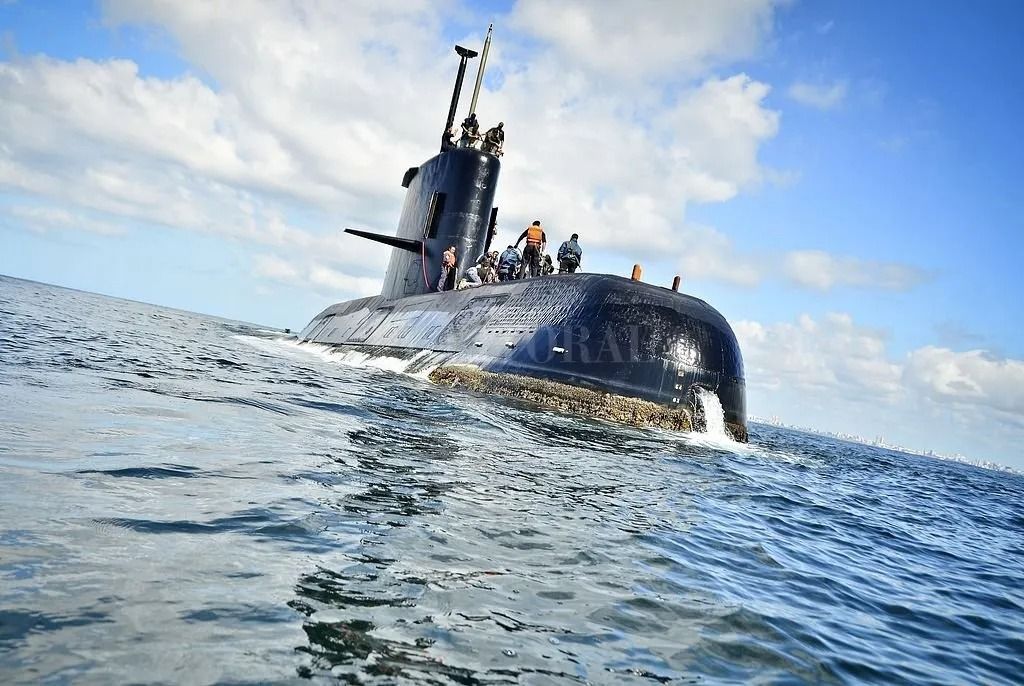
Minutes of the Argentine Submarine Force Advisory Council signed by fourteen navy captains on 30 April 2017, seven months before the implosion of the ARA San Juan in the South Atlantic, have become central evidence in the ongoing oral trial before the Federal Oral Court of Santa Cruz, based in Río Gallegos. The document, cited by the Argentine outlet Infobae, details the technical issues outstanding and the operational restrictions affecting the submarine before its final mission, and constitutes one of the central elements of the debate over the eventual criminal responsibility of the four former senior naval commanders charged in the case.
The meeting, held at the Submarine and Diving School in Mar del Plata, was chaired by the then Submarine Force inspector, Captain Gabriel Attis, now retired with the rank of commodore. The session was convened at the request of the then Chief of the General Staff of the Navy, Admiral Marcelo Eduardo Srur, amid concern about the possibility that the Submarine Force could be left without operational units during maintenance processes. The Navy then had three units in service: the ARA Salta, of Type 209 class, and the ARA Santa Cruz and ARA San Juan, of TR-1700 class. Among those attending were two of the current defendants in the trial: the then commander of the Submarine Force, Captain Claudio Javier Villamide, and the then Chief of Staff of the force, Captain Héctor Aníbal Alonso, the latter serving as secretary of the session.
The commander of the ARA San Juan, Frigate Captain Pedro Martín Fernández, who died in the disaster alongside the other forty-three crew members, presented to the council the list of technical issues outstanding since the mid-life refit conducted at the Argentine Naval Industrial Complex. These included problems with the seawater cooling system, hydraulic losses, air leaks, gas detectors out of service for lack of reagents, sensor failures, and noises in the shaft line that needed to be verified in dry dock. Fernández also mentioned a leak between a fuel tank and a battery tank that had been addressed twice but required a major repair. Despite these issues, the commander described the state of the vessel as “operational, with depth limited to 100 metres, a self-imposed maximum speed at stage 3, and as a significant point the indiscretion of the shaft line noise when stopping the engines.”
The minutes concluded with the recommendation to “process the urgent entry of the SUSJ into dry dock during the first half of 2018 in order to ensure its operability,” and warned that the vessel had accumulated “39 months without conducting the corresponding maintenance,” when the manufacturer's manual established a cycle every 18 months. The prosecution argues at trial that the sum of these technical issues was the efficient cause of the disaster; the defences argue that none of the items recorded affected the nautical safety of the vessel.
The submarine imploded on 15 November 2017 at 10:51 local time, according to international acoustic records. Its hull, made of HY80 steel, was located a year later by the US firm Ocean Infinity in an operation that featured the collaboration of marine archaeologist Mensun Bound, a Falkland Islander.


Top Comments
Disclaimer & comment rulesCommenting for this story is now closed.
If you have a Facebook account, become a fan and comment on our Facebook Page!