MercoPress. South Atlantic News Agency


La Paz endures a month of blockades as food and fuel shortages deepen
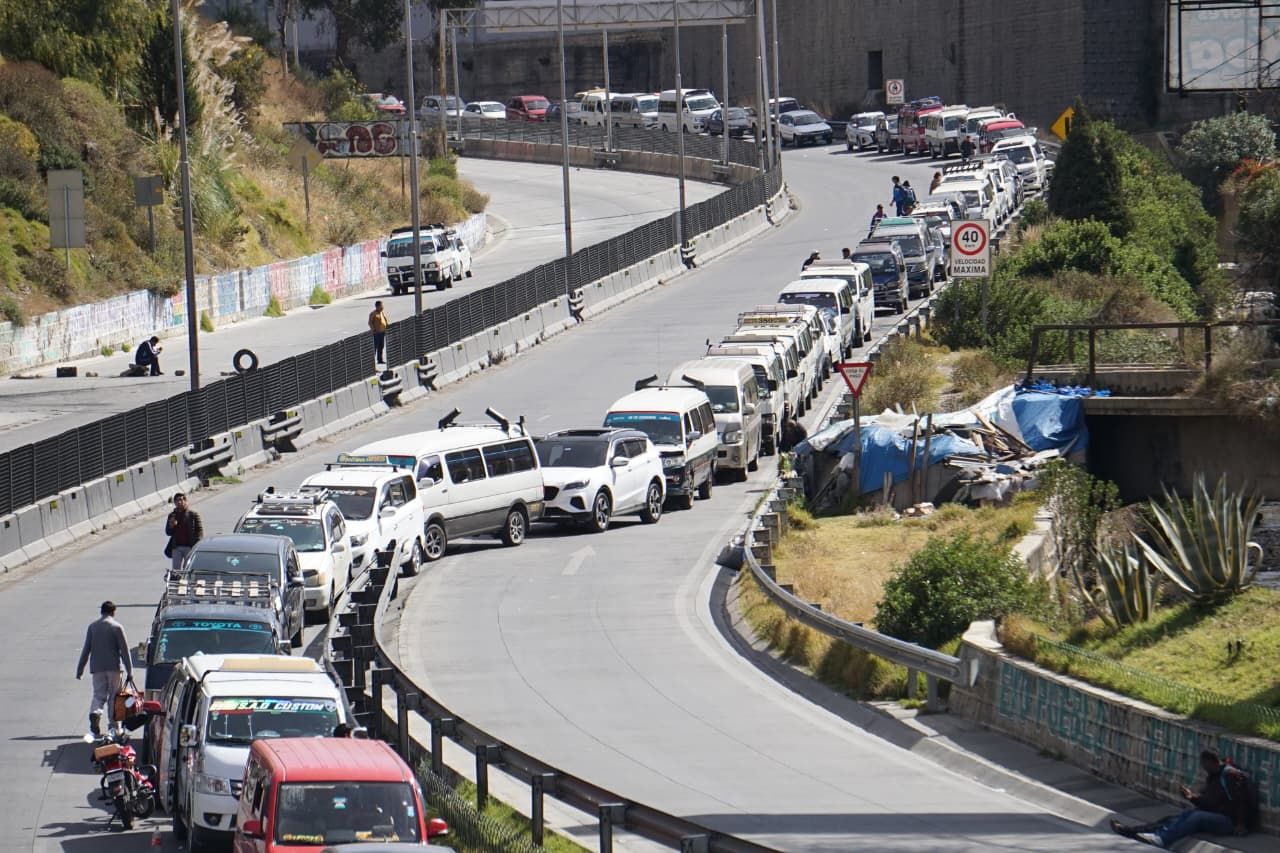 Drivers continue to line up for fuel. Photo: Francisco RIVEROS / @APGNoticiasBo
 La Paz has spent a month under blockade. The main roads into Bolivia's administrative capital have been cut for four weeks, and shortages of food and fuel worsen by the day. Frustration is mounting among residents: some demand the resignation of President Rodrigo Paz for failing to keep his campaign promises, while others call for a firm hand and the deployment of the army to lift the siege. Most agree that the president, who took office less than seven months ago, should have acted sooner, when the protests began.
Plaza Murillo, the seat of the executive and legislative branches, has been sealed off with barriers and chains for four weeks. Police allow through only those who work in the institutions or the neighboring shops, now empty of tourists. Lines at gas stations stretch for miles, waiting for deliveries that sometimes take three or four days. On the black market, fuel is scarce and costs nearly triple the official price.
The same scene repeats in the markets. At the Camacho Market downtown, only two of the ten butcher shops opened; many residents have replaced beef with cheaper proteins. Four tomatoes that cost four bolivianos (0.4 dollars) in April now sell for 12 (1.2 dollars). On one corner, more than 150 people lined up to buy one chicken each, priced at 100 bolivianos (about 10 dollars), more than double the cost before the siege. “Everything is upside down; the situation is very serious,” said Guillermo Villegas, a bank employee, while waiting in line.
Schools have also felt the impact: thousands of students have spent weeks in virtual classes, as during the pandemic. Villegas, a father of two, said learning suffers and that childcare now falls on families. Ana María Quintana, a lawyer and teacher, said repairing her car —damaged by low-quality fuel distributed earlier in the year— cost about 600 dollars, nearly two minimum wages, with no reimbursement from the government. “He is a president who promised a great deal and delivered nothing,” she said.
The main opposition leader, Jorge Quiroga, whom Paz defeated at the polls, pressed the government to end the conflict and, without saying so explicitly, called for a state of exception and for the roads to be cleared by force. He described the administration as “defenseless, passive” and argued that the security forces must guarantee the rights of all Bolivians.
Lawmakers are seeking institutional solutions. Last week, a law limiting the deployment of the armed forces during a possible state of exception was annulled. Carlos Alarcón, a deputy from the Unidad bloc, proposed an extraordinary recall referendum on the president, the vice president and legislators, suggesting that an interpretive law passed by a two-thirds majority could bring the vote forward. If the recall were rejected, the officials' terms would run until 2030; if it succeeded, new elections would be called. The initiative gained the backing of former senator Andrónico Rodríguez on Tuesday. “We cannot allow violence to depose and overthrow governments,” Alarcón warned.
Paz, for his part, continues to call for dialogue and anticipates a peaceful resolution “in the coming days.” Speaking from Cochabamba, he appealed for national reconciliation, though the mobilized sectors rejected the call over the weekend. The protests, led by the Bolivian Workers' Center (COB) and peasant organizations, began over a land-mortgage law —annulled on May 13— and broadened into economic demands and resignation calls, amid the country's worst economic crisis in decades. In the streets of the city, built more than 3,600 meters above sea level, graffiti sums up the discontent: he promised “capitalism for all” and brought “hunger for all.”


Top Comments
Disclaimer & comment rulesCommenting for this story is now closed.
If you have a Facebook account, become a fan and comment on our Facebook Page!