MercoPress. South Atlantic News Agency



Bolivia's blockade crisis risks tipping into civilian clashes, analysts warn
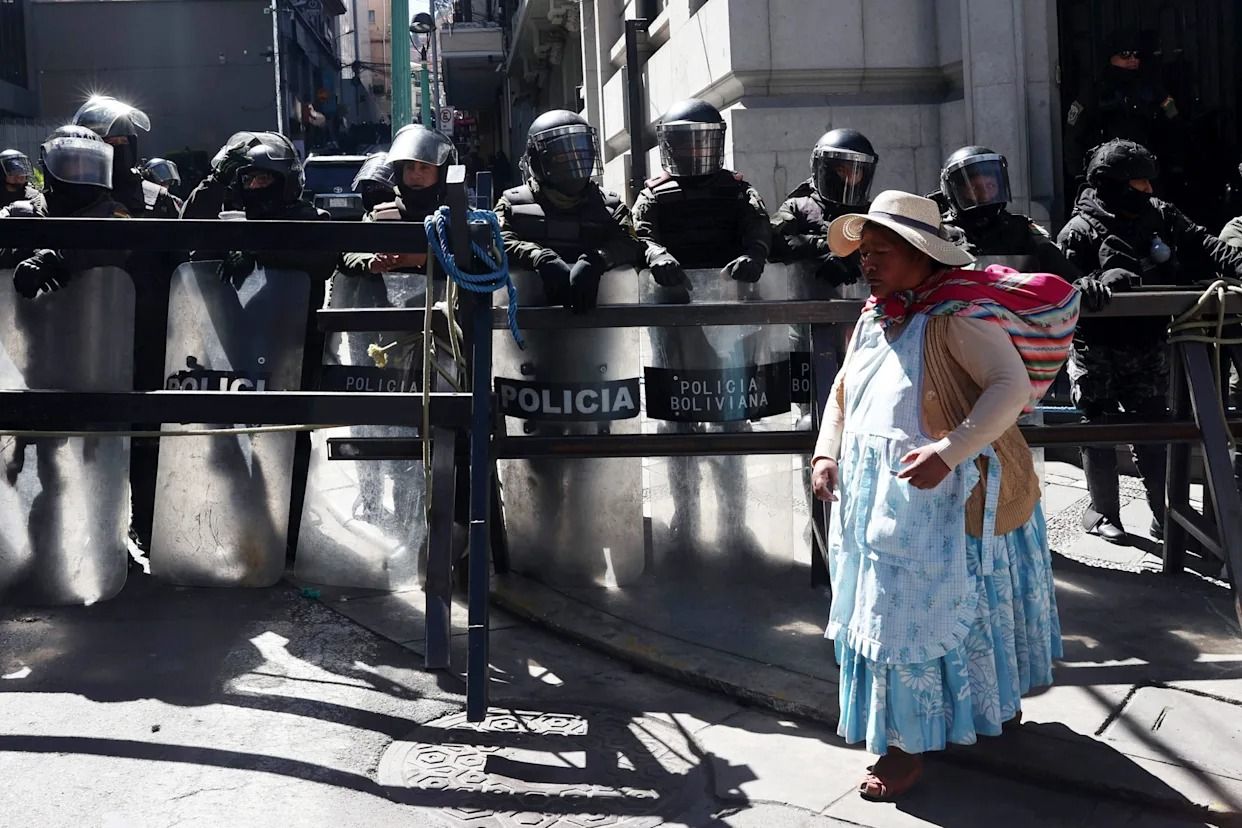 The conflict, now close to a month old, has left at least nine dead
 Bolivia's political crisis threatens to spill over into confrontations between urban and rural populations, after nearly a month of road blockades that have disrupted supplies of food, medicine and fuel —especially in the Andean region— and left at least nine people dead. Analysts Pedro Portugal and Gabriela Canedo warned of the danger in remarks to the news agency EFE, pointing to clashes fueled by an ethnic and cultural fracture and by the alleged inaction of Rodrigo Paz's government, whose resignation the mobilized sectors are demanding.
“The government is doing absolutely nothing; it is as if it were waiting for the population that supports it to confront the blockaders and resolve this through a clash between civilians, rather than through state intervention,” said Portugal, a specialist in indigenous affairs. Several regions have seen incidents and near-confrontations between rural and urban residents, for and against the blockades, in which the analysts see signs of a polarization that could escalate, as has happened before in the country.
Portugal recalled that Paz came to power with the backing of popular and indigenous sectors that voted in their communities on instruction, more for his vice president, Edman Lara, than for him. The Tupac Katari Peasant Federation accuses him of a “betrayal”: having first approved measures favoring business owners in eastern Bolivia, before reaching agreements with the Andean sectors that had voted for him, and having distanced himself from Lara, now an avowed opponent. For the analyst, that rupture explains the peasant blockades, which have as their backdrop a historically conflictive relationship between indigenous peoples and the state, marked by persistent poverty and by the demand to be part of the state “not in a subordinate position, but a leading one.”
Blocking roads has been a historic method of struggle for these sectors since 1781, when an indigenous rebellion led by Tupac Katari besieged La Paz for months and cut off food supplies to the Spanish, criollo and mestizo population.
The conflict, now close to a month old, has left at least nine dead —six of them people who could not receive timely medical care because of the roadblocks— in addition to the shortages of food and medicine hitting the Andean cities.
For the sociologist Canedo, the situation reflects the persistence of the “ghost of 2019,” a reference to the crisis of that year, when then-president Evo Morales (2006-2019) resigned alleging a coup, amid protests over suspected fraud in elections that were later annulled. That crisis left 37 dead —several of them Morales supporters— in places such as Senkata, in El Alto, and Sacaba, in civilian clashes and after military interventions. “We had a six-year pause, and now, with the change of government six months ago, we have this again, the ghost of 2019, and we know the consequences,” she said.
Canedo warned of an “effervescence of racist discourse” that she said was reactivating “historical wounds” around a structural problem. “The problems may be socioeconomic, but what is being touched are ethnic identities,” she said. She described a country with a majority that “suffers the worst social and economic conditions” against a minority “that does enjoy privileges,” and warned that, if the state does not balance conditions for vulnerable sectors, there is a risk that society could head toward “a settling of scores” marked by “resentment, revenge and hatred.”


Top Comments
Disclaimer & comment rulesCommenting for this story is now closed.
If you have a Facebook account, become a fan and comment on our Facebook Page!