MercoPress. South Atlantic News Agency
US sanctions Cuba's president Díaz-Canel and inner circle in push for regime change
 The executive order, signed on May 1, also authorizes secondary sanctions against foreign companies and financial institutions that deal with key sectors of the Cuban economy
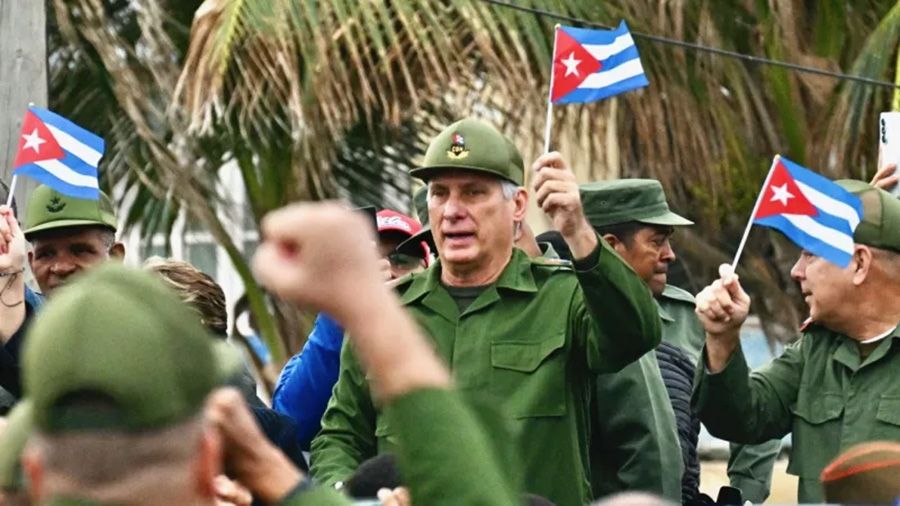
 The United States sanctioned Cuban President Miguel Díaz-Canel and his closest circle on Thursday, in a fresh escalation of Washington's pressure on the island with the stated goal of forcing a change of regime after 67 years of communist government. Havana rejected the move at once.
The Treasury and State Departments added Díaz-Canel, his wife, Lis Cuesta Peraza, his stepson Manuel Anido Cuesta and Alejandro Castro Espín, son of former president Raúl Castro, along with entities such as the Ministry of the Revolutionary Armed Forces (MINFAR) and the Committees for the Defense of the Revolution, to their sanctions (SDN) list under Executive Order 14404. In all, five individuals and five entities were designated, in the third round of sanctions in less than a month. The measures freeze any assets the targets hold in the United States and bar US citizens from doing business with them.
The executive order, signed on May 1, also authorizes secondary sanctions against foreign companies and financial institutions that deal with key sectors of the Cuban economy. The deadline Washington set to sever ties with the military conglomerate GAESA, which controls about 40% of the economy, fell on Friday. “Foreign banks and other companies that provide services to these bodies must freeze their activities,” warned Secretary of State Marco Rubio. The threat has already had an effect: the Spanish hotel chains Iberostar and Meliá announced they would stop managing dozens of hotels linked to GAESA.
The Cuban government responded forcefully. Foreign Minister Bruno Rodríguez called the inclusion of Díaz-Canel on the list “the latest sign of the US interventionist plan,” while the president himself denounced an “illegitimate list of sanctions” and accused Donald Trump's administration of “political blindness.” China, for its part, voiced its opposition and accused Washington of “hegemonic” behavior.
The sanctions add to other recent measures. On May 20, US prosecutors charged Raúl Castro, 94, and five other military officers over the downing, three decades ago, of two light aircraft belonging to the anti-Castro group Brothers to the Rescue. Days earlier, CIA director John Ratcliffe had held an unprecedented meeting in Havana with representatives of the Cuban Interior Ministry.
It all comes amid a severe economic and energy crisis, worsened by the fuel blockade imposed by Washington, which has caused frequent blackouts. The fall early this year of Venezuelan ally Nicolás Maduro, after a US intervention, left the island more isolated. Díaz-Canel, chosen in 2018 to succeed Raúl Castro and the first Cuban leader in decades from outside the Castro family, holds a mandate until 2028.


Top Comments
Disclaimer & comment rulesCommenting for this story is now closed.
If you have a Facebook account, become a fan and comment on our Facebook Page!