MercoPress. South Atlantic News Agency



Bolivia's Paz bets on wearing down protests and holds off deploying the army
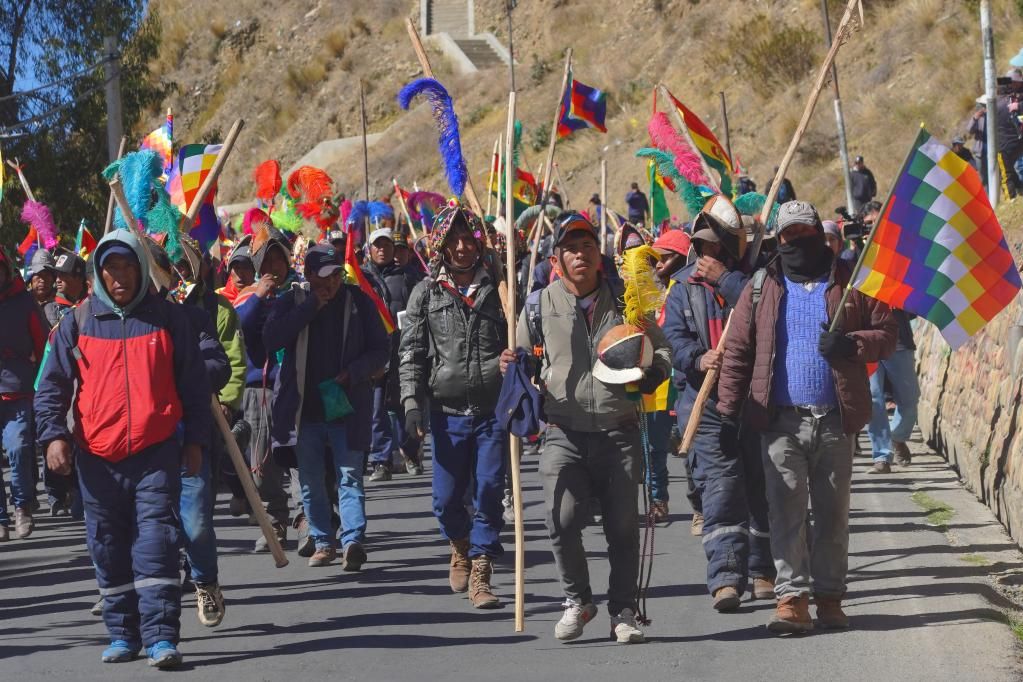 The strategy has generated impatience in La Paz, deprived of fuel and food for more than a month, but it has allowed the government to hold out for more than 40 days
 Bolivia's government has opted to wear down the social protests that have shaken the country for about six weeks, rather than resort to a hard line. President Rodrigo Paz promulgated a law regulating states of exception in early June, but has so far not ordered the deployment of the Armed Forces to clear the roads, leaning instead toward exhausting the protesters and dismantling the movements demanding his resignation through the detention or persuasion of their leaders. “The new Bolivia will be built with dialogue, without giving way to violence,” said presidential spokesman José Luis Gálvez.
The government says the strategy is working. Government Minister Marco Antonio Oviedo held that the conflict is entering its “final phase,” and the blockade points fell from about 90 last week to just over 50, according to the Bolivian Highway Administration. The campesino populations of La Paz, the first to mobilize, nonetheless keep up their pressure measures; a campesino leader, Aquilardo Caricari, warned that any agreement between the government and some union executives would be disowned by “the grassroots.”
The high number of detentions of social leaders fuels accusations that the government is seeking to behead or intimidate the organizations. Some leaders —such as Mario Argollo, of the Bolivian Workers' Center (COB), or the miner Andrés Paye— went into hiding because of arrest warrants against them. The COB denounced irregular arrests by “hooded police”: “It looks like state terrorism,” charged one of its members, Edgar Salazar. Other sectors, in turn, question the government's negotiating with leaders who, they say, do not represent the movement. The protesters chant the slogan “resign or upheaval.”
The strategy has generated impatience in La Paz, deprived of fuel and food for more than a month, but it has allowed the government to hold out for more than 40 days. Journalist Andrés Gómez said the approach “reduces the number of deaths,” though at a “huge political cost.” The precedent is present: the 2019 protests forced Evo Morales's resignation in 21 days, and in 2003 the same sectors brought down Gonzalo Sánchez de Lozada in 16, in a crisis that left 67 dead. For analyst Guido Alejo, a military deployment is the “last option” and is “unlikely” in the short term because of its political cost.
On the rhetorical front, Paz has held that the protests are financed by “narcoterrorism,” an accusation he has not backed with evidence and that has been echoed by US Defense Secretary Pete Hegseth and the regional Shield of the Americas alliance. Paz came to power last October, winning the runoff that ended two decades of Movement for Socialism governments, and faces his gravest crisis amid an acute shortage of foreign currency.


Top Comments
Disclaimer & comment rulesCommenting for this story is now closed.
If you have a Facebook account, become a fan and comment on our Facebook Page!