MercoPress. South Atlantic News Agency



Uruguay deepens its search for the dictatorship's disappeared with access to new archives
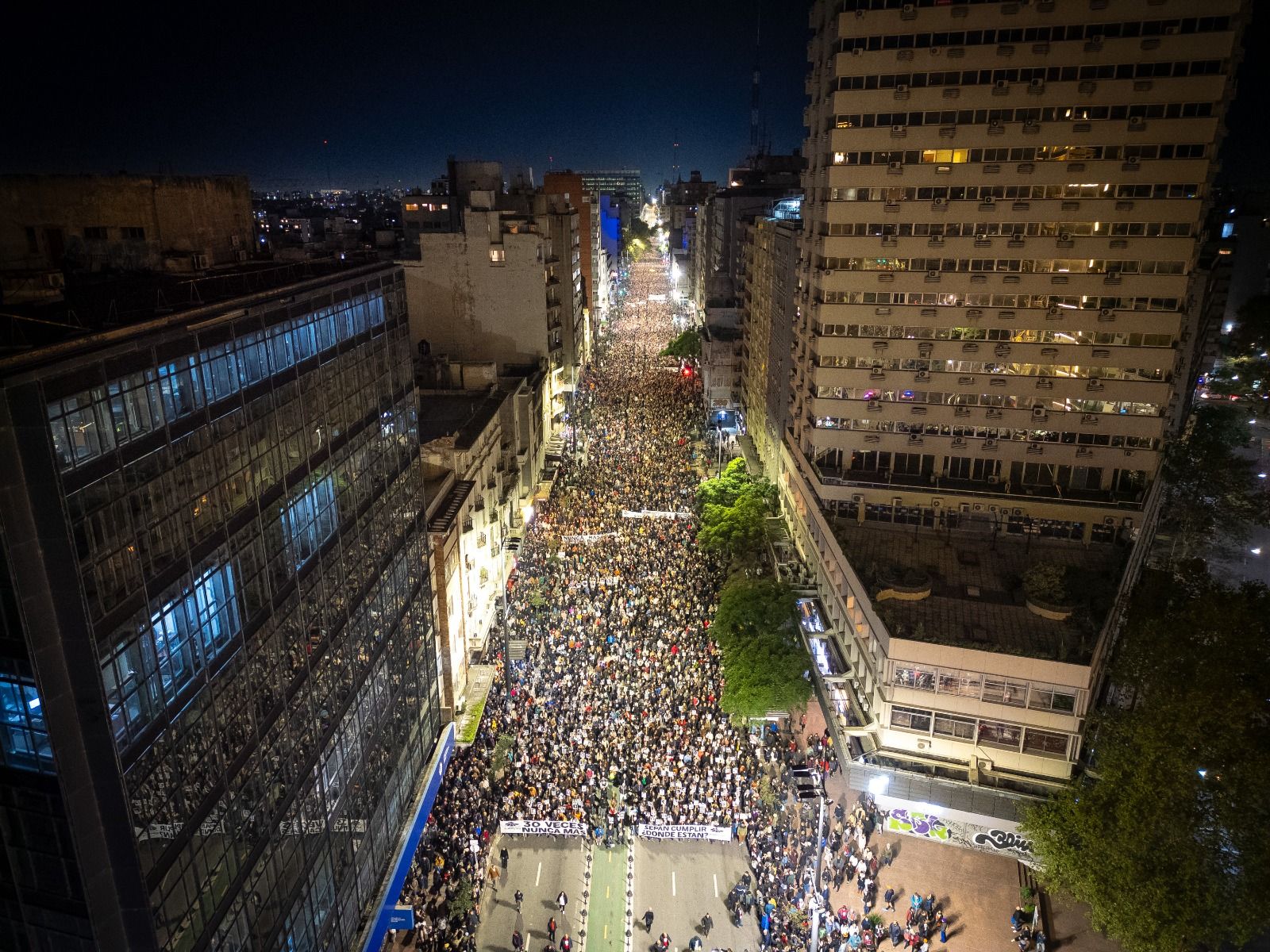 The March of Silence crosses Montevideo every May 20 since 1996 under the motto “Where are they?”, seeking truth and justice for the dictatorship's disappeared. Photo: Sebastián Astorga
 Uruguay expanded its policy of searching for those who were detained and disappeared during the dictatorship with the signing of an accord for the treatment, preservation and administration of archives on human-rights violations committed in the country between 1968 and 1985. The agreement, signed on Monday in Montevideo, deepens a strategic pact reached by state bodies in February.
The accord was signed by the Ministry of Education and Culture (MEC), through the General Archive of the Nation; the National Human Rights Institution and Ombudsman's Office (INDDHH); and the University of the Republic (Udelar). Education Minister José Carlos Mahía said the step was fundamental to “advance on truth and justice,” as it facilitates access to data crucial for judicial investigations and for victims' access to justice. The State, he said, “must help when there is such a great dispersion of documents,” and specified that the processing of the information would be governed by strictly technical criteria to guarantee objectivity.
The main development is the incorporation of the Udelar, which will contribute its technological infrastructure to form a repository that allows the data to be systematized, made accessible and disseminated. The president of the INDDHH, Mariana Mota, valued that institutional synergy as a way to optimize resources in the face of the challenge of analyzing archives scattered across different state agencies, and linked it to the permissions already granted to access the Defense Ministry's archives.
Mota stressed that direct access to those documents is decisive for clarifying the ongoing investigations. In the context of the recent recognition of eight new cases of detained and disappeared persons, she explained that many files under study contain “very minimal information,” so delving into the state archives is vital to reconstruct each person's circumstances, learn of their political activity or places of transit, and thus confirm or rule out cases with greater certainty.
The search falls under Law 19,822 and covers the period between June 13, 1968 —when then-president Jorge Pacheco Areco first decreed the “prompt security measures”— and February 1985, encompassing the years before the 1973 coup and the subsequent civilian-military dictatorship. According to the Presidency's Human Rights Secretariat, during that period 197 people were detained and disappeared, many of them within the framework of Operation Condor, the coordinated repression among South American dictatorships.


Top Comments
Disclaimer & comment rulesCommenting for this story is now closed.
If you have a Facebook account, become a fan and comment on our Facebook Page!