MercoPress. South Atlantic News Agency

Collapsed hospitals and morgues raise health fears in Venezuela's earthquake zone
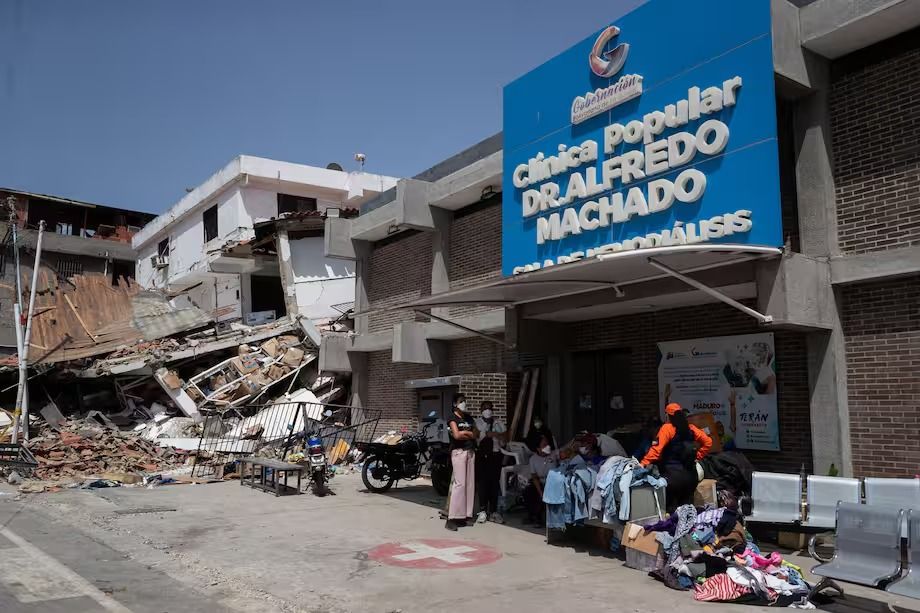 Authorities have restricted access to La Guaira to ease the entry of heavy machinery and specialized teams
 The emergency caused by the twin earthquake that struck north-central Venezuela on Wednesday is beginning to turn into a health risk, given the bodies that remain under the rubble and the collapse of hospitals and morgues in the worst-hit areas, particularly the coastal state of La Guaira. Authorities this weekend raised the toll to at least 1,450 dead and some 3,150 injured, a figure they warned would keep rising.
More than 72 hours after the quakes, rescue teams and volunteers warn that the presence of fatalities among the ruins poses a public health problem, as the chances of finding survivors narrow. In several areas, rescuers requested masks and more resources to work in adequate sanitary conditions. The scale of the disaster has overwhelmed the capacity of emergency services: in some cases, according to reports from the ground, relatives themselves had to move the bodies of their loved ones amid the lack of available services.
The health system, already weakened before the catastrophe by the country's prolonged economic crisis, is under heavy strain. According to the official toll, at least 13 hospitals were seriously damaged or rendered unusable, reducing care capacity just when it is most needed. The Pan American Health Organization had warned that medical centers in the affected areas were treating fractures, trauma and crush injuries, and that the quakes would generate “new and significant needs.”
Authorities have restricted access to La Guaira to ease the entry of heavy machinery and specialized teams. Acting President Delcy Rodríguez said that more than 14,000 soldiers and police officers were deployed in the area, along with about a hundred machines. The number of missing people is the subject of conflicting accounts: bodies such as the UN have said that tens of thousands may still be unaccounted for, while the government maintains that the figure is in the hundreds. Health Minister Carlos Alvarado clarified that the official data reflect the victims recorded at hospitals.
The international response has expanded: according to the government, 24 countries have sent aid, with more than 2,700 rescuers and dozens of canine units already integrated into the operations. Thousands of volunteers mobilized to distribute food, water, medicine and clothing, while the government set up a telephone line and a digital platform to report missing persons and coordinate assistance. The UN estimated the damage at between $4.7 billion and $8.7 billion. The two quakes, of magnitude 7.2 and 7.5, were among the most powerful recorded in Venezuela in more than a century and left thousands of people displaced.


Top Comments
Disclaimer & comment rulesCommenting for this story is now closed.
If you have a Facebook account, become a fan and comment on our Facebook Page!